

VoWiFi & VoLTE Deployment: Top Strategies for Seamless Connectivity
2026-05-19
In an era where dropped calls and patchy indoor coverage are no longer acceptable, VoWiFi and VoLTE have emerged as lifelines for seamless communication. Yet, deploying these technologies without a clear strategy can lead to disjointed user experiences and operational headaches. That’s where IPLOOK steps in, redefining how operators blend voice over Wi-Fi and LTE into one fluid, reliable service. This blog unpacks the top deployment strategies that turn connectivity challenges into competitive advantages.
Building the Backbone for Crystal-Clear Voice Over LTE and Wi-Fi
Moving voice traffic onto packet-switched networks like LTE and Wi-Fi demands a fundamental rethinking of how we prioritize and protect audio streams. In legacy circuit-switched setups, a dedicated channel guarantees consistent bandwidth, but IP-based voice breaks that mold—packets compete with data, and delays or loss immediately degrade call clarity. To counter this, LTE relies on dedicated bearers with strict quality-of-service (QoS) parameters, carving out a virtual lane for voice that suppresses jitter and prioritizes signaling via the IP Multimedia Subsystem (IMS). This isn’t just about adding bandwidth; it’s about synchronizing radio and core network resources so that every VoLTE call feels as immediate and stable as a landline, even under heavy network load.
Wi-Fi presents a different set of hurdles: the spectrum is unlicensed, interference is unpredictable, and there’s no native QoS enforcement. Voice over Wi-Fi (VoWiFi) compensates by leaning on advanced codecs like EVS, which adapt to fluctuating conditions—dialing down bitrates when packets clog or ramping up sampling rates during quieter moments. The handover seamlessness between Wi-Fi and LTE is equally critical; ePDG gateways and fast authentication methods keep calls alive as you walk from your living room to the street without a stutter. Operators also tweak packet scheduling and employ techniques like uplink/downlink decoupling to sidestep congestion, ensuring that whether you’re chatting over a congested home router or a carrier-grade access point, the voice payload arrives intact.
At the infrastructure level, building this backbone requires more than protocol upgrades—it’s about end-to-end latency management and intelligent buffering. Jitter buffers must be tuned to absorb variation without introducing perceptible delay, while the core network’s policy controls dynamically allocate resources based on real-time link quality. Some operators overlay their Wi-Fi calling with small-cell support to offload traffic and reduce backhaul strain, while others implement network slicing to guarantee voice service even when data usage spikes. Ultimately, the goal isn’t merely to replicate old-school telephony but to deliver crystal-clear conversations that remain resilient across heterogeneous access networks, without the user ever needing to think about the underlying technology.
Seamless Handover Techniques Between Cellular and Wi-Fi Calling
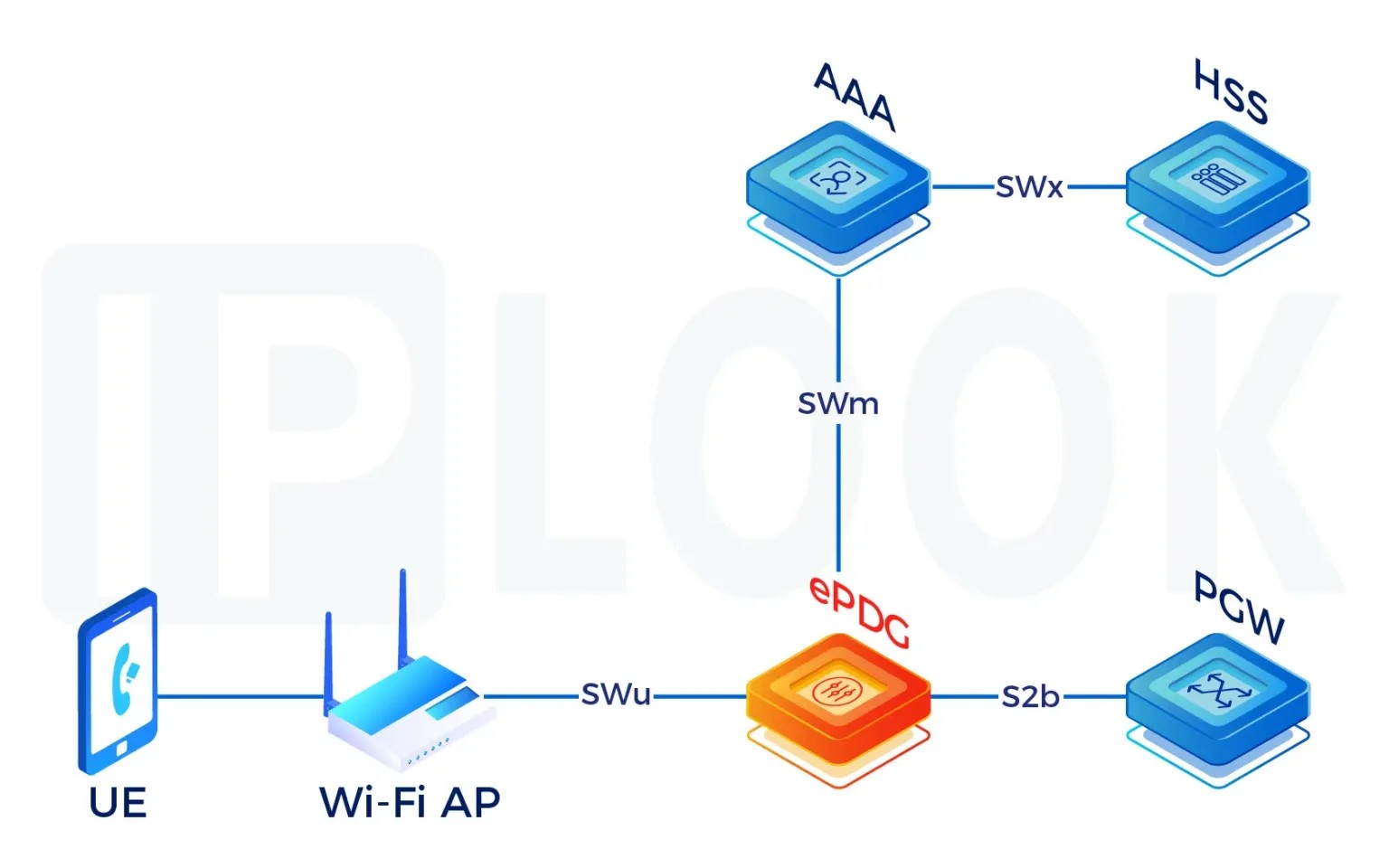
Seamless handover between cellular and Wi-Fi calling hinges on the device's ability to maintain session continuity as it moves across network boundaries. This process typically leverages the IP Multimedia Subsystem (IMS) core, which acts as a unifying layer, treating both access types as paths to the same service. When a call is initiated on Wi-Fi and the user walks out of range, the handset preemptively establishes a parallel cellular leg while the Wi‑Fi quality degrades, merging the audio streams before dropping the original path. This make-before-break approach ensures the conversation isn't interrupted, with the transition often imperceptible to the user.
Under the hood, protocols like the Session Initiation Protocol (SIP) and the Media Gateway Control protocol play a critical role. The device continuously monitors signal thresholds and jitter levels; once Wi‑Fi performance falls below a configurable trigger, it signals the IMS core to switch the media to the LTE or 5G interface. Network assistance, such as Access Network Discovery and Selection Function (ANDSF) policies, can further smooth the changeover by instructing the phone on the best available radio. The challenge intensifies in dual‑mode scenarios where operators must orchestrate the handover without dropping the voice call, often relying on the Evolved Packet Core's bearer management to keep latency in check.
A key differentiator in modern implementations is the use of voice‑call continuity (VCC) mechanisms that span both circuit‑switched fallback and pure VoLTE/VoWiFi architectures. By anchoring the call in the IMS, applications can leverage real‑time transport protocol (RTP) steering, dynamically redirecting packets between Wi‑Fi and cellular modems. Some advanced solutions even employ client‑side predictive algorithms that anticipate coverage loss based on motion and historical RF patterns, initiating the handover early enough to avoid audio clipping. As operators push toward converged, multi‑access edge computing environments, these techniques are becoming more robust, blending accessibility with the reliability expected of carrier‑grade voice.
Avoiding Common Pitfalls in Large-Scale VoLTE and VoWiFi Rollouts
Large-scale VoLTE and VoWiFi deployments often stumble on interoperability gaps between core network elements and the varied handset ecosystem. Early testing cycles frequently overlook how devices handle mid-call access handovers, especially in mixed 4G/5G NSA environments. Instead of treating IMS core upgrades and handset firmware as separate tracks, operators should align them through continuous pre-launch regression testing that mimics real-world mobility patterns. Without this, subscriber complaints spike due to silent failures that lab setups rarely catch.
Another underplayed risk is the QoS inconsistency when voice packets traverse multiple transport networks. VoWiFi traffic, for instance, can suffer from jitter and packet loss on unmanaged broadband links, while VoLTE relies on dedicated bearers that may degrade under heavy cell load. A practical mitigation is deploying end-to-end quality monitoring with per-call granularity, paired with dynamic policy adjustments that shift traffic to less congested paths or fall back to circuit-switched alternatives before quality dips below the muting threshold.
Operators also underestimate the complexity of emergency calling compliance across jurisdictions. VoLTE/VoWiFi solutions must accurately convey location and callback information to PSAPs, even when users roam or connect through third-party Wi-Fi. Overlooking this leads to regulatory penalties and safety risks. Building a dedicated test harness that simulates cross-border scenarios and verifying handset behavior against each carrier's supplementary service interactions can prevent late-stage rework that compromises launch timelines.
Quality of Service Tuning for Lag-Free Mobile Voice Experiences
Achieving consistently lag-free mobile voice calls demands more than just raw bandwidth—it’s a delicate balancing act of network parameters. Fine-tuning Quality of Service (QoS) settings specifically for real-time voice traffic ensures that packets carrying your conversation are prioritized over less time-sensitive data like email syncs or app updates. This means configuring routers and access points to detect and expedite VoIP streams through techniques like differentiated services code point (DSCP) marking, which flags voice packets for priority treatment at every hop. Without such granular control, even high-speed connections can suffer from bursts of latency that chop up words or introduce awkward pauses, making natural conversation impossible.
On mobile devices, the challenge is compounded by constantly shifting signal conditions and resource contention from background apps. Effective QoS tuning needs to be adaptive, leveraging dynamic queue management and application-aware policies that can distinguish a WhatsApp call from a video buffer. By limiting the bandwidth allocated to non-essential services during a call and maintaining minimal jitter buffers, we prevent the dreaded “underwater” voice effect. The key is to align device-side optimizations with core network configurations, creating a seamless path where voice frames are delivered with predictable, sub-50ms latency, preserving the natural rhythm and emotion of human speech even on congested cellular networks.
Security Must-Haves for Next-Generation Voice Networks
As voice networks evolve to embrace IP-based architectures and cloud-native designs, the attack surface expands dramatically. Traditional telephony relied on physical isolation, but now every component—from session border controllers to media servers—becomes a potential target. A comprehensive security strategy must start with strong identity management: mutual TLS for all inter-service communication, strict certificate pinning, and short-lived tokens issued only after robust device attestation. This isn't about ticking compliance boxes; it's about assuming breach and building zero-trust principles directly into the fabric of the network.
Real-time voice traffic demands low latency, so security controls must be lightweight yet effective. Encrypting media with SRTP and signaling with SIP over TLS is baseline, but advanced threats like voice phishing and deepfake injection require more. Integrating continuous authentication and behavioral analytics can detect anomalies—like a sudden change in call patterns or voice characteristics—without adding perceptible delay. Network operators should also isolate voice infrastructure in dedicated virtual private clouds, with micro-segmentation that limits lateral movement, ensuring that a compromise in one node doesn't cascade into a full system takeover.
True resilience comes from proactive threat hunting and automated response. Implementing a voice-specific security operations pipeline that analyzes call metadata, codec fingerprints, and signaling anomalies can spot reconnaissance attempts early. When a threat is detected, the system must react instantly: tearing down suspicious sessions, revoking credentials, and redirecting traffic without human intervention. This level of automation, paired with regular red-team exercises that simulate attacks on the voice stack, transforms security from a static defense into a dynamic, adaptive shield that keeps pace with modern voice network complexity.
Future-Proofing Your Network with Unified Voice Solutions
Adopting a unified voice architecture allows your infrastructure to grow in step with emerging communication standards without forcing a complete overhaul. By decoupling telephony from proprietary hardware and moving call management into software, you gain the ability to deploy feature updates, integrate new endpoints, and extend voice services on demand. This abstraction layer keeps your network nimble, letting you fold in innovations like AI-driven call routing or team collaboration tools without disrupting day-to-day operations.
A single voice fabric also simplifies management and reduces long-term cost by consolidating disparate systems under one policy framework. Instead of juggling multiple PBX silos or carrier contracts, your IT staff can orchestrate voice across locations from a central interface, adapting capacity and features as the business evolves. The result is a network that not only handles today’s demands but readily accommodates tomorrow’s shifts in hybrid work, customer engagement methods, and device preferences.
FAQ
VoLTE relies entirely on the operator's licensed spectrum and requires tight integration with the existing LTE RAN and EPC. It demands rigorous testing for voice quality and emergency services because the network must guarantee coverage. VoWiFi, on the other hand, leverages unlicensed spectrum and third-party access points, which introduces variables like varying internet backhaul quality and NAT traversal. The complexity shifts from controlling the radio environment to ensuring a secure tunnel and consistent service across an unpredictable IP network.
Seamless handover depends on a well-configured IMS core supporting SRVCC (Single Radio Voice Call Continuity) for LTE to 2G/3G and ePDG-based handover for Wi-Fi to LTE. The device must support the necessary SIP signaling to transfer the call without interruption. Operators often fine-tune handover thresholds and use adaptive jitter buffers to mask the transition. Extensive field testing in real-world scenarios, like walking out of a building from Wi-Fi to outdoor LTE, is essential to avoid dropped calls.
The IMS core is the heart of both services, handling call session control, media routing, and service logic. For VoWiFi, the IMS connects through the ePDG (evolved Packet Data Gateway) that terminates the secure IPsec tunnel from the device. By centralizing authentication and call control, the IMS enables features like HD voice to work consistently across both access types and allows subscribers to transition between them without re-registering their identity.
One frequent issue is overestimating the quality of home and public Wi-Fi networks. Without proper QoS markings or dedicated bandwidth, voice packets can suffer from jitter and packet loss, leading to a poor experience. Another pitfall is underestimating the load on the ePDG and AAA infrastructure, which can become bottlenecks. Also, inconsistent emergency call routing across Wi-Fi and cellular often catches operators off guard, requiring careful regulatory compliance.
On LTE, the operator controls the entire path and can enforce a dedicated bearer with guaranteed QoS using QCI (QoS Class Identifier). With Wi-Fi, you're at the mercy of a best-effort connection. Some operators mitigate this by using AP-side prioritization like WMM (Wi-Fi Multimedia), but end-to-end control is limited. Newer standards like Wi-Fi 6 and 5G-ATSSS are improving things, but for now, VoWiFi still leans heavily on codec adaptation and packet-loss concealment to maintain call quality.
Device support goes beyond just the chipset. The operating system needs carrier-specific configurations for IMS parameters, ePDG address discovery, and emergency call handling. Battery optimization for Wi-Fi scanning and IPsec encryption is crucial to avoid draining the device. Manufacturers must also ensure a smooth user experience, like displaying the VoWiFi icon only when the service is truly available, and fallback gracefully to cellular when Wi-Fi voice quality degrades.
A common approach is to start with a controlled pilot, perhaps with employees, to validate IMS and ePDG integration without overwhelming the network. Phase two adds a limited public launch, focusing on modern flagship devices with well-tested firmware. During this phase, collect metrics on call setup time and handover success. The final phase expands to all VoLTE-capable devices and opens the service to all subscribers, with continuous monitoring for voice quality and capacity planning on the Wi-Fi gateways. Parallel to all phases, operators typically negotiate with broadband providers or enterprise IT departments to secure preferred QoS.
Conclusion
Achieving truly seamless voice connectivity across VoLTE and VoWiFi begins with a robust backbone. Operators must engineer an IP Multimedia Subsystem core that handles high-definition audio without jitter or delay, while maintaining tight synchronization between packet-switched and circuit-switched fallback mechanisms. The real art lies in handover orchestration—moving calls between cellular and Wi-Fi networks without audible glitches demands intelligent algorithms that anticipate signal decay and pre-establish target legs. Yet even well-designed systems stumble when scaling: inadequate testing of legacy device compatibility, misconfigured eNodeB parameters, or overlooked IPsec tunnel constraints can trigger call drops. Avoiding these pitfalls means rigorous stress-testing under varied RF conditions and adopting phased rollouts that preserve subscriber quality perception.
Beyond basic connectivity, fine-tuning Quality of Service becomes critical. Classifying voice packets with appropriate DSCP markings end-to-end, from radio access to the core, prevents congestion-induced choppiness. On Wi-Fi, leveraging 802.11e/WMM prioritization ensures voice frames win over background data. Security cannot be an afterthought—next-gen voice networks must armor themselves with strong mutual authentication like EAP-AKA, robust encryption for signaling and media (IPsec, SRTP), and hardened border elements against denial-of-service attacks. Ultimately, future-proofing the network means embracing a unified voice architecture that abstracts the access layer, merging VoLTE, VoWiFi, and even 5G voice into a single service continuum. This approach simplifies operations, enables consistent policy enforcement, and prepares for emerging capabilities like voice over New Radio, keeping the subscriber experience cohesive no matter how they connect.
Contact Us
Contact Person: Shimmy
Email: [email protected]
Tel/WhatsApp: 85253392231
Website: https://www.iplook.com