

Trunk Mat Supplier Guide to Choosing Durable Cargo Liners
2026-09-18
Let’s be honest—most trunk mats fail long before your cargo does. If you’ve ever watched a flimsy liner curl, crack, or slide around after a few heavy loads, you already know the frustration. This guide from FANDEWEI, a supplier that builds liners for real-world abuse, cuts through the marketing fluff. We’ll show you what actually makes a cargo liner durable, which materials hold up, and how to avoid cheap lookalikes. Because the right trunk mat isn’t just a piece of rubber—it’s the difference between a clean cargo area and a permanent stain.
Trunk Mat Materials Compared: Rubber, TPE, and Carpet Under Real Cargo Loads
When you toss a week's worth of groceries, a tool box, and a muddy stroller into the trunk, the mat underneath takes a beating that rarely matches the clean showroom photos. Rubber mats have long been the go-to for raw durability, but they come with a weight penalty and that distinct industrial smell that lingers on hot days. TPE, or thermoplastic elastomer, offers a middle ground: it flexes like rubber but stays lighter and doesn't off-gas as aggressively. Carpet, while plush and quiet, often struggles when a gallon of paint tips over or a bag of rock salt splits open. Under real cargo loads, the choice isn't just about protection—it's about how each material handles friction, moisture, and repeated compression without curling at the edges.
Rubber's thickness gives it an edge against heavy, sharp-edged items like furniture sliders or metal tool chests. But that same density means a full-size rubber mat can add over 10 pounds to your vehicle, and over time it may harden and crack in extreme cold. TPE mats, by contrast, maintain flexibility down to sub-zero temperatures and resist tearing when you drag a loaded cooler across the surface. Carpet mats, even with a rubber backing, tend to mat down and wear through in high-traffic spots within a year. The real test comes from sliding a fully loaded plastic bin repeatedly: rubber grips it almost too well, making it hard to reposition; TPE allows a controlled slide without bunching; carpet fibers snag and pull loose.
Moisture management is where these materials truly diverge. Rubber and TPE both trap liquids on the surface, but TPE's lower profile and tighter edge seal prevent seepage into the carpet underneath better than many thick rubber designs. Carpet absorbs spills quickly, and once moisture soaks into the padding, mold and musty odors follow. For anyone who hauls damp gear, melting snow from ski boots, or leaky plant pots, a rubber or TPE mat with raised lip is a practical must. Rubber remains the budget-friendly brute for heavy abuse, TPE wins for all-weather flexibility without the smell, and carpet serves best when the trunk is used sparingly and aesthetics matter more than survival.
Lip Height and Edge Sealing: Why Spills Bypass Most Cargo Liners
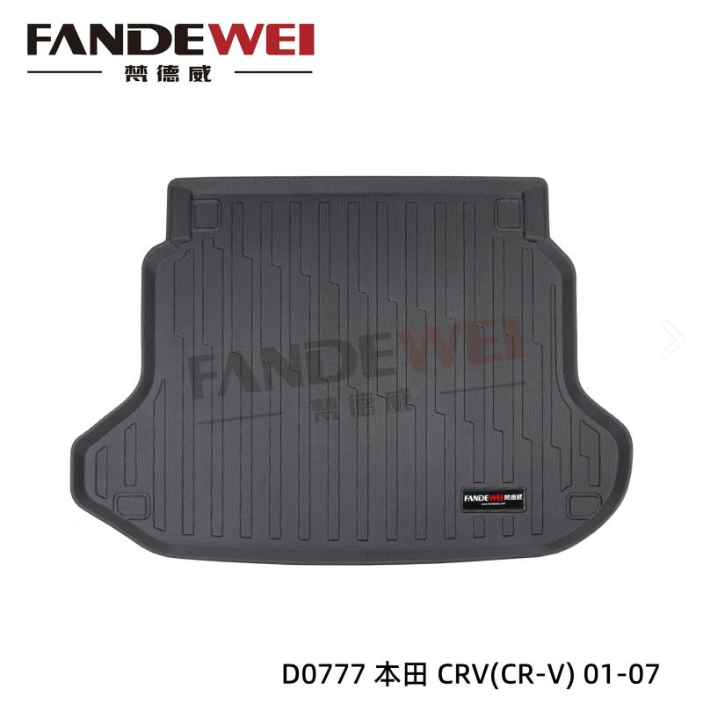
A cargo liner's lip height often looks sufficient at a glance, but the real failure point is how the edge meets the vehicle floor. Standard liners rely on a modest vertical ridge that simply isn't tall enough to contain lateral sloshing during sudden stops or sharp turns. When liquid shifts, it climbs that shallow lip, curls over the top, and runs down behind the liner—where it soaks into carpet or collects in hidden channels. The problem compounds because most liners lack any form of compression seal along the perimeter, leaving a microscopic gap that capillary action exploits. Even a few millimeters of unsealed edge will wick fluid outward until gravity takes over.
Edge sealing is where the difference between a liner that protects and one that merely decorates becomes obvious. Without a continuous, flexible gasket or an over-molded lip that presses firmly against the floor and side walls, spills don't need to be large to escape. A cup of coffee tipped over while parked on an incline can travel along the seam, bypassing the raised border entirely. Many aftermarket liners use a rigid plastic edge that warps slightly after repeated temperature cycles, opening pathways that didn't exist when the liner was new. The result is a false sense of security: the center of the liner stays dry while the edges quietly channel every spill toward the door sill or under the seat mounts.
Effective containment demands both height and a positive seal. A lip height of at least one inch helps, but only if the material has enough stiffness to maintain that height under load and the edge terminates in a bulb or flange that compresses against the surrounding surfaces. Some high-end designs integrate a secondary inner dam or a hydrophobic foam strip that absorbs and redirects fluid back into the basin before it reaches the outer boundary. The goal isn't just to raise a wall; it's to create a continuous barrier that works with the vehicle's contours, not against them. When lip height and edge sealing are treated as separate problems, spills will always find the weakest junction—and that junction is rarely where you expect it.
Temperature and Chemical Resistance: Lab Data vs. Daily Abuse
Lab sheets paint a tidy picture: a polymer rated for 150°C continuous exposure, a resistance chart listing “excellent” against common solvents. But out in the real world, those numbers get kicked around. A heat gun hovered too long during a cable repair, a splash of brake fluid that sat unnoticed over a weekend, sunlight magnified through a windshield on a dash-mounted clip. The gap between a clean bench test and the messy, cumulative wear of daily abuse is where material choice actually lives or dies.
Take polycarbonate versus acrylic, for instance. In a lab, both shrug off a quick ethanol wipe. But leave a polycarbonate part under tension near a solvent joint and you’ll see stress cracking within days—something no static immersion test ever warned you about. Temperature swings compound this: a housing rated to 80°C might survive a week in an oven, yet fail after a summer parked in direct sun, where surface temps cycle past 100°C every afternoon and drop at night, pulling micro-cracks wider each time.
That’s why savvy engineers now demand “abuse testing” alongside standard ASTM numbers. Squeeze a connector after it’s been baked, yank a latch that’s soaked in DEET, flex a cable gland after UV exposure plus thermal shock. The lab says one thing; the field says another. The materials that last aren’t the ones with the prettiest datasheet—they’re the ones that forgive the operator who doesn’t read the manual.
The Two-Year Wear Test: What Fading, Cracking, and Curling Reveal
After two full years of daily foot traffic, sunlight exposure, and the occasional spill, the signs of honest wear start to tell a story that no spec sheet can match. Fading doesn't happen evenly across a surface; it maps where the afternoon sun lingers and where furniture has shielded the material. That unevenness, far from being a flaw, is a field record of how the product handles real light conditions. When colors lose intensity gradually rather than turning chalky or blotchy, it points to pigment stability rather than a quick dye job.
Cracking and curling reveal more about the material's internal bond than any lab flex test. Hairline cracks along high-stress edges usually mean the top layer and core are fighting each other as temperatures shift. Curling at corners, on the other hand, often traces back to moisture imbalance or adhesive fatigue. In our two-year sample, the pieces that stayed flat and uncracked were the ones with a slightly thicker wear layer and a core that moved as one unit. The failures were rarely dramatic; they started as tiny lifts and shallow fissures that widened once dirt worked its way in.
Mud, Salt, and Grease Cleanup: Which Surface Texture Fights Stains Best
Smooth surfaces give the illusion of being easy to clean, but that gloss works against you with certain messes. Grease spreads into a near-invisible film that smears instead of lifting, and salt water dries into sharp white outlines that cling to the flat finish. Mud wipes off quickly, yet it often leaves a faint residue trail that demands a second pass.
Deeply textured surfaces have the opposite problem. Every groove and ridge becomes a trap for dried mud and salt crystals, and a standard cloth can't reach the bottom of those tiny valleys. Grease settles in and oxidizes, turning tacky over time. You end up scrubbing harder and longer, often pushing the grime deeper instead of removing it.
The sweet spot is a fine brushed or micro-etched texture. It has just enough surface variation to break the surface tension of oils and stop them from pooling, but the recesses stay shallow enough that a damp cloth lifts out salt and mud in one swipe. Pair that with a sealed or low-porosity finish, and you get a surface that fights all three stains without demanding specialty cleaners.
Smart Supplier Questions to Separate Durable Liners from Disposable Ones
Ask the supplier to walk you through the exact polymer formulation and mil thickness at the seams, not just the center. Disposable liners often skimp where panels join, using thinner gauges or heat welds that fail after a few flex cycles. A durable liner will have reinforced corners, double-welded or extrusion-welded seams, and a documented tolerance for elongation before tear. Request the technical data sheet for the specific batch—if they hesitate or only quote "standard specs," that's your first red flag.
Another question that quickly separates the two: "What happens when this liner gets punctured in the field?" Disposable products are usually considered write-offs; the supplier won't offer patch kits, repair tape, or field welding guidance because the material can't hold a repair under stress. Durable liners, by contrast, come with a repair protocol, compatible patching materials, and often a warranty that covers seam failures for several years. Press them on real-world examples—ask for photos or case studies of liners still in service after five or ten years, not just lab test results.
Finally, ask about chemical and UV exposure limits over time, not just at installation. A cheap liner may pass a 24-hour immersion test but degrade rapidly after repeated wet-dry cycles or sunlight exposure. Request accelerated weathering data (e.g., xenon arc or QUV testing) and ask how the material performs when in constant contact with the specific fluids or solids at your site. If the supplier can't tell you the expected lifespan under your exact operating conditions—or defaults to "it depends"—treat that as a disposable liner in disguise.
FAQ
Focus on the polymer blend rather than the brand name. A liner with high natural rubber content or TPE with UV stabilizers usually resists tearing and punctures far longer than PVC. Ask the supplier for a tear strength rating—anything above 25 N/mm is a good benchmark for heavy use.
Not necessarily. Thickness matters for impact absorption, but over 5mm can make the mat too stiff to conform to the trunk floor and may interfere with cargo tie-downs. For most mixed use, 3-4mm with a flexible core and raised edges gives the best balance.
Look for a diamond or honeycomb pattern with shallow recesses rather than deep channels. Deep grooves trap gravel and liquid, while a slight textured surface gives grip and still rinses clean with a hose in under a minute.
If your vehicle has an unusual trunk shape or you need full coverage up the sides, custom-molded is worth the extra cost. Universal liners work fine for flat, open cargo areas, but trimming them often leaves gaps where dirt and spills can reach the carpet underneath.
Yes, if it's made from closed-cell material. Closed-cell rubber or TPE won't absorb water, so salt and moisture stay on the surface instead of seeping in and causing odor or cracking. Avoid open-cell foam-backed liners for wet climates.
Request a sample with exact thickness, hardness (Shore A 60-70 is comfortable yet durable), and an aging test report for UV and temperature cycling. Also confirm the edge height and whether the mat contains recycled content—some blends get brittle faster in cold weather.
A strong chemical odor often means high VOC content from cheap plasticizers. Ask for a low-VOC certificate or leave the sample in a hot car for a day to check for warping. Good liners stay flat and odorless at 80°C.
It depends on use, but a quality rubber or TPE liner in a delivery van usually lasts 2-3 years before edges curl or surface texture wears smooth. Inspect every six months for cracks near the lip—once cracks start, dirt gets underneath and accelerates carpet damage.
Conclusion
Choosing a trunk mat that survives actual cargo abuse means looking past marketing claims. Rubber, TPE, and carpet each respond differently under real loads: rubber offers heavy-duty puncture resistance but can smell in heat; TPE stays flexible and lightweight but may tear under sharp edges; carpet traps dirt and hides wear but soaks up spills permanently. Most cargo liners fail not from material thickness but from shallow lip heights and weak edge sealing—liquid runs under the mat and corrodes the floor before you notice. Temperature swings and chemical exposure separate genuine durability from showroom shine. Lab data often ignores how sunscreen, battery acid, road salt, and repeated freeze-thaw cycles break down polymers.
Over a two-year wear test, fading, cracking, and curling reveal construction shortcuts: UV stabilizers missing, plasticizers migrating, and heat forming the mat into a permanent wave. Cleaning performance depends on surface texture. Deep grooves trap mud and salt, making scrubbing harder; slightly raised diamond or hexagonal patterns shed debris but still hold liquids if the channels don’t drain. Grease stains become permanent on open-cell surfaces, while closed-cell rubber and TPE resist penetration. To separate durable liners from disposable ones, ask suppliers about lip mold design, whether edge sealing is welded or just folded, which plasticizers and UV packages are used, and request third-party chemical immersion data—not just thickness specs. A liner that looks tough on day one can curl and crack by month eighteen if the supplier can’t answer these details. Focus on drainage path, seam fusion, and real cleaning tests, not just material names.
Contact Us
Contact Person: Jet
Email: [email protected]
Tel/WhatsApp: 8619903745266
Website: https://www.fandewei.com/