

Substantial Preserved Flower Bouquet Ideas for a Bold, Long-Lasting Centerpiece
2026-09-30
Most centerpieces whisper. This one refuses. When you want a table arrangement with real presence—something that holds its shape, color, and drama for months, not hours—a substantial preserved flower bouquet is the answer. No wilting, no rushed replacement, no quiet compromise. At PHLEEYA, we design preserved arrangements that feel intentionally bold: sculptural stems, saturated tones, and that rare sense of permanence. Whether you're styling a dining table, entryway, or event space, this guide walks you through striking ideas for a centerpiece that doesn't just last—it leads.
Go Big or Go Home: Creating a Centerpiece With Real Presence
A centerpiece that demands attention rarely plays it safe. Instead of scattering a few slim candles or a single bud vase down the middle, think in terms of scale and silhouette. A low, wide arrangement of foraged branches, eucalyptus, and oversized dahlias can stretch across the entire table, forcing guests to lean in and notice. The key is not just size, but an unexpected element—a twisted branch that breaks the table line, or a cluster of fruit tucked into the greenery at odd intervals.
Color is where the risk pays off. Rather than matching the napkins, reach for a single saturated hue—persimmon orange, cobalt blue, or deep aubergine—and repeat it in the flowers, the table linen, even the glassware. That deliberate oversaturation reads as confident, not chaotic. Add one natural material with rough texture, like a raw linen runner or unglazed ceramic vessels, to keep the arrangement from feeling too polished.
Finally, don't forget the room around the table. A centerpiece with real presence should shift the proportions of the whole space. Raise a single sculptural branch above the rest, or place a wide but low container so the arrangement feels anchored. The goal is to make the table look incomplete without it, so that when guests sit down, they're already leaning toward the middle.
Texture Overload: Layering Preserved Blooms, Grasses, and Seed Pods
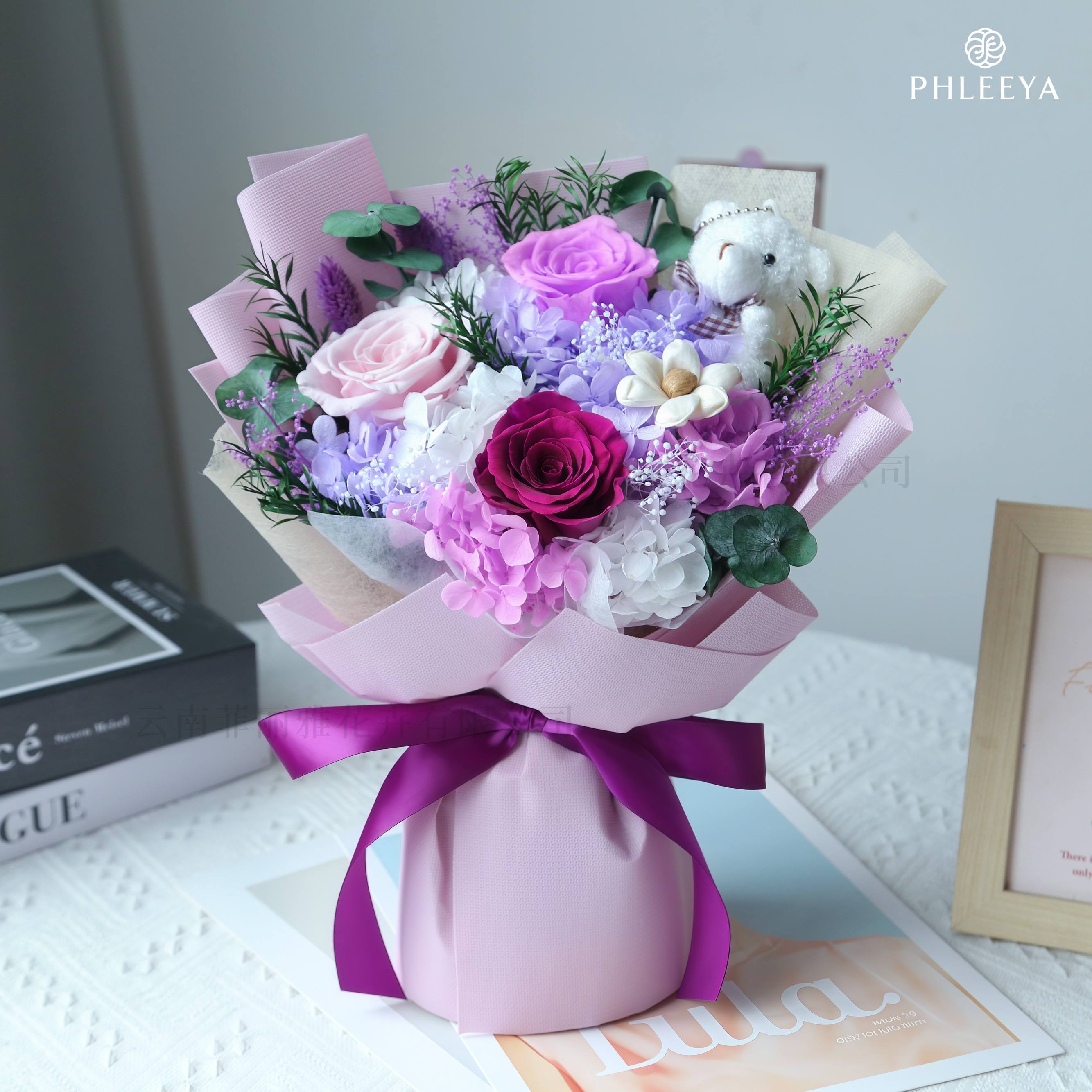
When preserved blooms, grasses, and seed pods share the same frame, texture becomes the real subject. Start with a loose base of airy grasses—bunny tails, pampas, or oat stems—so the arrangement doesn't sit flat. Press dried seed pods into the gaps, letting their woody ridges and papery edges catch the light. Then work in preserved blooms like strawflowers or globe amaranth, placing some deep within the layers and leaving others to rest on the surface. The goal is not symmetry but a controlled tangle where every angle offers a different combination of soft, brittle, fluffy, and firm.
A practical trick is to build in three passes: first the structural seed pods and heavier stems, second the grasses that thread between them, third the blooms that punctuate rather than dominate. Rotate the piece as you go—shadows shift, and a pod that looked flat from the front may suddenly reveal a hollow center or a curled rim. If the layers begin to feel noisy, pull back one element and let the remaining materials breathe. Texture overload works best when the eye can still travel in short stops: a burst of petals here, a spike of grass there, a seed pod tucked sideways like a secret.
Color That Won't Quit: Picking a Palette for Long-Lasting Impact
Most palettes fail not because the colors are ugly, but because they were chosen for a single fleeting moment. A shade that feels electric under showroom lights can turn muddy by late afternoon, and a trendy pairing that photographs well can feel exhausting after three months of daily exposure. Long-lasting impact comes from testing hues across different hours and finishes—what survives morning glare, evening lamplight, and your own shifting mood is worth keeping.
Durable palettes tend to lean on a base of near-neutrals: warm greys, soft clay, deep olives, or weathered blues. These tones don't demand attention, yet they hold a room together when brighter accents fade or fall out of favor. Instead of chasing the color of the year, pull one or two saturated accents from something permanent in the space—a vein in a stone countertop, the rust on a vintage fixture, the underside of a favorite ceramic. That anchor keeps the scheme grounded long after the trend cycle moves on.
There is also a quiet case for monotony. Limiting a palette to three closely related values can feel more alive than a rainbow of contrast, because it lets texture and light do the work. Paint large swatches on foam board rather than directly on the wall, move them around the room for a week, and note which one you stop noticing in a good way. The color that quits is usually the one you never had to talk yourself into.
The Vessel Matters: Chunky Ceramics, Aged Metals, and Found Objects
There's a quiet honesty in objects that show their weight and wear. Chunky ceramics with uneven glazes, metals that have tarnished and dulled over decades, and random bits picked up from a beach or a flea market—these pieces carry a sense of time that new, mass-produced items simply can't fake. They ground a room, adding a layer of texture that feels both tactile and personal.
Thick-walled stoneware crocks, once used for fermenting or storing grain, now hold unruly branches or clusters of dried seed heads. Their heavy bases and imperfect rims make each arrangement feel anchored and unforced. Meanwhile, aged brass or copper vessels—perhaps an old watering can or a dented bucket—bring a muted glow that shifts with the light. And then there are the found objects: a rusted gear, a smooth piece of driftwood, a chipped enamel bowl. They don't need to be functional; they just need to sit there, telling a story you can almost hear.
What draws us to these materials is their refusal to be perfect. In a world of smooth plastics and predictable finishes, a chunky ceramic or a weathered metal container interrupts the expected. It asks us to slow down, to notice the thumbprint left by a potter, the green patina that only years of rain can create. Arranging a few of these vessels on a shelf or table isn't just decorating—it's building a small archive of resilience and memory.
Sculptural Shapes: Asymmetry and Movement in a Static Arrangement
A static arrangement doesn't have to sit still. When sculptural forms lean into asymmetry, the eye begins to trace invisible paths across negative space, discovering a quiet momentum that linear symmetry rarely invites. One side might pull low and heavy, the other rising sharply, as if mid-gesture. This deliberate imbalance gives the composition a held breath—a sense that something has just happened or is about to.
Movement emerges not from actual motion, but from the tension between volumes. A cantilevered curve, a shifted axis, an unexpected weight distribution—these choices force the viewer to physically or mentally circle the piece, renegotiating balance from every angle. The static becomes kinetic through perception alone. What appears stable from the front may reveal a dramatic sweep when viewed slightly off-center.
In practice, asymmetry works best when it feels inevitable rather than arbitrary. A single off-center focal point can anchor the entire composition, while smaller counterweights—a tucked fold, a tilted base—respond to that primary gesture. The result is not disorder, but a more natural order: one that mirrors the way bodies stand, trees grow, and rivers bend. Static only in name, these arrangements pulse with the energy of unresolved equilibrium.
Set It and Forget It: Preserved Flower Care That Actually Works
The whole point of preserved flowers is that they don't ask for much. Once you've placed them in a dry spot away from direct sun—think a shelf, a desk corner, or a bedroom dresser—you can genuinely stop fussing. No water changes, no misting, no trimming dead leaves. The biggest mistake people make is treating them like fresh stems; preserved blooms have already been through a stabilization process, and adding moisture only breaks down that process faster.
If you want to go one step further, a quick dust-off every few weeks keeps them looking their best. Use a soft makeup brush, a can of compressed air, or a hairdryer on the cool, low setting. Just keep them out of bathrooms, laundry rooms, and anywhere steam builds up. Preserved flowers hate humidity and direct heat, so that sunny windowsill or radiator shelf is not your friend—pick a stable, room-temperature spot and leave them there.
That's really all there is to it. The less you handle preserved flowers, the longer they hold their shape and color. If a few petals shift or soften over time, that's normal—they're real botanicals, not plastic. Let them live quietly in a stable environment, and they'll stay presentable for months, often years. The best care routine is the one you never have to think about.
FAQ
It usually comes down to scale and texture. Use larger focal blooms like preserved garden roses or king protea, then pack the base with full grasses, eucalyptus pods, or preserved hydrangea heads. The arrangement should feel dense from every angle, not just pretty from the front.
Look for deep-toned blooms like preserved burgundy roses, navy thistles, burnt orange carnations, or dyed eucalyptus. They keep their color saturation well and give the arrangement a moody, intentional feel.
Build in layers. Start with a generous base of preserved foliage like ruscus or fern, then add medium filler blooms, and finish with a few statement stems. Keep the stems cut at different lengths so the bouquet has a rounded, almost overgrown silhouette.
They'll last longest away from harsh sun, but an occasional hour or two won't ruin them. If the table gets strong afternoon light, choose darker preserved flowers or use a low vase that can be moved easily.
Try burnt sienna, dusty rose, and deep emerald. Or go monochrome with different shades of plum and mauve. Avoid pastel rainbows and stick to two or three saturated tones plus one neutral foliage.
Yes. Preserved hydrangeas, globe amaranth, pampas grass, and lotus pods have a lot of visual weight. They fill space fast and make the arrangement look intentional without needing dozens of stems.
Dust it gently with a soft brush or cool blow dryer every few weeks. Keep it out of bathrooms and away from air vents. If a stem gets bent, you can steam it lightly and reshape it with your fingers.
Absolutely. Dried grasses and seed heads add a wispy, wild edge, while preserved blooms keep the color and softness. The contrast makes the bouquet feel more natural and less like a craft project.
Conclusion
A bold, long-lasting centerpiece demands more than a few stems in a skinny vase. The first rule is scale: go oversized with preserved blooms, letting their natural forms spill outward and claim the table. Layer in unexpected textures—wispy grasses, papery seed pods, and velvet-like petals—so the eye keeps discovering new details. Color should be assertive but not garish; think deep burgundy, burnt orange, or muted terracotta that won't fade over time. The vessel itself is half the story. A chunky ceramic urn, a weathered metal trough, or even a found object like an old wooden crate grounds the arrangement with weight and character. Avoid perfect symmetry. Let one side dip lower, let a single dramatic stem break the top line—imperfection feels alive and less like a hotel lobby standard.
The real advantage of preserved flowers is the set-it-and-forget-it reality. No water, no wilting, no urgent petal cleanup. That means you can create a sculptural, almost architectural statement that stays put for months or even years. To make it feel curated rather than store-bought, vary the bloom sizes within the same palette and tuck small clusters of dried seed heads into the gaps where fresh flowers would normally drop. This isn't just a bouquet; it's a permanent design element. And because preserved stems are so forgiving, you can experiment with asymmetry and height without worrying about maintenance. The result is a centerpiece that reads as intentional, dramatic, and refreshingly unfussy—a bold fixture that earns its place at the table every single day.
Contact Us
Contact Person: Mr. Luo
Email: [email protected]
Tel/WhatsApp: 86 18100895505
Website: https://www.feiliyaflowers.com/en/