

Stainless Steel Hex Bolts Supplier: What to Consider Before Placing an Order
2026-10-05
Ordering stainless steel hex bolts might seem straightforward—until a shipment arrives with questionable threading or off-spec dimensions. Before you commit to a supplier, a few critical checks can save you from costly rework. From material grades to surface finish, here's what to look for in a partner you can trust. That's where Wanluo comes in, but let's first walk through the essentials.
Match the Alloy to the Application, Not Just the Price
Choosing an alloy based solely on cost per kilogram often leads to premature failures, increased scrap rates, and unplanned downtime. A cheaper material might survive a short trial run, but real-world conditions—thermal cycling, corrosive exposure, mechanical stress—quickly expose mismatches. The real question isn't what the alloy costs today, but what it will cost over the full life of the component, including maintenance, rejects, and lost production.
Each application has its own fingerprint of demands. A marine fastener needs resistance to chloride pitting, while a high-temperature furnace fixture must retain strength under creep. An aerospace bracket may prioritize fatigue life over ultimate tensile strength. By starting with the specific failure modes and operating environment, you can narrow the alloy field to those whose microstructures and compositions align with those stresses. Price then becomes a secondary filter—one that only applies among technically viable candidates.
This approach doesn't mean ignoring budget. It means avoiding false economies. A slightly more expensive duplex stainless might outlast three replacements of a standard 304 in a chloride-rich setting, reducing total cost of ownership by 40%. Similarly, a heat-treated 17-4PH could replace a premium nickel alloy in a moderate wear and corrosion scenario, saving 30% without sacrificing performance. Matching the alloy to the application, then negotiating price on that matched material, turns metallurgy into a competitive advantage rather than a gamble.
Certification and Traceability: Ask Before You Trust
Certification often feels like a stamp of approval, but the real question is what sits behind it. A label or badge can be printed in seconds; traceability requires someone to actually follow the thread from source to shelf. Before you place trust in any claim, ask how the certification was earned, who verified it, and whether the path from raw material to finished product is open for inspection.
Traceability is not the same as transparency. A company can publish a polished origin story while keeping its supply chain hidden behind trade secrets or vague assurances. Demand the specifics: batch numbers, audit dates, the names of certifying bodies, and the actual farms or factories involved. If a brand hesitates to share those details, that hesitation is itself a form of information.
Trust should be earned through evidence, not vibes. When you encounter a certification mark, treat it as a starting point for your own verification. Cross-check the certifier’s standards, look for third-party audits, and see if independent reports back up the claim. In a market flooded with greenwashing and empty promises, the habit of asking before trusting is your most reliable defense.
Tolerances and Thread Fit: The Overlooked Dealbreakers
Anyone who has spent time swapping fasteners on a motorcycle, bicycle, or piece of industrial machinery knows the frustration of a thread that almost fits. It starts easily, then binds halfway down. You back it out, try again, maybe add a little oil, and suddenly the hex corners start to round. In that moment, tolerances are no longer an abstract spec on a drawing—they are the difference between finishing the job and ordering a replacement part.
Thread fit is often described only by class, such as 2A/2B or 3A/3B, but those designations hide the real story. The actual pitch diameter, lead error, and flank angle all interact to determine whether a connection feels crisp or sloppy. A bolt that meets the maximum material condition might assemble with zero play, while one at the minimum material condition could wobble under vibration, even if both are technically within the same tolerance band. For applications that experience thermal cycling or dynamic loads, that small difference can lead to loosening, galling, or fatigue failure over time.
The problem is that most buyers never check thread fit until something fails. They assume a bolt is a bolt, largely because suppliers rarely publish detailed thread data and most assembly processes rely on torque alone to validate the joint. But torque is a poor proxy for thread engagement—it is heavily influenced by friction, plating, and lubrication. A far better approach is to measure thread form directly, using go/no-go gages at minimum, and ideally with a thread micrometer or coordinate measuring machine for critical fasteners. Only then can you be sure that the threads you paid for are the threads you got.
Corrosion Resistance Goes Beyond the Surface Finish
A mirror-smooth surface can still trap chlorides in micro pits that polishing never reached. What actually stops rust is often a stable oxide layer that reforms faster than the environment can attack it, and that depends on alloy chemistry, heat treatment, and even the direction of final machining.
Hidden stress from aggressive grinding or laser cutting can create tiny galvanic cells beneath the visible finish. Parts that look identical on the outside may fail at very different rates because their subsurface grain boundaries or inclusion patterns are not the same. That is why real corrosion testing should measure pitting potential and crevice behavior, not just gloss or roughness values.
Supplier Inventory Claims Need a Reality Check
Suppliers often paint a rosier picture of their stock levels than what the warehouse floor actually shows. A promised 5,000 units ready to ship can shrink to a few hundred once the order hits the system, leaving procurement teams scrambling for alternatives. This gap between claimed availability and physical reality isn't just an inconvenience—it's a recurring source of production delays and inflated safety stock buffers.
The reasons behind these inflated claims vary widely. Some suppliers rely on outdated inventory records that fail to account for damaged goods, reserved lots, or items still in transit from their own upstream vendors. Others intentionally overstate stock to lock in contracts, knowing that a buyer may not discover the shortfall until it's too late to switch sources. Manual data entry and siloed ERP systems make the problem worse, as no single party sees the full picture in real time.
A practical response is to stop taking supplier inventory statements at face value and instead build verification into the sourcing workflow. Request live inventory feeds or at least weekly snapshots with lot-level detail. For critical components, conduct random on-site audits or use third-party inspection services before committing to volume orders. Buyers who treat stock claims as hypotheses to be tested rather than facts to be accepted will save themselves from costly surprises down the line.
Low Quotes Often Hide Long-Term Failure Costs
A suspiciously cheap estimate rarely reflects what you'll actually spend once the work begins. The initial figure might cover only the surface, leaving out essentials like reinforcement, waterproofing, or proper drainage. You won't see those gaps until cracks appear or water starts pooling in places it shouldn't.
What feels like a smart saving early on often turns into repeated callbacks, patched repairs, and eventually a full redo that costs more than the higher bid would have in the first place. The real price isn't in the quote—it's in the years after, when low-grade materials and rushed labor start demanding attention.
Experienced clients learn to read between the line items. A quote that leaves no room for contingencies, permits, or quality control is not a bargain; it's a deferred bill. The lowest number on paper can quietly become the most expensive decision you make.
FAQ
Not all stainless grades behave the same outdoors. 304 works for general use, but 316 handles salt spray and chemical exposure much better. Ask which grade they stock and request documentation if the bolts will go into a demanding environment.
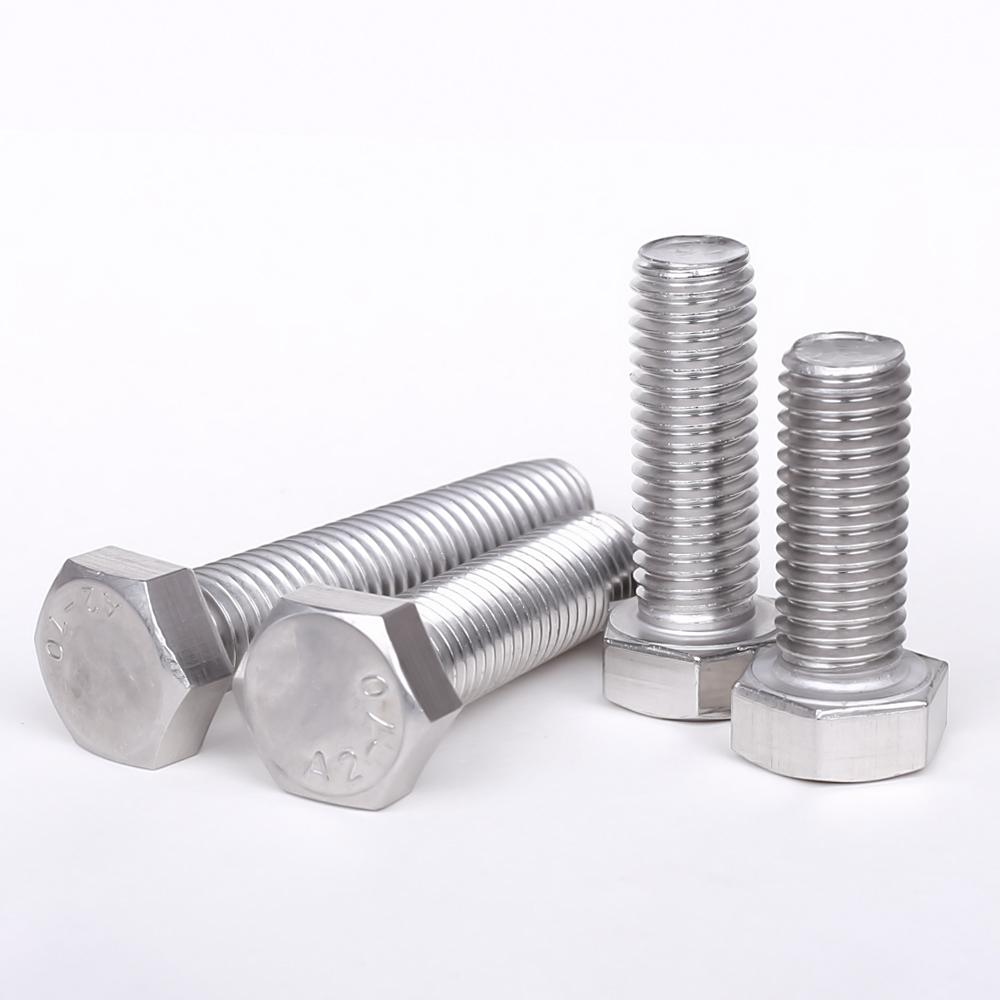
Look for a stated strength class or property marking on the bolt head. A good supplier should be able to give you tensile and yield figures, or share test certificates for the batch. If they only say "strong enough," keep looking.
Lock down diameter, thread pitch, length, and head dimensions. A thread pitch mismatch can ruin assembly even if the diameter looks right. Ask which standard they follow—DIN, ISO, or ASME—and get a drawing or spec sheet if tolerances are tight.
Ask whether they check thread fit, dimensions, and surface finish on incoming material and finished bolts. A supplier who can walk you through their inspection process and offer material traceability is usually more reliable than one focused only on price.
Talk about current stock levels and typical lead times before you place the order. Ask if they keep common sizes in inventory and whether they can ramp up if your project grows. A dependable supplier will give clear answers, not just "no problem."
Stainless already resists corrosion, but a passivated or polished finish can improve appearance and remove surface contaminants. Ask which finishes they offer and whether they're compatible with stainless to avoid galling or discoloration.
It's usually wise. A few sample bolts let you check thread engagement, finish, and dimensions without risking a large shipment. If a supplier won't provide samples, treat that as a caution sign unless you already have a trusted history.
Bolts can arrive scratched or with damaged threads if packed loosely. Ask how they separate sizes, whether boxes are reinforced, and if they use rust-inhibiting packing when needed. Proper packing saves you from sorting through damaged inventory later.
Conclusion
Ordering stainless steel hex bolts without digging into the supplier’s actual capabilities is how projects quietly derail. The first thing worth questioning is whether the alloy truly matches the exposure it will face—304 might look fine on paper, but chloride-rich environments can punish it within a season, and chasing the lowest per-piece price often means paying twice when replacements show up early. Certifications only matter if they trace back to the heat lot and the mill, not just a generic PDF. Ask to see the chain before you trust the badge. Tolerances are another quiet killer: a bolt that binds halfway or needs excessive torque isn’t a minor annoyance; it signals inconsistent thread rolling or out-of-spec shank diameters.
Corrosion resistance runs deeper than a polished surface. Passivation quality, carbide precipitation in welded zones, and even how the supplier stores material can undo the best alloy choice. When a supplier claims deep inventory, ask what that actually means—many keep only popular diameters and backfill the rest with long lead times or substitute grades. Low quotes deserve the same scrutiny. A fastener that fails from stress corrosion cracking or galling inside a critical assembly can dwarf the savings in downtime, rework, or liability. The sane approach is to treat the supplier as a partner who can prove metallurgy, dimensional control, and lot traceability before the order ships, not after the first seized bolt stops the line.
Contact Us
Contact Person: Shane
Email: [email protected]
Tel/WhatsApp: 8613357785029
Website: https://www.wanluohardware.com