

Stainless Steel Ball Valve Factory: How Premium Manufacturers Ensure Corrosion Resistance and Long Service Life
2026-11-22
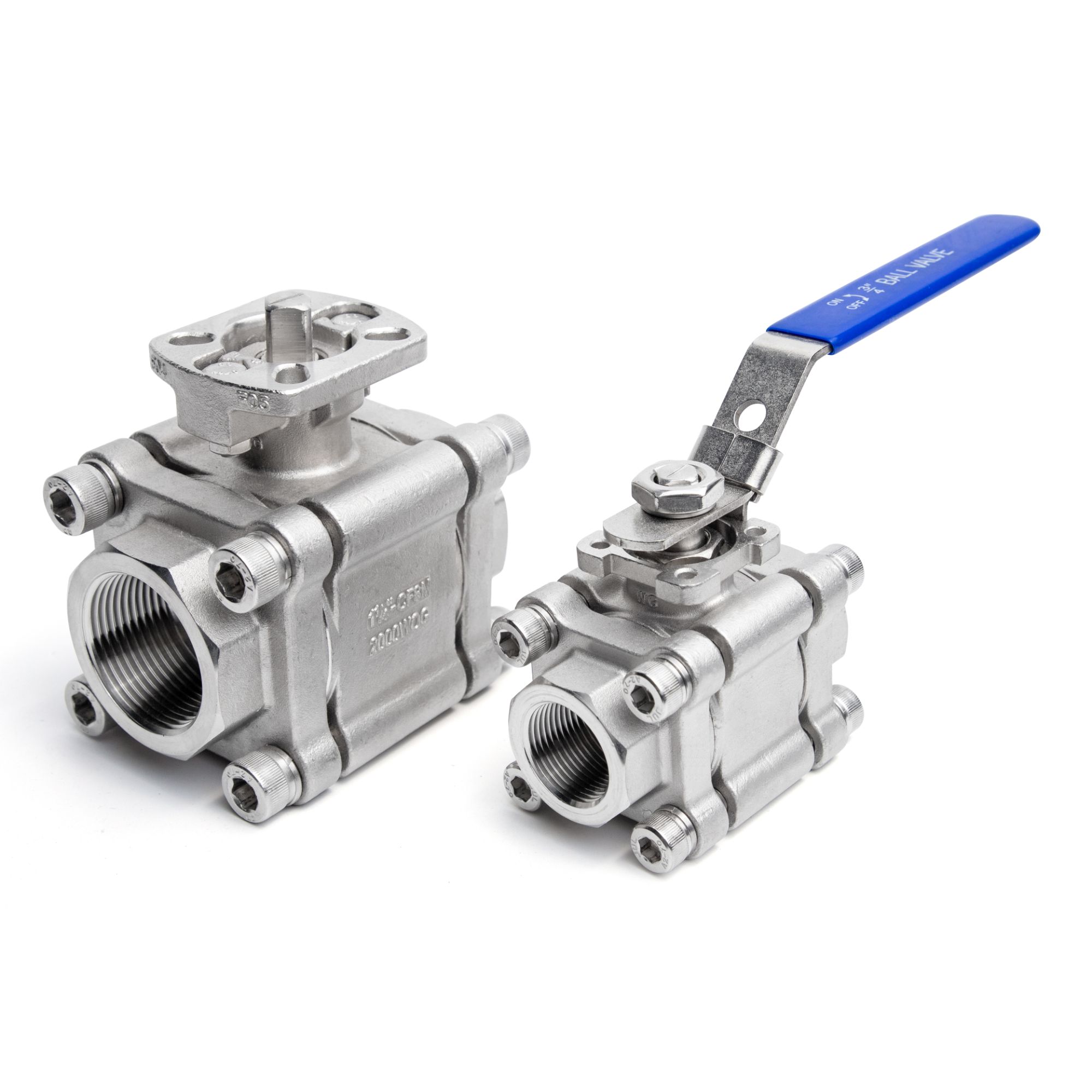
Stainless steel sounds like a simple material choice, but inside a ball valve it has to do much more than resist red rust. Pitting, crevice corrosion, galling, and aggressive process media can quietly shorten service life long before any visible failure. That is why premium manufacturers treat corrosion resistance as a manufacturing discipline, not just a raw material specification. UPTAI, for example, has engineered its stainless steel ball valve production around tighter material traceability, cleaner machining, and controlled finishing—details that directly extend valve life in demanding applications. Here’s a closer look at what actually separates a long-service valve from a short-lived one.
What Premium Valve Shops Look for in 316 and 316L Chemistry
What Premium Valve Shops Look for in 316 and 316L ChemistryHow Controlled Passivation Removes Surface Iron Before Assembly
Most free iron left on stainless surfaces comes from ordinary shop handling: steel wire brushes, forming dies, cutting tools, and even nearby grinding dust. Once a part is rinsed and dried, that iron sits on the surface and starts to corrode in service, often showing up as small rust blooms days or weeks after assembly. Passivation removes this layer before it becomes a failure point, provided the bath is matched to the alloy and the surface is clean enough for the acid to reach the contamination.
Controlled passivation works by using an acid system, usually citric or nitric, to dissolve embedded iron and sulfides while leaving the underlying chromium intact. The chromium then reacts with air or rinse water to rebuild a thin, protective oxide film. The word controlled matters here: time, temperature, concentration, and agitation are held within narrow ranges so the acid removes surface iron without etching dimensional tolerances or attacking sensitized grain boundaries.
Doing this before assembly avoids the real headache of trying to treat crevices, threads, and blind holes after parts are already joined. A quick verification step, such as a ferroxyl test on a cleaned coupon or a representative part, can confirm that free iron is gone before the parts move to the assembly bench. Skipping that check or leaving the passivation until after welding and bolting usually means hidden contamination stays trapped in the joint.
Why Tight Ball and Seat Alignment Keeps Corrosion Out of Leak Paths
Corrosion rarely starts across the full contact face of a ball and seat. It gets established in the microscopic discontinuities where alignment is slightly off. When the ball does not sit concentrically against the seat ring, contact pressure becomes uneven and narrow gaps begin to form. Those gaps offer a stagnant zone where chlorides, moisture, or process acids can collect and trigger crevice corrosion. A tight alignment closes those micro-channels early, forcing the sealing load to spread evenly instead of concentrating in a few high spots.
Close-tolerance alignment also keeps the ball from lifting an edge of the seat during rotation. Even a small angular offset can create a wedge-shaped opening that retains fluid after the valve is closed. Over time that trapped volume becomes oxygen-depleted and chemically aggressive, attacking the base material rather than the protective oxide layer. With the ball and seat held concentric, the contact band stays continuous around the circumference, leaving no low-pressure pocket where a corrosion cell can stabilize.
The benefit is most obvious after maintenance. If a rebuilt valve is assembled without restoring the original ball-to-seat alignment, a new seal can start leaking within weeks, not because the parts are worn but because the geometry concentrates stress unevenly. Tight alignment is therefore less about applying more torque and more about preserving a uniform sealing line that denies corrosion a place to initiate.
Seal Compounds Selected for Chemical Resistance, Not Just Pressure Ratings
A seal that holds pressure on a test bench can still fail within weeks once it meets an aggressive fluid stream. Pressure ratings tell you how much mechanical load the hardware can tolerate, but they say nothing about what happens when an elastomer absorbs esters, swells in hot transmission oil, or turns brittle after repeated exposure to caustic cleaners. For critical wetted services, the selection process has to start with the chemical environment: base fluid, additives, cleaning agents, and any potential contaminants that might flash through the line.
Choosing a compound strictly by its durometer, tensile strength, or pressure class misses the degradation mechanisms that cause most seal removals. A nitrile element might handle petroleum oil at room temperature but harden rapidly near aggressive oxidation byproducts; fluorocarbon can manage many acids yet lose performance in low-temperature ketones or amines. Mapping the seal material to the full chemical profile—not just the primary process fluid—prevents the kind of failure that looks fine on a drawing and then leaks after two clean-in-place cycles.
The practical difference shows up in service life, not in the initial pressure test. Compounds that resist volume swell, extraction, and surface cracking keep their lip contact and gland fill longer, which directly reduces fugitive emissions and unplanned maintenance. That only happens when the material choice is driven by chemical compatibility data and field experience under actual exposure conditions, rather than a catalog pressure number.
Salt Fog and Thermal Cycling Tests That Reveal Weak Valves Early
A salt fog chamber does not just spray mist at a valve; it finds every pore, scratch, and poorly seated seal. Corrosion often begins where the stem meets the packing or where a coating was nicked during assembly. Once chlorides settle into those crevices, the resulting oxide buildup changes stem friction and can push opening torque well past the design limit. The real failure is rarely the rust itself. It is the slow shift in sealing geometry that lets a valve pass fluid when it should be closed.
Thermal cycling adds a different kind of damage. Repeated expansion and contraction works the seat against the ball or plug, gradually shaving away the interference fit that keeps a tight shutoff. A valve that holds pressure at room temperature can start weeping after a few hundred cycles between cold soak and hot ramp. When salt fog is alternated with thermal shock, the test becomes far less forgiving: brine wicks into micro-cracks opened by thermal stress, then crystallizes and wedges them wider. Weak valves tend to declare themselves early through torque drift, visible seepage, or erratic operation, long before they would fail in a single-condition bench test.
Heat Number Traceability From Bar Stock Through Final Inspection
Every bar of incoming raw material carries a unique heat number that links back to the original melt and pour records. Once the stock reaches the receiving dock, that identifier is logged against the purchase order and physically verified before the material is racked. From there, the heat number moves through saw cutting, machining, and any secondary operations as a traveling companion to the work order, so a part cannot advance to the next step unless the heat number matches the lot being processed.
On the shop floor, operators stamp or tag each piece with the heat number after the first cut, and the same marking survives deburring, heat treating, and surface finishing. If a bar is split into multiple blanks, those blanks inherit the parent heat number and gain a sequential sub-lot code for tighter resolution. This approach keeps mixed-stock scenarios from drifting into a gray area, especially when two heats of the same alloy sit side by side at a workstation.
At final inspection, the inspector records the heat number against dimensional results, mechanical test reports, and any non-destructive evaluation data before the parts are cleared for shipment. Should a material discrepancy or field failure surface later, the team can trace every affected component back to the exact bar, heat, and supplier certificate without reopening the entire lot. That closed loop from receiving to final release is what makes the traceability chain defensible during audits and customer source inspections.
FAQ
The grade is only a starting point. Serious manufacturers avoid carbon steel tooling, control heat treatment to prevent chromium carbide precipitation, and passivate to ASTM A967. They also verify every heat with PMI and switch to 316L or duplex when chlorides are high. Cheap valves often leave free iron or a damaged surface that starts pitting quickly.
Look for full heat traceability, not just a material certificate. A premium factory records the charge number, chemical analysis, heat treatment curve, machining parameters, passivation batch, and test results for each valve. That creates a chain from raw bar or casting to the finished unit, so if a problem ever appears you can trace the root cause instead of guessing.
More than most buyers expect. A ball with poor roundness or a misaligned seat creates uneven loading, high torque, and tiny crevices where chloride solutions can stagnate. Premium factories hold tight roundness and alignment tolerances and polish sealing surfaces to a low Ra value. That reduces wear and removes the micro-crevices that often start crevice corrosion.
Water and air tests are baseline. A serious factory adds PMI, ferrite measurement for castings, intergranular corrosion testing when specified, helium leak testing for critical seats, and salt spray verification for coatings. They also cycle the valve under pressure and record torque values. The key is data, not just a pass/fail stamp, so you can see whether performance is stable over repeated cycles.
Passivation only removes free iron and restores a clean passive layer. If the base material has inclusions, carbide precipitation, or deep scratches from carbon steel tools, passivation cannot fix that. The valve has to be clean before passivation. Premium factories control cutting tools, handling, and cleaning before the chemical treatment, and they verify the result with humidity or copper sulfate testing.
They look at chloride concentration, temperature, pH, and crevice conditions rather than defaulting to 316. A useful calculation is the pitting resistance equivalent number. Above certain chloride levels or temperatures, duplex or super austenitic grades become necessary, and the seats and stem materials also have to match. The factory should ask about the real process conditions and be willing to recommend the lower-cost option only when it genuinely fits.
A blowout-proof stem, live-loaded packing, and a pressure-relieving seat design are practical starting points. The seat material should be selected for the chemical and thermal range, not just the body. Premium factories also control stem finish and use proper clearances to avoid galling. Those details keep torque stable and prevent small leaks from becoming failures.
They should provide installation torque limits, spare seat and seal kits, and clear maintenance instructions. Many also offer re-certification, refurbishment, or torque diagnostics for critical services. The goal is to keep the valve serviceable rather than forcing a full replacement at the first leak, which extends the real working life of the installation.
Conclusion
In a premium stainless steel ball valve plant, the difference starts long before machining. A 316 or 316L designation is not accepted at face value; the melt chemistry is checked for chromium, nickel, molybdenum, and especially carbon, because the low-carbon 316L grade resists intergranular attack after welding or high-temperature exposure much better than standard 316. But chemistry alone does not prevent corrosion. Controlled passivation is the next gate: machined parts are treated in heated citric or nitric acid baths to strip away free iron and tool smears that would otherwise rust on the surface. Shops that skip this step leave valves vulnerable even when the raw alloy is perfect. Beyond the metal itself, the ball and seat are lapped and matched to very tight geometric tolerances, so there are no uneven gaps or micro-crevices where chloride-bearing fluids can stagnate and start crevice corrosion. That alignment work is what keeps the closed valve from developing leak paths over years of cycling.
Seal selection is another area where premium manufacturers go beyond catalog ratings. Instead of matching a seal only to the valve's pressure class, they consider the actual chemicals, solvents, acids, or steam the valve will see, choosing PTFE, RPTFE, PEEK, or FKM based on compatibility and temperature range. A seal that holds pressure but swells or embrittles in service is a future failure. To catch weak designs early, finished valves are put through salt fog exposure and repeated thermal cycling from cold to hot, which stresses the body, seats, and seals in ways a simple hydrostatic test cannot. Valves that leak or show seal degradation are pulled before they ship. Finally, heat number traceability follows every batch from bar stock through machining, assembly, and final inspection, so if a particular mill heat ever shows an issue, the plant can isolate exactly which valves were built from it. That level of control is rare in commodity production, but it is what makes long service life repeatable rather than accidental.
Contact Us
Contact Person: Adonis
Email: [email protected]
Tel/WhatsApp: 8615858822657
Website: https://www.uptaivalve.com