

Silicon Carbide Ceramic Exporter Guide: What Global Buyers Need to Know
2026-10-02
Most silicon carbide ceramic buyers learn the hard way that a low quote can cost more in the long run. HUAYI TECH put together this exporter guide to spare you those expensive surprises—covering the specs, certifications, and red flags that global buyers often overlook until it's too late.
Why Silicon Carbide Outperforms Standard Ceramics in High-Stress Environments
Silicon carbide earns its keep in places where ordinary ceramics crack, spall, or simply lose shape. The difference starts with thermal conductivity: it moves heat away from hot spots roughly three to four times faster than alumina or zirconia. That alone prevents the kind of localized expansion that turns a fine crack into a sudden failure. Add a low coefficient of thermal expansion, and the material shrugs off rapid temperature swings that would send most oxide ceramics into thermal shock.
Under mechanical load, the gap widens. Silicon carbide retains its hardness and flexural strength at temperatures where standard ceramics begin to soften or creep. In high-speed seals, blast nozzles, and pump bearings, this translates into less wear, tighter tolerances, and fewer unplanned shutdowns. It also resists attack from acids, alkalis, and molten metals far better than typical clay-based or alumina bodies, which means one material can replace several in a demanding environment.
Reading Between the Lines of a Mill Test Report: Density, Hardness, and Grain Structure
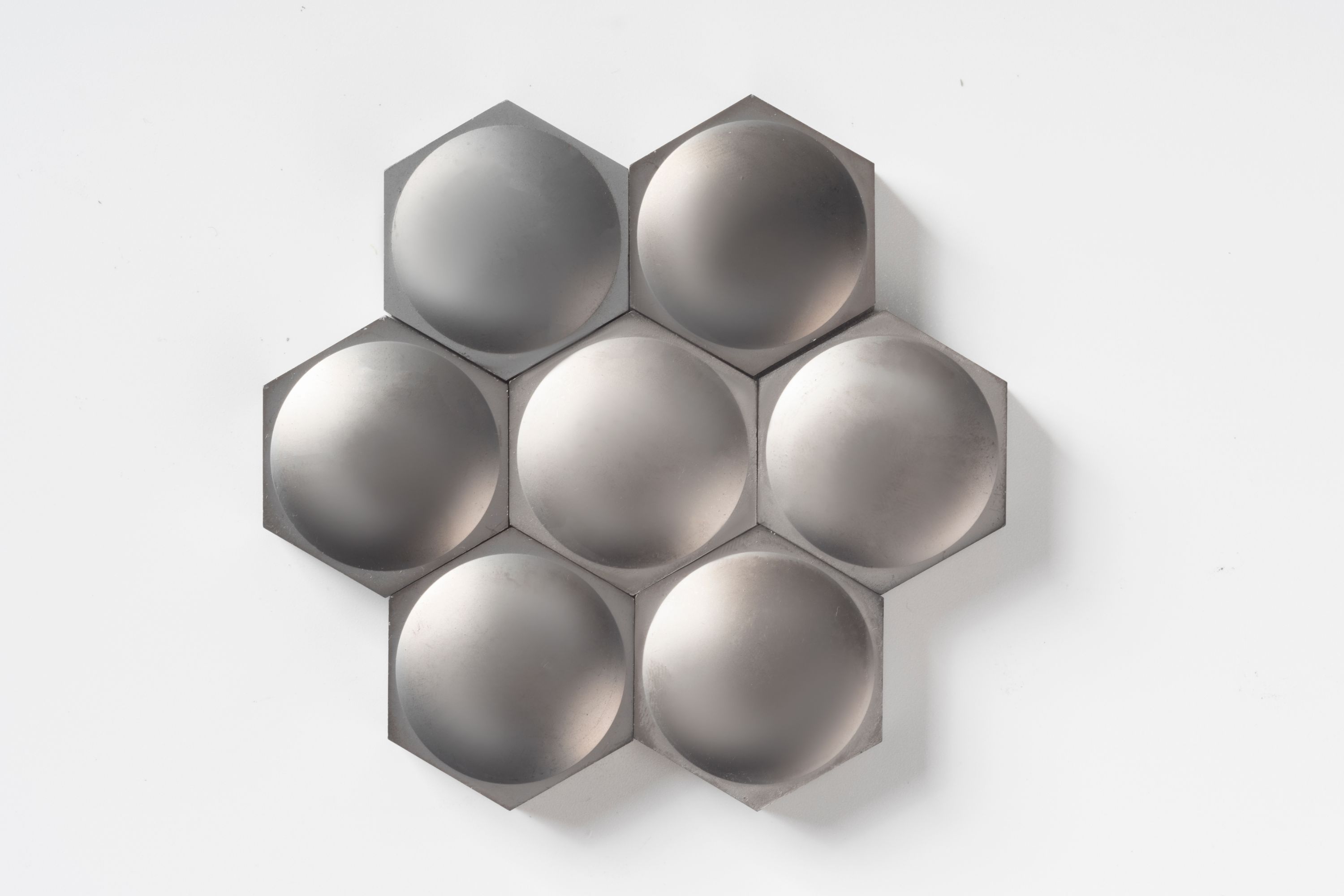
A mill test report often reads like a checklist of chemical percentages and tensile numbers, but the real story lives in three physical details that don't always get a second glance: density, hardness, and grain structure. Density is not just a material property; it can expose porosity, improper alloying, or even a mix-up at the mill if the reported value drifts from the expected range for the specified grade. Hardness readings, whether Rockwell, Brinell, or Vickers, give a quick snapshot of how the material will respond to machining, forming, or heat treatment, and a spot check against the certified range can flag under- or over-tempering long before a part fails.
Grain structure is where things get more subtle. A coarse grain might point to excessive heat during processing or a skipped normalization step, while an unusually fine grain could mean the material was cold-worked more aggressively than the spec allows. Neither condition will show up as a red flag in a standard tensile test, but both can shorten fatigue life or cause distortion during subsequent heat treating. That is why experienced buyers and engineers compare the reported grain size number against the process route, not just against the minimum requirement.
Reading these values together matters more than checking them in isolation. A high hardness with a normal density and fine grain might simply indicate a higher-carbon heat, but the same hardness paired with low density and an uneven grain distribution suggests porosity or segregation. The mill test report will not always spell out these interactions; it is up to the person reading it to connect the dots. When density, hardness, and grain structure line up with the expected processing history, the material is far more likely to perform as designed; when they do not, that is the time to ask for a deeper look.
The Most Overlooked Defects in Reaction-Bonded vs Sintered Silicon Carbide
In reaction-bonded silicon carbide, the most frequently missed defect is not the presence of residual silicon itself, but its uneven distribution after infiltration. Small pockets of unreacted silicon can remain trapped in thick sections or near sharp corners, and these pockets expand at different rates from the surrounding SiC during heating. Over repeated thermal cycles, this mismatch creates microcracks that originate below the surface, making them invisible to normal visual inspection and even to standard density tests.
Sintered silicon carbide has a different but equally subtle weak point. During green body compaction, localized density variations can survive the sintering process, especially in parts with variable wall thickness or complex geometries. These low-density regions act as preferential paths for crack propagation under mechanical load, yet they rarely show up as significant differences in overall bulk density. In some lots, abnormal grain growth produces individual elongated grains that generate internal stress concentrations far below the surface, leading to unexpected fracture at loads well under the published strength values.
For both materials, the true danger lies in microstructural discontinuities at phase boundaries. In reaction-bonded SiC, the interface between alpha SiC and residual silicon can develop weak bonding if the infiltration front advances unevenly. In sintered SiC, boundaries between alpha and beta polytypes or around trace sintering aids can become sites for slow crack growth under sustained stress. These defects are routinely overlooked because standard flexural tests average out local weaknesses, and polished cross-sections often miss the three-dimensional connectivity of the flawed regions.
How to Map the Real Cost of Imported SiC Components Beyond the Invoice
The invoice price of an imported silicon carbide component is only the tip of the cost iceberg. Duties, freight, insurance, and customs brokerage fees are obvious, but many teams stop there. Hidden charges like port storage demurrage, inland trucking from the bonded warehouse, or currency conversion spreads can quietly erode margins long after the purchase order is closed. You need to pull the actual cost-to-serve from your freight forwarder's itemized statements, not the estimated landing cost spreadsheet.
One reliable way to map the real cost is to trace each shipment's journey and attach every third-party invoice to a single reference number. Build a line-item register that includes VAT or GST paid at entry, any anti-dumping or countervailing duty specific to SiC substrates or coated parts, and even the time lost waiting for customs clearance when documentation wasn't perfect. Compare that register against the original quote. The gap between what finance approved and what actually left the bank account is your true cost of import.
Don't forget the softer costs that rarely show up on a freight bill. Reworking a shipment because the country of origin marking was missing, or paying expedited fees to a broker after a tariff code was misclassified, adds real money and delay. A monthly audit of all import-related expenses, grouped by supplier and HS code, gives you a clear picture of which SiC components are genuinely profitable and which ones are quietly subsidizing their own logistics.
Custom Machining Tolerances: What Exporters Assume You Already Know
Exporters rarely spell out what “tolerance” means on a quote—they assume you already know that dimensions without a specific callout follow the general tolerance block, while boxed or individually flagged dimensions are the ones that actually drive cost and lead time. If you’re not familiar with ISO 2768 or GB/T 1804, you may only discover after delivery that a critical mating surface was machined to a loose fit because nobody asked.
Another unspoken assumption is that you understand how material choice changes what’s realistic. A ±0.01 mm tolerance on aluminum is routine, but the same number on PEEK or a thin-walled stainless part can double the scrap rate and price. Exporters won’t normally remind you to check the coefficient of thermal expansion before marking up a drawing—yet a part that passes inspection at room temperature may fail at the customer’s site because of a few degrees of temperature swing.
They also expect you to provide complete callouts: datums, position, and profile, not just an isolated linear tolerance. A geometric tolerance without a datum has no real constraint, so the shop is left to interpret your intent. When the parts come back wrong, the argument is usually not about machine capability but about a drawing that never said what it needed to say.
Preparing for Customs and End-Use Audits Without Delays
Getting ahead of customs and end-use audits means having your records in order long before any notice arrives. Keep a single, easily searchable file for each shipment that pairs the commercial invoice, packing list, bill of lading, and any certificates or licenses. The key is that the product description, harmonized code, country of origin, and value must match across every document. Discrepancies are the fastest way to trigger follow-up questions. If your goods have a specific end-use that qualifies for duty relief or requires a permit, maintain a short log showing where and how the items are actually used after import. That log should be updated monthly, not reconstructed under pressure.
Run a mock audit with someone who was not involved in the original filings. Give them a sample of ten recent entries and ask them to trace each one from purchase order to final consumption. If they hit a missing document or a confusing code within fifteen minutes, that is exactly what a customs officer will find. Also call your broker or freight forwarder before the audit season starts to confirm they still have your entry packets on file and can retrieve them within a day or two. Many delays come not from bad data but from waiting on a third party to dig through archived emails. A short quarterly reconciliation between your inventory system and import records closes most gaps.
FAQ
Silicon carbide stands apart because it combines extreme hardness with high thermal conductivity and corrosion resistance. It retains mechanical strength at temperatures where alumina or zirconia would deform or oxidize, which is why it is used in mechanical seals, pump shafts, and kiln furniture rather than just as a wear tile.
Ask for the sintering line location, request batch production records with furnace profiles, and check if the exporter can offer custom green machining or post-sinter grinding in-house. A genuine manufacturer will usually invite you for a video walkthrough of the pressing and sintering shop without hesitation.
The common baseline includes ISO 9001 for quality management and material test reports citing ASTM C750 or equivalent for density, hardness, and flexural strength. For pump and valve components, buyers often request additional proof of dimensional stability and surface finish against DIN or GB/T tolerances.
Each piece should sit in a custom foam nest or be separated by soft dividers inside a rigid wooden crate. Vacuum sealing helps keep out humidity, while shock indicators on larger shipments let you confirm that the load was not dropped or stacked improperly during transit.
Yes, the quoted unit price rarely includes tooling charges for custom shapes, secondary grinding fees, or the cost of export documentation and certificate of origin. Some buyers also overlook tariff classification penalties when the shipment is declared under a generic ceramic code rather than the specific silicon carbide heading.
Reaction-bonded material often has lower density but excellent thermal shock resistance and is easier to make in large complex shapes. Pressureless sintered grade with submicron grain size delivers higher hardness and better corrosion resistance, but it costs more and may require diamond grinding to hold tight tolerances.
Request the sampling plan per lot, the actual tolerance capability on critical dimensions, and whether the exporter performs ultrasonic or dye penetrant testing for internal cracks. You also want to know if they retain retained samples for at least two years so any later dispute can be checked against the shipped batch.
It reduces the risk of density and color variation between batches, lowers freight costs through consolidated packing, and gives you a single point of accountability if a batch needs rework. Long-term buyers also accumulate better credit terms and priority access to production slots during peak demand.
Conclusion
Global buyers evaluating silicon carbide ceramics rarely lose a deal over tensile strength alone; they lose it over unspoken assumptions buried in mill reports, machining tolerances, and customs paperwork. The real advantage of SiC over standard ceramics emerges only when you compare performance under thermal shock, abrasive wear, and chemical attack—conditions where alumina or zirconia fade quickly. But a spec sheet that looks perfect can hide density variation, porosity clusters, or uneven grain growth, particularly if you don't know how reaction-bonded and sintered grades differ in their typical defect patterns. Ask for photomicrographs, not just average hardness, and have an engineer read the report line by line: a 3.10 g/cm³ density reading means one thing in a sintered part and something very different in a reaction-bonded one.
Cost mapping goes far beyond the invoice. Freight, tariff classification, anti-dumping duties, packaging for brittle components, and the cost of a rejected lot all compound quickly, especially when tolerances are not defined at the quoting stage. Exporters often assume buyers understand that a ±0.05 mm flatness callout requires grinding time, not just a good press cycle, and that tighter tolerances on SiC demand specialized diamond tooling. Before shipment, align with your supplier on end-use documentation, dual-use export controls, and audit trails—customs delays are usually caused by vague product descriptions or missing heat-treatment records, not by the material itself. The buyers who avoid costly surprises are the ones who treat the exporter relationship as an engineering partnership, not a catalog order.
Contact Us
Contact Person: Junting Leo
Email: [email protected]
Tel/WhatsApp: +86 18615009766
Website: https://www.huayimaterial-china.com/