

Reliable Solar Charging Benches for Parks and Public Spaces
2026-08-22
Imagine a park bench that does more than just offer a place to rest. In today's public spaces, reliable solar charging benches are becoming essential—powering phones, tablets, and even small devices while people enjoy the outdoors. Yet not all benches are built to withstand daily use or harsh weather. That's where zemso steps in, combining sturdy craftsmanship with smart solar technology to keep communities connected, safely and sustainably.
Why the Best Solar Benches Don’t Mind a Little Rain
A quick shower rolls through the park, and most people dash for cover. The solar bench, though, just sits there, panels glistening, as if rain were nothing more than a friendly pat on the back. That confidence isn't accidental. The best designs treat weather as a design requirement, not an afterthought. Sealed junction boxes, gasketed edges, and drainage channels built into the frame keep moisture away from the wiring and battery pack. Even the panel glass itself is tempered and coated, so water beads up and rolls off instead of pooling and seeping into tiny gaps.
What really separates a good solar bench from a great one is how it handles the long game. Rain isn't just about a single downpour; it's about weeks of damp mornings, humidity, and the occasional sideways storm. Cheaper models might survive a sprinkle, but corrosion creeps into connectors and the USB ports start acting up. The best benches use marine-grade stainless steel, powder-coated aluminum, and all-weather enclosures that shrug off both rust and UV damage. The electronics are potted or encased in silicone, so even if water sneaks past the outer shell, the sensitive bits stay dry and functional.
And here's the quiet payoff: a little rain actually helps. Dust, pollen, and bird droppings that would otherwise block sunlight get washed away, keeping the panels closer to peak efficiency. You don't need to send someone out with a squeegee after every dry spell. So the next time you see a solar bench out in the rain, don't feel sorry for it. It's not just surviving the weather—it's using it to stay cleaner, sharper, and ready for the next sunny day.
Keeping Phones Charged When the Sun Plays Hide-and-Seek
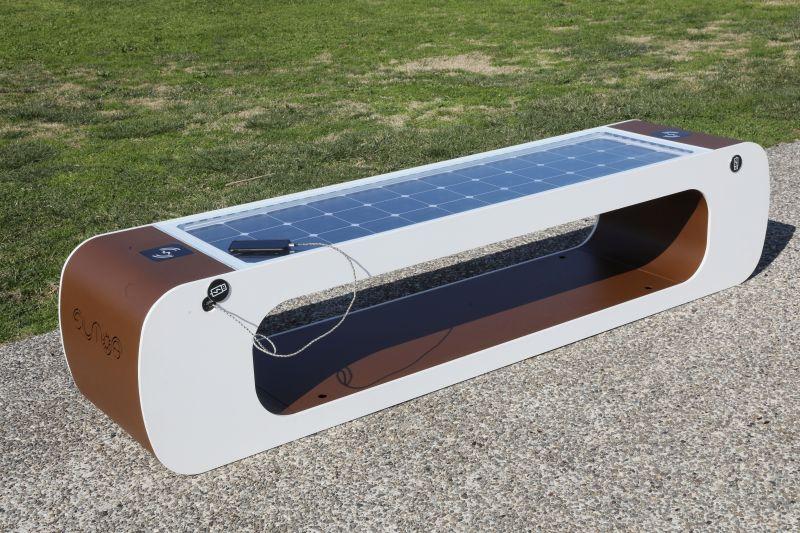
Solar chargers promise freedom from wall outlets, but scattered clouds and shifting light can turn a reliable power source into a guessing game. A passing cloud doesn’t mean your phone stops charging entirely—it means the panel drops to partial output, and your device may flip between charging and not charging. That flicker isn’t just annoying; it can confuse battery management circuits. The trick is to use a small power bank as a buffer. Let the panel feed the power bank slowly and unevenly, then charge your phone from the power bank at a steady rate. This way, the sun’s mood swings never reach your phone’s battery directly.
Angle matters more than you might think when the sky is patchy. Instead of laying the panel flat and hoping for the best, tilt it toward the brightest gap in the clouds. Even a 20-degree adjustment can lift output by a noticeable margin. Keep the panel cool too—heat builds up fast behind glass, and efficiency drops as temperatures climb. A simple trick is to prop the panel on a backpack or a few sticks so air can flow underneath. If you are moving, clip the panel to the top of your bag rather than letting it hang against your back, where it gets both shade and body heat.
When the sun keeps slipping away entirely, don’t fight it. Use the dim periods to switch your phone into low-power mode, close background apps, and turn off unnecessary radios. A phone that needs less energy makes better use of the trickle the panel does capture. And if you have to choose between charging a phone directly or topping up a power bank, always choose the power bank during unstable weather. It accepts a wider range of input voltages and won’t stop and start the way a phone does. Later, when the clouds clear, you’ll have a stable reserve ready to go.
Benches That Blend Into the Park While Doing a Quiet Job
The newest additions to the park don't announce themselves with blinking lights or bulky panels. Instead, they sit low among the ferns, their surfaces treated to match the surrounding stone and bark. Look closely and you might notice slender photovoltaic strips running along the armrests or a small vent tucked beneath the seat. These benches charge phones and power nearby path lights, yet they stay visually quiet—more like natural outcroppings than pieces of street furniture.
A few of them take on a different silent task. Built-in sensors measure particulate matter and humidity, feeding data to the city's environmental team without a single visible wire. The wood composite is porous enough to let rainwater filter into the ground below, helping to reduce runoff after heavy storms. Passersby usually just see a place to rest; the bench's second life goes on underneath and around them.
What makes them work is restraint. Designers stripped away everything that doesn't need to be seen, hiding batteries in the hollow legs and using finishes that weather to the same gray as the nearby rocks. The result is a piece of park infrastructure that earns its keep without interrupting the reason people come here in the first place.
What Vandal Resistant Really Means for Outdoor Charging
Most outdoor charging stations are described as 'vandal resistant,' but that phrase hides a wide spectrum of real-world durability. True vandal resistance isn't just about surviving a casual kick or an accidental scratch; it's about withstanding deliberate, repeated attacks with common tools while keeping both the electronics and the user safe. The housing must be thick enough to resist prying, the ports recessed beyond easy reach of a screwdriver, and the internal mounting points reinforced so the whole unit can't be ripped off a wall or pole.
Equally important is what happens after an attack. A station that simply bends or dents can still fail internally, leaving a dead charger that requires a service call. Effective vandal-resistant design anticipates this by using modular components: a cracked screen or broken cable can be replaced in minutes without exposing high-voltage wiring. The outer shell may show battle scars, but the charging core keeps working. That distinction—between cosmetic damage and functional failure—is what separates a marketing bullet point from a station that actually survives in a public park or transit hub.
Finally, vandal resistance isn't only about physical armor. Smart placement and smart design deter attacks before they happen: angled surfaces that shed liquids, tamper-resistant screws that require specialized bits, and even lighting that makes the station highly visible at night. All of these details work together, so a would-be vandal sees the effort and moves on. When every joint is sealed against water, every port is protected by a sprung cover, and the entire unit is anchored to a concrete footing, the station becomes less a target and more a piece of infrastructure that quietly keeps doing its job.
Lessons from Parks That Switched to Solar Benches
When a few forward-thinking parks first swapped out standard benches for solar-powered versions, the visible shift wasn't in the hardware itself but in how visitors lingered. People who once passed through a plaza in minutes began stopping to charge a phone or check a message, quietly turning a passive rest spot into a small hub of activity. The lesson wasn't about the panels or the batteries; it was about giving a familiar object a second job that people actually needed.
Maintenance teams learned early that solar benches demand a different kind of care. Leaves, snow, and even bird droppings could cut output faster than a cloudy week. Parks that thrived with the switch didn't just install and forget; they folded a quick wipe-down into existing routines and angled the benches to catch morning sun. Those that skipped this step found the benches became just benches again, which taught everyone that the promise of renewable energy in a public space only holds if the upkeep matches the ambition.
Perhaps the clearest takeaway came from watching how different communities embraced the change. In some neighborhoods, the benches became informal meeting points for teens after school; in others, older visitors used the charging ports as a reason to sit and chat rather than rush home. The parks that saw the most benefit didn't treat solar benches as a tech upgrade but as an invitation to rethink why people sit down in the first place. That reframing, more than any wattage number, turned out to be the real lesson worth carrying forward.
The Specs That Matter More Than Peak Wattage
When a power supply is marketed with a huge peak wattage number, it’s easy to assume that figure tells the whole story. In practice, continuous output capability and voltage regulation matter far more for daily use. A unit that can briefly hit 900W but drops its 12V rail under sustained load will cause instability in a gaming PC, while a 650W model with tight voltage control and solid continuous rating will run without a hiccup. Look at the amperage on the 12V rail and the temperature rating for continuous output, not just the headline number.
Hold-up time and transient response are also more telling than peak wattage. Modern GPUs can demand sudden spikes that briefly double their rated power draw. If the power supply’s transient response is sluggish, the voltage will dip enough to trigger a reboot even though the peak wattage suggests plenty of headroom. Hold-up time, usually measured in milliseconds, determines how long the unit can keep output stable during a brief power interruption. A higher peak wattage doesn’t compensate for a short hold-up time when the lights flicker.
Protection features and fan behavior round out the list of specs that deserve more attention. Overcurrent protection set too high might allow a fault to damage components before shutting down, while a well-tuned protection circuit cuts power at the right moment. Fan curves also matter: a power supply with a massive peak rating but a noisy, always-spinning fan becomes annoying, whereas a lower-rated unit with a silent fan curve and good thermal design feels far more refined. These details shape the real experience more than a peak number on the box.
FAQ
The enclosures are sealed to at least IP65, and the internal wiring is rated for outdoor temperature swings. We've had units running through northern winters without any water ingress or connector corrosion, though heavy snow should still be cleared off the panel surface when possible.
You can charge phones, tablets, e-readers, portable batteries, and most USB-powered accessories. Some models include Qi wireless pads and a pair of 12V DC outlets for items like laptops or small medical devices, but anything needing a standard wall plug will need an inverter-equipped bench.
Yes. The ports are recessed behind spring-loaded covers, and the circuit has overcurrent, short-circuit, and temperature protection. There are no exposed live contacts when the cover is closed, and the low-voltage output is safe even if someone spills a drink nearby.
On a heavily overcast day, expect about 15 to 30 percent of the rated panel output. A typical 100-watt bench might still produce 15 to 30 watts, which is enough to maintain a slow charge for two phones over several hours. The integrated battery buffer covers gaps so users rarely notice the drop.
Realistically, you need to wipe the panel surface every few weeks in dusty or pollen-heavy seasons and check the drainage holes after storms. The batteries are sealed and rated for 5 to 8 years, and the charge controller rarely needs attention. An annual inspection of mounting bolts and cable glands is enough for most sites.
Yes, as long as the battery reserve has been topped up during the day. Most benches store 150 to 300 watt-hours, which can fully charge several phones overnight. Continuous heavy use after dark may drain the reserve by early morning, but the system automatically resumes charging once the sun returns.
Most units ship pre-assembled or with a two-bolt anchoring plate that works on concrete pads or compacted gravel. You don't need to trench power lines, which is the biggest time saver. A two-person crew can usually place and secure a bench in under an hour, assuming the site is level and gets at least four hours of direct sun.
Conclusion
Reliable solar charging benches in public spaces earn their keep by shrugging off weather that would sideline lesser electronics. Decent models are built around sealed battery housings and drainage-conscious joints, so a passing downpour doesn't turn a charging port into a safety hazard. Even when clouds roll in for days, the best units lean on low-power circuitry and sensible battery banks rather than chasing headline-grabbing wattage numbers. A bench that quietly delivers a steady trickle charge from stored energy beats a high-peak panel that goes dark the moment the sun dips behind a tree.
What separates a bench that lasts from one that gets ripped out after a season often comes down to the unglamorous details. Vandal resistance means more than thick bolts; it means flush-mounted ports, tamper-proof screws, and surfaces that shrug off graffiti and scratches. Parks that have made the switch report that the most successful installations are the ones that blend into existing paths and plazas, offering a place to sit first and a charging point second. Planners learn to look past peak wattage claims and instead check the battery's usable capacity, charge controller behavior in partial shade, and how easily a maintenance crew can swap a failed module without replacing the whole bench.
Contact Us
Contact Person: Leo
Email: [email protected]
Tel/WhatsApp: +86 18901905138
Website: https://www.zemsogroup.com/