
Reliable Bottom Pull Facial Tissue Machine Exporter for Global Buyers
2026-10-23
Sourcing a bottom pull facial tissue machine that won't let you down across continents is easier said than done. DAXIN has built its name by shipping machines that global buyers actually rely on, not just ones that look good in a brochure. In this post, we cut through the noise and show you what makes a supplier truly dependable.
How Bottom Pull Mechanisms Reduce Jamming in High-Volume Runs
Bottom pull mechanisms tackle jamming by reversing the force direction in material feeding systems. Instead of pushing stock from above or behind, these designs grip the strip or wire from underneath and draw it steadily through the die. This downward pull naturally settles the material against the lower guide surfaces, eliminating the slight upward lift that often causes misalignment, buckling, or edge catching during rapid cycling. In high-volume production, where even a 0.2 mm deviation can snag a progressive die, that consistent contact becomes the difference between smooth throughput and constant stoppages.
The real advantage shows up at speed. Top-mounted pushers tend to flex or bounce when cycling accelerates, creating momentary slack that invites jams. A bottom pull unit maintains constant tension because gravity works with the feed direction, not against it. The material stays flat, the pilot pins enter cleanly, and the strip never gets a chance to kink or fold inside the tooling. Many line operators also note that bottom pull systems naturally shed debris downward, away from the feed path—another small factor that pays off when you are pushing tens of thousands of parts per shift.
Maintenance teams appreciate the accessibility too. With the drive components mounted below the die space, there is less clutter around the tooling area, and routine checks do not require removing upper guarding. The mechanism’s lower profile also lowers the center of gravity, reducing vibration transfer at high stroke rates. Combined with fewer jam-related shutdowns, this design quietly extends both die life and press uptime without asking operators to learn a new feeding philosophy.
Choosing a Partner Who Understands Cross-Border Compliance
Finding a partner who truly grasps cross-border compliance goes beyond ticking boxes on a checklist. It means working with someone who can read between the lines of overlapping regulations—from export controls to data localization rules—and anticipate how changes in one jurisdiction might ripple into another. Without that depth, even a well-intentioned collaboration can stall at customs or attract fines that quietly erode margins.
The right partner treats compliance as a shared operating rhythm rather than a one-time hurdle. They ask about your data flows before signing, flag restricted parties during routine conversations, and keep an internal map of trade agreements that your own team may not track. This practical vigilance shows up in small ways: a contract clause that accounts for shifting sanction lists, or a shipping route adjusted before a border closure becomes headline news.
Ultimately, you want a partner whose compliance knowledge is woven into how they solve problems, not bolted on as a legal afterthought. Pay attention to how they respond to ambiguous scenarios—do they default to silence or offer a reasoned path forward? That signal, more than any certificate, tells you whether they can help you move across borders without getting caught in the gaps.
Customizing Fold Types Without Overcomplicating the Line
A lot of folding workflows get messy because every small variation is treated as a brand new fold type. That's rarely necessary. Most bends share the same underlying mechanics, and the line stays much cleaner when you limit your customization to a handful of core behaviors—valley, mountain, reverse, and maybe a couple of compound options. Before adding another fold type, ask whether it's truly a different way of folding, or just the same fold applied at a different angle or with a slightly wider gap. If you can express the difference with a parameter instead of a new category, do that.
On the production side, too many fold types create confusion in tooling and in handoff documents. Instead of a long list of near-identical folds, keep the line readable by grouping folds that share a common bend radius or material behavior. When a new requirement comes in, first check if an existing fold type can be adjusted with a note or a simple override. This keeps the line from becoming a catalog of exceptions. A clean, small set of well-understood fold types is easier to train people on, easier to troubleshoot, and far less likely to break when something changes.
Spotting Build Quality Before You Pay a Deposit
Before you hand over any money, walk through the property like you're already living there. Open and close every door—does it swing smoothly without catching? Check the corners where walls meet floors and ceilings; uneven lines or visible gaps often mean the builder cut corners. Tap on tiles in the bathroom and kitchen to hear if they sound hollow, and run your hand along countertops and cabinetry edges to feel for rough finishes.
Don't ignore the details that tend to hide problems: look at the base of exterior walls for cracks wider than a hairline, and press on any soft spots in window frames or door jambs. If the property has a balcony or deck, step outside and check how it's attached—rusty bolts or wobbling rails are a red flag. Even the smell of fresh paint can be masking water damage, so ask when it was last painted and why.
Finally, bring a small level or just a marble to test floors. A marble rolling on its own tells you the slab isn't flat, which could point to structural settling. Build quality isn't about luxury finishes; it's about the things you can't easily change later, so trust your hands and eyes more than a polished sales pitch.
Keeping Downtime Low When Spare Parts Are Far Away
When a critical component fails and the nearest replacement sits in a warehouse two continents away, the usual playbook—rush shipping, overtime labor—collapses. The fix starts long before the breakdown. Keep a small but carefully chosen cache of high-wear parts on site, based on actual failure history rather than supplier suggestions. Pair that with condition-monitoring sensors on pumps, motors, and drives so you get a warning days ahead of a hard stop. That early signal often turns a panic purchase into a routine courier run.
Where local stock is impossible, lean on modular redundancy. If a gearbox or control board can be swapped in under an hour from a nearby sister facility, the waiting time disappears from the production line. Cross-train two or three technicians to handle these swaps without relying on outside specialists. Also push suppliers for consignment stock: they keep the part on your shelf, but you pay only when it is used. This shifts the cash-flow burden while keeping the physical component within arm's reach.
Finally, build flexibility into the machine itself. Standardize connectors, mounting patterns, and software interfaces across equipment from different vendors. When the exact original part is months away, a functionally equivalent local substitute can often be installed with minor adaptation—if you planned for that from day one. Document these workarounds before you need them. Under pressure, a field-tested improvisation beats a perfect-but-distant spare every time.
What Real Operators Say About Changeover Speed
Real operators rarely describe changeover speed as heroics. They talk about setups with no wasted motion: tools mounted exactly where the last finger leaves them, clamps that snap instead of screw, and color-coded hoses that connect only one way. 'If I can do a changeover with my eyes closed,' one operator said, 'that's when I know we're fast.'
The sharpest comments come from comparing shifts. Operators point out that a slow changeover is usually a handoff problem, not a skill gap. They want the previous crew to leave the line staged, the program loaded, and the first part ready to verify. One packaging tech explained, 'The machine doesn't care how fast you are. It cares how long you make it wait.'
Veterans also resist the idea that speed means cutting corners. Instead, they focus on removing decisions. When every changeover follows the same route, there's no debate about what comes next. A lead operator from a bottling plant summed it up: 'Fast isn't about rushing. It's about knowing what you're going to do before you touch the tool.'
FAQ
Reliability comes down to consistent build quality, transparent communication during the order process, and a proven history of shipping machines that hold up under continuous use. Look for an exporter who offers detailed video inspections before dispatch and provides clear documentation on maintenance intervals.
Ask for close-up photos or live video of the frame welding, the folding rollers, and the cutting mechanism. A serious exporter will also share the specification sheet with tolerances and material grades, and may arrange a factory visit or third-party inspection if you request it.
Yes, most exporters with in-house engineering can adjust the folding width, servo motor brands, or add features like embossing units. Share your production target and tissue dimensions early so the exporter can confirm whether a standard model fits or a tailored version is needed.
Expect the machine to be shipped in a reinforced wooden crate with moisture protection. A dependable exporter will offer remote setup guidance through video calls, and some provide optional on-site commissioning for an additional fee depending on your location.
Bottom pull dispensing lets users take tissues from the lower opening, which keeps the next tissue partially visible and reduces the chance of multiple sheets coming out at once. This design often feels smoother for end customers and can lower waste in high-traffic settings.
Most reliable exporters include a starter kit of common wear parts such as belts, blades, and sensors. After-sales service is usually handled through email, video calls, or a local partner technician, and response time is a key factor to confirm before signing.
Typical machines range from around 30 to 120 packs per minute depending on the folding style and automation level. Your choice should match your daily order volume, with some exporters offering modular upgrades if demand grows later.
Request references from nearby countries or similar climate zones, and ask for shipment records or a list of installed machines. You can also search industry forums and ask the exporter for contact details of a current client who has agreed to share their experience.
Conclusion
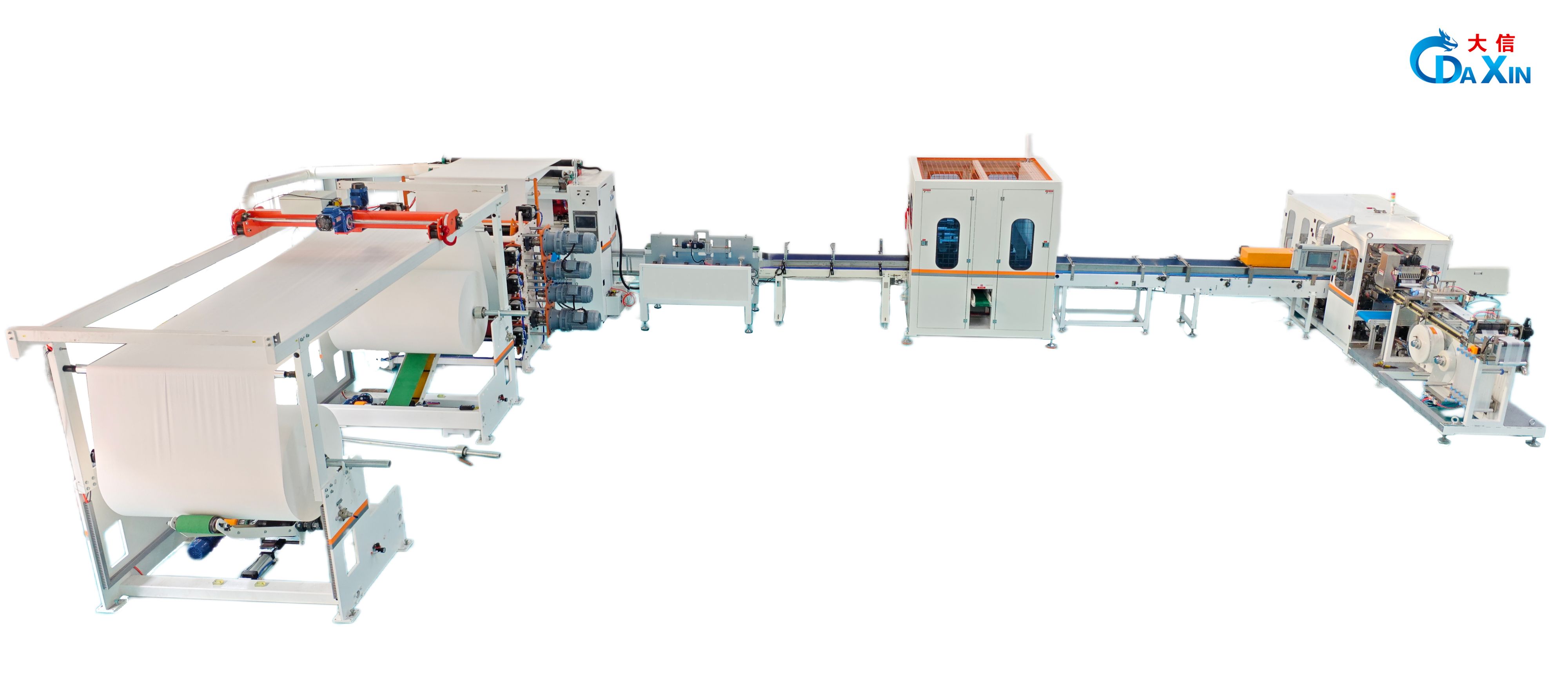
When a tissue line runs twenty hours a day, the last thing any plant manager wants is a jam that forces three operators to stop everything and pull wadding out of the folding plates. Bottom pull machines earn their place in high-volume production because they keep the sheet path short and the tension steady, which cuts down on the little misalignments that snowball into shutdowns. But mechanical design alone isn't enough. A dependable exporter for global buyers has to know what happens after the container leaves the port: customs paperwork, voltage differences, local safety marks, and spare parts that can't sit in a warehouse two time zones away. The smartest suppliers ask about your market's requirements before they quote, and they build machines with common, off-the-shelf components where it matters, so a maintenance crew in Nairobi or Quito isn't waiting three weeks for a proprietary sensor.
Customization gets tricky when every added fold type adds another set of cams and another eight hours of changeover. Good exporters simplify the options instead of piling them on. They'll offer two or three proven fold configurations, clear switchover routines, and tooling that's designed to be swapped by one person without calling the OEM. Before you wire a deposit, look at the frame, the bearings, the way the drive shafts are mounted, and whether the guards feel like sheet metal or something that survives a decade of dust and vibration. Operators we've spoken to rarely mention spec sheets after a year; they mention how long it takes to go from one tissue width to another and whether the touchscreen actually tells them what's wrong. A supplier who listens to that feedback and keeps the control logic simple is the one you want as a long-term partner, not just a one-time vendor.
Contact Us
Contact Person: Sam Xie
Email: [email protected]
Tel/WhatsApp: 86-18938538530
Website: https://www.daxin321.com/