

Professional Package Printing Die Making Equipments: Essential Tools for Precision Packaging
2026-10-06
In the world of package printing, the difference between a flawless finish and a costly re-run often comes down to the die making equipment behind the scenes. These essential tools for precision packaging demand more than just sharp blades—they require engineering that anticipates every cut, crease, and contour. That's where ADEWO steps in, offering professional-grade solutions that turn complex packaging designs into tangible reality. Whether you're chasing tighter tolerances, faster turnaround, or simply fewer wasted sheets, the right equipment isn't a luxury—it's the quiet engine of your production line. Let's explore what truly separates average tooling from the systems built to excel.
Sharpening the Edge: Die Making Essentials for Flawless Package Cuts
A clean package cut rarely comes down to luck. The real difference sits inside the die itself. Laser-cut bases have replaced most hand-jigged plates for good reason: the kerf stays consistent, so blades seat without wobble or drift. That matters more than most operators admit. A blade that shifts by half a millimeter on a long run will tear fibers instead of slicing them, leaving fuzzy edges on an otherwise premium carton. Blade bevel choice is equally specific. For folding cartons and lightweight paperboard, a 42 to 50 degree bevel usually produces the cleanest entry and exit. Move into corrugated or fluted board and the logic flips. A slightly blunter angle, often 52 to 55 degrees, prevents the tip from crushing the flutes before the cut completes.
Ejection rubber seldom gets the attention it deserves, yet it controls how the sheet releases from the die. If the rubber sits too high or too close to the blade, the material can hang up or tear at the point of separation. A gap of 0.8 to 1.2 mm below the cutting edge works for most solid board, with firmer compounds placed near intricate cutouts and softer strips along long straight runs. The creasing rules need the same kind of scrutiny. When the crease height is off by even a fraction of the board caliper, you get cracked folds on the outside of the finished pack. As a working rule, the crease rule height should be about 1.5 times the material thickness, and it must run parallel to the adjacent cutting rule without drifting into the cut path.
Even a well-built die dulls over time. Micro-chips along the blade edge are invisible to the naked eye but leave a telltale string of fibers on every sheet. Checking the edge with a loupe after each long run, then touching up with a fine stone, extends the die life considerably. Pressure distribution is another silent variable. Rather than relying on feel, use pressure test film across the full sheet to spot high and low zones, then adjust the make-ready accordingly. Small nicks in the cutting rule that hold waste in place are useful, but they must be tuned to the stock. Too deep leaves a visible bump on the cut edge; too shallow and the scrap breaks free mid-run. Those fine adjustments are what separate a flawless package cut from one that just barely passes inspection.
Beyond Standard Blades: Precision Tooling for Complex Package Shapes
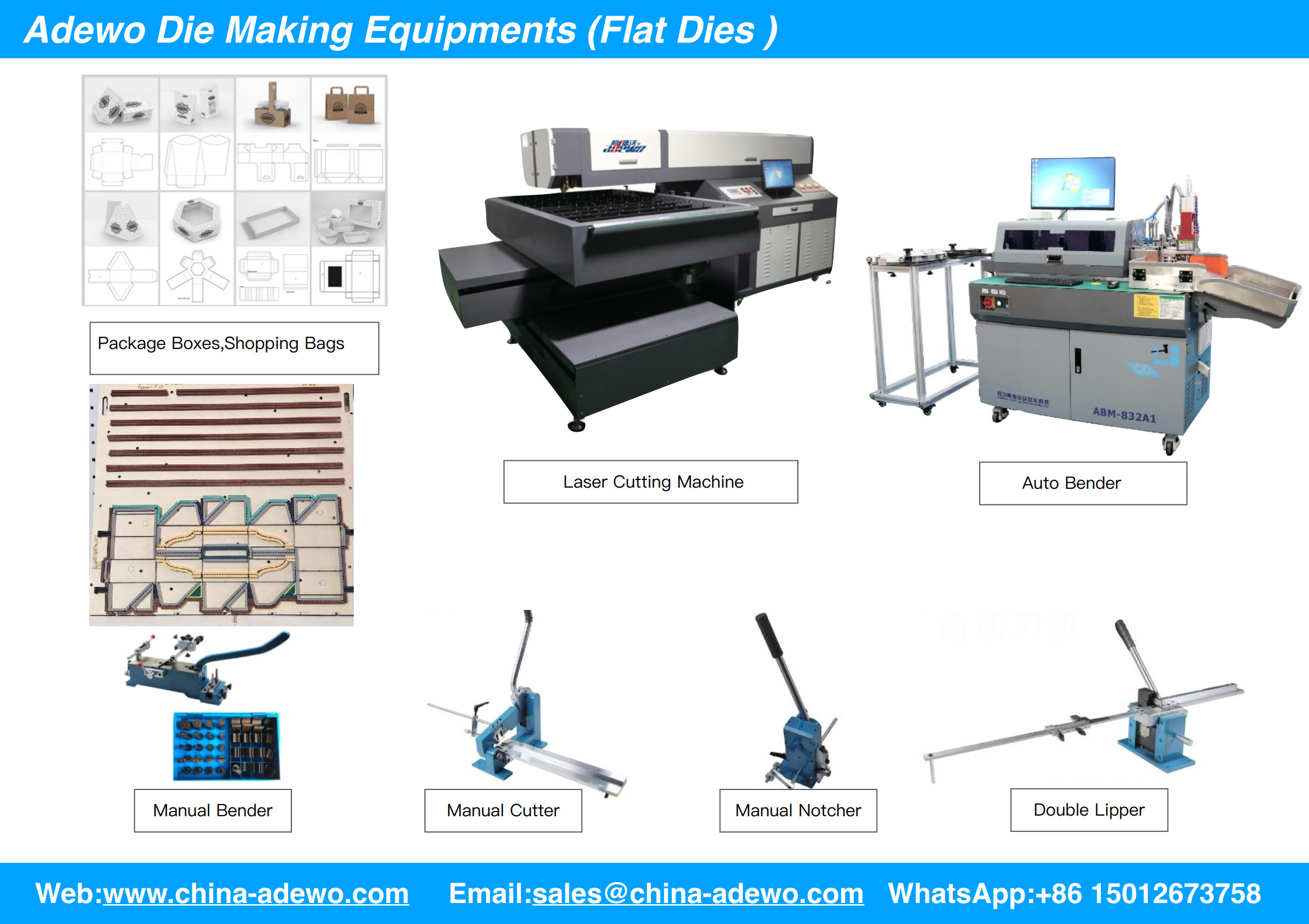
Standard straight blades rarely survive long on packages that deviate from simple rectangles. Rounded corners, tear notches, contoured clamshell edges, and film lids with integrated peel tabs all demand cutting edges that follow the material's actual geometry. Instead of forcing a universal blade to work, tooling engineers map the cut path from CAD data and grind the blade profile to match: asymmetric bevels for thin films, stepped edges for multi-layer laminates, and micro-serration patterns that reduce drag on heat-sealed corners. The difference shows up quickly in edge retention and in the cleanliness of the cut, especially on recycled board stocks that blunt generic steel within a few thousand cycles.
Beyond the shape itself, material selection and coating matter just as much. High-speed steel works for short runs, but carbide with a titanium nitride or diamond-like carbon coating holds a sharp edge far longer on abrasive coated papers or foil-lined pouches. Tolerances are typically held to ±0.005 mm on the cutting land, and each blade is inspected under magnification for micro-chipping before it ships. When these precision-ground tools drop into an automated line, the payoff is less dust in the sealing area, fewer jam-ups at the forming shoulder, and a noticeable drop in the number of rejected packages per shift.
From CAD to Cut: Streamlining Die Production for Faster Turnarounds
The handoff between design and machining used to be where die production slowed to a crawl. Instead of exporting neutral file formats and manually rebuilding toolpaths, our shop now feeds native CAD geometry straight into the cutting software. That single change eliminates translation errors and lets the CNC operator start roughing the die plate while the designer is still finalizing trim edges. We also keep a library of proven cutting parameters for common die steels, so switching from a blanking die to a forming die doesn't mean starting from scratch.
Another bottleneck we removed was the back-and-forth over manufacturability. By running a quick toolpath simulation directly on the CAD model, we catch undercuts, insufficient clearance, or overly tight radii before any metal is loaded. This pre-flight check has cut our rework rate on die components by more than half, and it means the cutting stage rarely stops to wait for a clarification call.
The result is a die production workflow where the gap between design approval and first cut is measured in hours, not days. Multiple die sections can be nested on one sheet and cut overnight, then hardened and finished the next morning. For short-run stamping jobs or urgent replacement inserts, this tighter CAD-to-cut loop is what keeps turnaround times competitive without adding headcount.
Materials That Matter: Choosing Durable Dies for High-Volume Runs
When a die starts to round over after a few thousand cycles, the real cost isn't just the replacement tooling—it's the downtime, the rejected parts, and the slow drift in dimensional accuracy. For high-volume runs, material selection separates a line that hums along from one that lurches between changeovers. Tool steels like D2 and M2 remain workhorses for their balance of edge retention and machinability, but vacuum-hardened powder metallurgy grades often pay for themselves once you push past six figures in stamping volume.
Carbide, on the other hand, shrugs off abrasion where steel starts to wear, but it demands a stiffer setup and a steadier hand on feed rates. Coatings add another layer: a thin TiN or AlTiN film can cut friction and heat, yet it won't save a die that's already flexing. The smart move is to match the material to the specific failure mode you're seeing—wear, chipping, galling, or plastic deformation—rather than chasing a single 'best' grade.
Heat treatment and surface finish matter just as much as the chemistry. A poorly tempered D2 die can be brittle even if the spec sheet looks right. If your volume keeps climbing, consider a powdered-metal tool steel with fine carbides for better toughness, or step up to solid carbide inserts in the highest-wear zones. The goal is predictable life, not maximum hardness on paper.
Automation on the Line: Smart Equipment for Consistent Packaging Output
When packaging lines rely on manual adjustments and human timing, even small variations in sealing pressure or fill volume can stack up into costly rejects. Smart equipment changes that equation by embedding sensor-driven controls directly into fillers, cappers, and labelers. These machines monitor their own performance dozens of times per second, nudging parameters like torque or film tension back into spec before a single bad package leaves the line.
The real advantage shows up during shift changes and material swaps. Instead of an operator walking the line with a stopwatch and a clipboard, automated stations now log every cycle and compare it against a golden baseline. If a roll of film starts pulling slightly tighter or a pump drifts by half a gram, the system flags the trend and adjusts on the fly. That means the first package of a new batch matches the last one from the previous run, with no warm-up waste.
Maintenance teams benefit just as much. Because each smart device records its own wear patterns and cycle counts, failures become predictable rather than sudden. A capper that has run 1.2 million cycles will tell you when its clutch is losing grip, letting you schedule a ten-minute swap during lunch instead of a forty-minute teardown at midnight. Over a year, that consistency turns into fewer line stoppages, less scrap, and a packaging output that customers can actually plan around.
Tolerance Control in Die Making: Keeping Every Fold and Crease Accurate
Die making is a discipline where a fraction of a millimeter can mean the difference between a crisp, repeatable fold and a costly batch of rejected parts. Tolerance control isn't just about hitting numbers on a drawing—it's about understanding how material thickness, springback, and tool wear interact in real production. A die maker learns early that the final crease position will shift slightly from the theoretical layout, so compensation must be built into the tool itself. This means measuring not just the die geometry, but the actual bent profiles it produces under full tonnage.
One practical method is to machine the creasing channel slightly narrower than the nominal bend radius, then open it up in small increments during tryout. Each adjustment is verified with a dial indicator mounted on a granite plate, and the results are logged against the part's functional requirements. The trick is to stay within the tolerance band while anticipating the next 10,000 strokes—where punches dull and clearances grow. By recording every change and its effect on fold location, a skilled die maker develops an intuitive feel for how much to compensate on future jobs.
Modern shops often pair this hands-on experience with laser scanning or vision systems that map the entire bend line in seconds. But the final call still rests with a person who can read the subtle witness marks left by the tool and decide whether it's time for a shim, a regrind, or a full insert replacement. Tolerance control in die making is thus a balancing act: keep folds accurate enough to assemble perfectly, yet loose enough that the die won't demand constant maintenance. That balance is what separates a die that runs years from one that fights you every shift.
FAQ
A basic setup includes a CAD plotter to draw the knife line position, a laser cutter for the substrate, a rule processor for cutting and bending steel rule, and a stripping machine to remove waste. Many shops also add an automatic bender to reduce manual shaping time.
If the knife line position drifts by more than 0.1 mm, high speed die cutters will jam, misregister prints, and create high waste rates. Folding lines, perforations, and creasing channels all depend on exact blade height and angle. A tool that cannot hold tolerance directly ruins box assembly and end customer quality.
Laser works for short runs, complex shapes, and fast sampling because there is no physical die to build, but the per piece cost is higher and some edges may show heat discoloration. Steel rule dies are still the go to for long runs, offering durability and lower unit cost, though the initial tooling time is longer. Many plants use both: laser for prototypes and steel rule for volume production.
Regular calibration of the laser head, cleaning rails and bearings, checking cutting bed flatness, and lubricating moving parts are essential. If a rule bending die wears, replace it immediately because the bend angle will drift. Vacuum and air pressure systems should be inspected every six months to avoid inconsistent hold down.
Most equipment can handle multiple materials but requires parameter changes. Thick corrugated board needs higher laser power or slower feed rates, while folding carton demands a narrower kerf. Steel rule height and thickness also vary by material. Switching frequently costs accuracy, so dedicated machines per material type often work better than one machine forced to do everything.
Automatic rule bending machines read the CAD file and form complex knife lines in minutes, replacing two to three hours of manual work. Automated stripping and sorting systems reduce human handling. Auto focusing laser cutters adjust to different substrate thicknesses without manual input. The main benefit is shrinking human error and cutting turnaround time.
A frequent error is buying cutting equipment while ignoring the precision of the rule bending process. Another is insufficient exhaust and dust collection, since laser cutting produces smoke and debris. Operators often lack training on material compensation values, and software compatibility between CAD systems and machinery gets underestimated.
Conclusion
Precision in package printing doesn't start at the press; it begins with the die. Every clean fold, smooth crease, and crisp cut in a finished carton or label traces back to the tools that shape the substrate. Sharpening routines, far from being routine maintenance, determine whether a blade can hold its edge through extended runs or leave behind ragged fibers that compromise the entire run. For complex package shapes—rounded corners, intricate cutouts, interlocking tabs—standard straight blades fall short. Instead, custom-ground profiles and hardened tooling are required, often developed directly from CAD files so that the digital design translates into physical tooling with minimal drift. This CAD-to-cut pipeline, combined with materials engineered for endurance—such as tungsten carbide or high-speed steel—keeps high-volume production consistent without frequent die changes.
The less glamorous side, tolerance control, is what separates a package that assembles perfectly from one that frustrates the end user. A variance of even a fraction of a millimeter in a fold line can cause a box to skew or a flap to misalign. Modern die making equipment addresses this through automated measurement and adjustment systems that check cutting depths, crease heights, and die flatness throughout the run. On the production line, automated feeders and ejectors sync with the die's rhythm to maintain consistent output, reducing manual handling that can introduce variability. Together, these elements—sharp tooling, adaptive digital workflows, durable materials, and tight process control—form the backbone of precision packaging. They don't just cut paper; they ensure that every package that reaches the customer feels intentional, sturdy, and ready for its purpose.
Contact Us
Contact Person: KAELYN LEE
Email: [email protected]
Tel/WhatsApp: +86 15012673758
Website: https://www.china-adewo.com