

pH Sensitive Heat Transfer Labels Manufacturer Advances Smart Packaging Innovation
2026-08-13
Imagine a label that changes color when freshness fades—no scanners, no guesswork. That’s exactly the frontier Victorygen heat transfer label is pushing forward, as this manufacturer unveils pH-sensitive heat transfer labels designed to make smart packaging not just smarter, but more intuitive. Here’s why this innovation could rewrite how brands and consumers interact with products.
How pH-reactive labels turn color without electronics
The label itself acts as a simple chemical sensor. A layer of dye, often extracted from red cabbage or litmus, sits between the backing and a porous top film. When the package leaks or spoilage gases build up, the pH of that inner layer shifts. The dye molecules lose or gain protons, which rearranges their electron clouds just enough to absorb a different part of the visible spectrum — so the label flips from green to red, or purple to yellow, without a single wire.
What makes this work without electronics is the built-in buffer system. Most pH-reactive labels contain a weak acid and its conjugate base, carefully balanced so the dye stays stable until a critical threshold is crossed. Food spoilage produces compounds like lactic acid or ammonia. As those diffuse through the film, they nudge the buffer past its tipping point, and the color change becomes irreversible. You can't trick it back — the label locks in the signal once the reaction has run its course.
Engineers tune the response by swapping the dye or adjusting the buffer ratio. A label for fish might be set to trigger on trimethylamine, while a milk freshness tag targets lactic acid. Because the chemistry is printed using standard flexographic or inkjet methods, the labels cost nearly the same as ordinary stickers. No batteries, no circuits, no antennas — just a piece of smart paper that reads the package's own chemistry and tells you when it's had enough.
Why heat transfer printing supports fine detail on flexible packaging
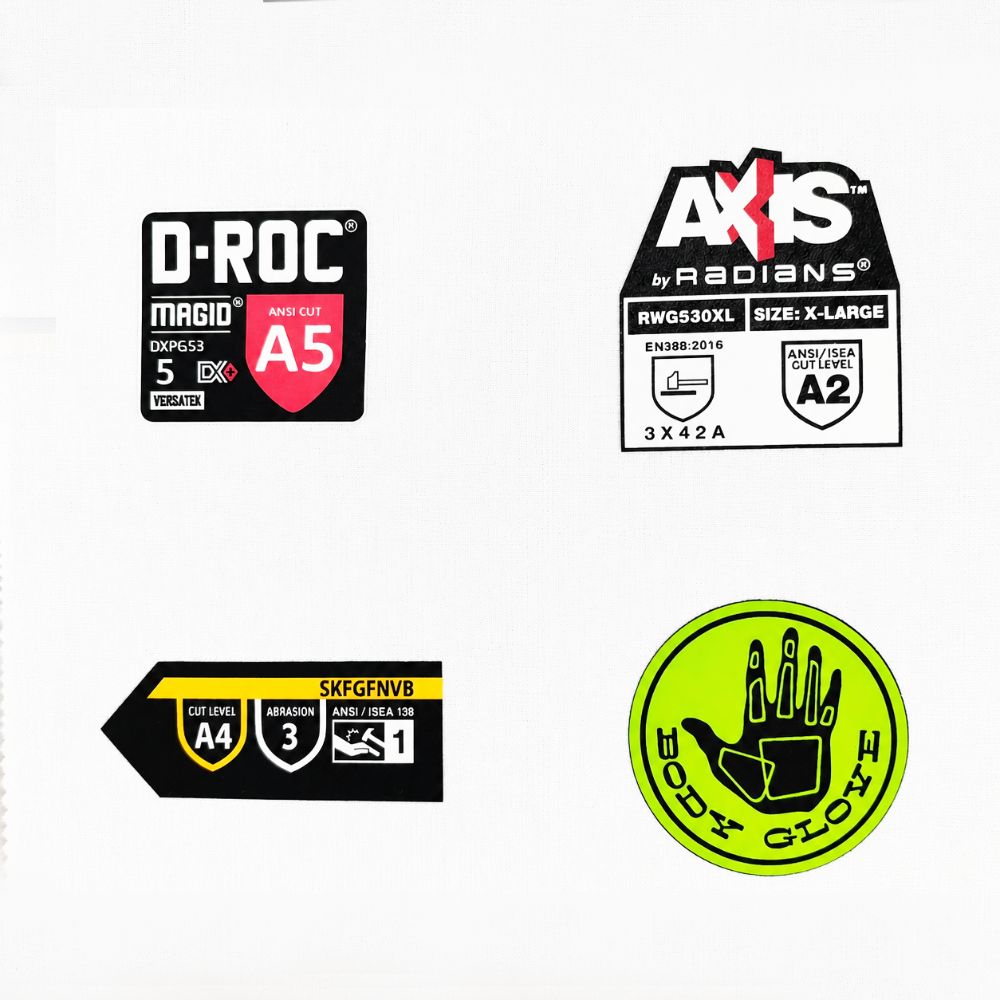
Heat transfer printing achieves fine detail on flexible packaging primarily because the image is carried on a stable intermediate film rather than being applied directly to a moving, stretchable web. The artwork can be rendered at very high resolution on the carrier, where tiny text and intricate line work stay perfectly defined. Only after the design is complete does heat and pressure move the entire image to the packaging surface in one controlled step, so fine elements are not distorted by film stretch or vibration.
The controlled release mechanism also plays a big role. As the heated platen or roller meets the transfer film, the ink softens just enough to release evenly across the full image area. There is no need for the substrate to be perfectly flat or rigid, because the transfer layer can conform to slight surface irregularities. This conformity means micro-details such as 4-point type, fine halftone dots, and delicate borders reproduce cleanly on flexible films like polyethylene or polypropylene.
Temperature and dwell time can be tuned for each type of film, which prevents ink from bleeding or smearing before it sets. The result is a sharp, durable image with consistent edge definition. For packaging that needs to hold fine print, barcodes, or ornamental graphics on a soft, flexible surface, heat transfer printing offers a level of precision that many direct-contact printing methods struggle to match.
What manufacturers are doing to keep indicator dyes stable during transit
Manufacturers tackle the transit challenge by reformulating indicator dyes with stabilizers that resist degradation from temperature swings and UV exposure. Instead of relying on standard dye compounds, they often encapsulate the active color-changing molecules in protective matrices, which shield them from oxygen and moisture during long hauls. This approach keeps the dye dormant until it reaches the intended activation threshold, so it doesn't fade or shift prematurely inside a shipping container.
Packaging plays an equally critical role. Vials and test strips are sealed in opaque, gas-impermeable pouches or blister packs, sometimes with desiccant sachets or oxygen scavengers tucked alongside. Manufacturers also pre-condition the packaging environment—flushing the headspace with nitrogen or argon—to prevent oxidative breakdown. For cold-chain-sensitive dyes, they integrate phase-change materials or insulated liners that buffer the cargo against extreme fluctuations, especially when rail or sea freight passes through multiple climate zones.
Beyond chemistry and packaging, logistics protocols are customized per dye formulation. Some makers ship indicator dyes as separate precursor components that get mixed on-site, sidestepping stability issues entirely. Others embed data loggers inside the pallets to track cumulative heat exposure, triggering rejection or reconditioning if the dye's tolerance limits are breached. These layered measures mean the dye that arrives at a hospital or lab still behaves exactly as specified, even after weeks in transit.
Where smart pH labels fit in high-spoilage food categories
Fresh meat, poultry, and seafood are the obvious starting points. These products spoil fast and can harbor pathogens long before any off-odor becomes noticeable. A pH-sensitive label stuck directly on a tray of ground beef or a salmon fillet starts shifting color as bacteria break down proteins into amines and ammonia, giving shoppers a visual cue that doesn't depend on guesswork or a printed date.
Dairy and soft cheeses also respond well to pH monitoring. As lactic acid builds up or proteolysis sets in, the label's dye reacts to the changing acidity. For items like ricotta, cottage cheese, or yogurt, this means the label can flag early fermentation or post-pasteurization contamination that a simple expiry date would miss.
Cut fruits and ready-to-eat salads might seem less risky, but their high moisture and broken cell walls make them prime spots for yeast and mold growth. Smart pH labels on clamshells of sliced melon, bagged spinach, or fresh-cut pineapple can signal when organic acids from microbial activity rise, helping stores rotate stock more accurately and reducing the number of perfectly good packages thrown away too soon.
Making the label part of the packaging design instead of an add-on
A label pasted on as an afterthought rarely earns a second glance. When it is woven into the packaging itself—sharing the same surface, texture, and visual rhythm—the product stops feeling like a container with a sticker and starts feeling like a single, deliberate object. This shift matters more than most brands realize, because it changes how people physically interact with the box or bottle. Instead of peeling back a corner or squinting at a crowded sticker, they encounter the information as part of the whole, which feels effortless and quietly confident.
The real advantage is not aesthetic tidiness; it is trust. A label that belongs to the packaging suggests the maker thought about the entire experience before production, not after. That might mean printing directly onto the carton, embossing a brand name into the lid, or using the package's folds and seams to carry essential details. When done well, the design no longer needs a separate label to explain itself—the packaging becomes the label, and vice versa. The result is a product that looks more intentional, less generic, and harder to forget.
There is also a practical layer worth noting: fewer separate parts means fewer chances for misalignment, peeling, or inconsistent application. A printed-on-label approach can simplify production while giving designers more room to play with negative space, pattern, and material contrast. Instead of treating the label as a necessary interruption, you treat it as an invitation to make the packaging more unified. For any brand trying to move beyond the ordinary shelf look, this integration is one of the fastest ways to signal that the product was made with care from the inside out.
The practical limits of pH indicators and what comes next
Most pH indicators are constrained by their narrow transition ranges, typically spanning only one to two pH units around their pKa. This means a single indicator cannot reliably track the full spectrum of acidity or alkalinity; you need a cocktail of several indicators or a universal mixture, which still suffers from uneven color gradations and subjective interpretation. Beyond that, temperature, ionic strength, and the presence of organic solvents can shift the apparent pKa, making precise measurements in real-world samples a moving target. Even the classic phenolphthalein, beloved for titrations, fails in strongly basic solutions where it becomes colorless again, and it's useless for distinguishing mild bases from strong ones without supplementary checks.
What comes next is a blend of smarter formulations and digital tools. Researchers are exploring indicator dyes attached to solid supports or embedded in hydrogels, creating reusable strips that resist leaching and offer sharper visual cues. On the instrumentation side, smartphone-based colorimetry paired with machine learning can now extract pH values from indicator images with far greater accuracy than the human eye, effectively bypassing the subjective color-matching problem. There's also growing interest in non-optical alternatives, such as ion-sensitive field-effect transistors and electrochemical microsensors, which deliver continuous pH monitoring without the need for any dye at all. These approaches don't replace classic indicators outright—they extend their utility into environments where a simple color change simply isn't enough.
In practice, the choice still depends on the context. For a quick classroom demo or a rough field test, a well-chosen indicator strip is hard to beat for speed and cost. But for fermentation batches, environmental water monitoring, or biomedical diagnostics where a drift of 0.2 pH units can ruin a result, the future lies in hybrid systems: indicator chemistry for rapid visual screening, backed by electronic verification when precision matters. The real breakthrough won't be a single perfect indicator, but a layered strategy that acknowledges the limits of color chemistry while leveraging everything else we have.
FAQ
These are specialized labels that change color or provide a visible signal when the surface or environment reaches a certain pH threshold. They typically incorporate pH indicator dyes into a heat transfer layer, so the label can be applied to packaging and then reacts to acidity or alkalinity shifts, such as spoilage in food or chemical exposure.
Heat transfer eliminates the need for a separate adhesive layer and allows the label to become part of the packaging surface, which is more durable and tamper-resistant. It also supports high-speed application on curved or irregular containers, making it practical for food, pharmaceutical, and industrial packaging lines.
Conventional labels only carry static information, but pH sensitive labels actively communicate product condition. For example, they can indicate if a package has been compromised or if a perishable product has started to spoil, helping reduce waste and improve safety without requiring electronic sensors.
A strong example is fresh meat or seafood packaging. If the product begins to degrade, microbial activity changes the pH inside the package. A pH sensitive heat transfer label applied to the inner or outer film could shift color to warn consumers or retailers before the product becomes unsafe, even if the use-by date hasn’t passed.
The indicator chemistry is carefully calibrated to a narrow pH range, and the label is engineered so that normal handling or minor temperature changes do not cause false responses. Many designs include a reference color scale or a threshold activation only after direct contact with specific volatile compounds released during spoilage.
Cost is the biggest hurdle, since specialty dyes and precise manufacturing add expense compared to basic labels. There are also regulatory considerations for food contact materials and the need to educate brands on how to integrate the labels without disrupting existing packaging workflows.
It moves labels from passive decoration to functional components. Instead of just identifying the product, the label becomes a low-cost sensor that provides real-time quality information. This aligns with the industry shift toward reducing food loss, enabling traceability, and giving consumers more transparency about product freshness.
Conclusion
A growing number of manufacturers are refining pH-sensitive heat transfer labels as a practical route toward smarter packaging, especially where spoilage risks run high. These labels rely on indicator dyes that shift color in response to changing acidity or alkalinity, so they don't need batteries, circuits, or readers—just a visible change on the package surface. Heat transfer printing plays a key role here by allowing crisp text, fine graphics, and precise color zones to be applied onto flexible films without compromising the label's reactive chemistry. The real challenge lies in keeping the indicator dyes stable from production through transit, and manufacturers are responding with encapsulated dye systems and controlled storage protocols that prevent premature activation before the package reaches the shelf.
In high-spoilage categories like fresh meat, seafood, dairy, and prepared salads, these labels are moving from a novelty add-on to an integrated part of the package design. Rather than looking like a separate sticker, smart pH indicators can be printed within the main label artwork, using subdued neutral tones when the product is fresh and shifting to a clear warning shade as pH changes signal spoilage. Of course, pH alone is not a perfect freshness marker—temperature abuse or microbial growth can occur without a large pH swing, and some dyes remain sensitive to light or humidity. Manufacturers are working on multi-indicator systems and more robust pigment chemistries to broaden the practical use of these labels, while packaging designers push for solutions that feel natural on the shelf instead of gimmicky.
Contact Us
Contact Person: Wang Song Lin
Email: [email protected]
Tel/WhatsApp: +8613751282193
Website: https://www.heat-transferprinting.com/