

OEM Steel Casting Solutions for Durable Industrial Components
2026-11-16
When heavy equipment can't afford a failure, OEM steel castings are the silent backbone. Supreme Machinery has spent years perfecting these components for industries that demand more than off-the-shelf parts. If you've ever wondered why some castings last decades while others crack in months, you're in the right place.
Inside a Steel Foundry: Where Raw Melt Becomes Machine-Ready Parts
The air inside a steel foundry never really cools down. Even in the middle of winter, the heat from the induction furnaces soaks into concrete walls and settles over the floor like a blanket. Scrap steel goes in as rusty chunks, but within an hour it's a glowing orange liquid, hissing and spitting as workers skim off slag with long-handled tools. No two pours feel exactly the same — the metal's fluidity shifts with humidity, carbon content, and how long the ladle sat before the crane picked it up. The crew reads these changes by eye, adjusting the pour angle or tapping the mold to let trapped gas escape.
Once the sand molds are filled, patience takes over. Castings that weigh half a ton can take a full day to cool enough to shake out. Knocking the sand away reveals raw shapes still wearing their gating systems like scaffolding. Here's where the real judgment comes in: a foundry hand will run a grinder over a surface and listen, feeling for internal voids that an X-ray might miss. The difference between a scrapped part and a machine-ready casting often comes down to whether someone noticed a faint crack near the riser before it went to heat treatment.
After shot blasting and dimensional checks, the parts move to the finish line. Not much about this stage looks automated — a worker with a pneumatic hammer removes stubborn scale while another stamps heat numbers into a flange. The final product doesn't leave with a polish; it leaves with a dull grey skin that still holds the texture of the sand. That roughness matters. Machine shops downstream rely on it to seat clamps and tools accurately, knowing the casting hasn't been over-ground to hide something.
Why Alloy Chemistry Matters More Than Part Geometry
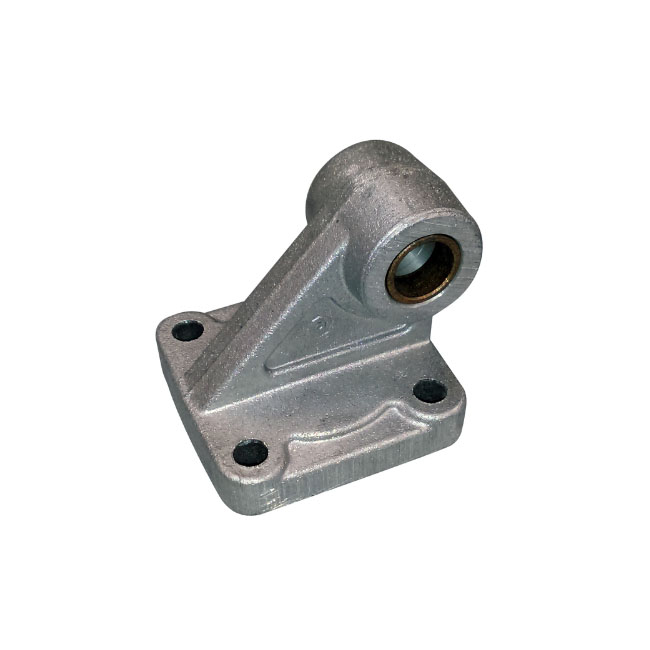
Often overlooked, the exact blend of elements in an alloy sets the baseline for how a component behaves under stress, temperature, and corrosion. Two parts machined to identical dimensions can fail in completely different ways if one uses a generic off-the-shelf alloy and the other a tailored chemistry. The reason is simple: geometry determines where loads concentrate, but chemistry dictates whether the material can actually withstand those loads without cracking, softening, or oxidizing prematurely.
Consider a bracket and a shaft with the same cross-sectional area. The bracket may look robust, but if its alloy lacks sufficient chromium or molybdenum, it will pit or creep long before the shaft, even if the shaft has a more complex shape. Microstructural features like grain boundaries, precipitates, and phase stability all trace back to chemistry, not shape. In high-cycle fatigue, for instance, a slight increase in silicon or a tighter control of impurities can double the service life without changing a single dimension on the drawing.
That's why leading design teams now lock down alloy composition before finalizing CAD models. Geometry can be optimized later through simulation, but no amount of ribbing or filleting will rescue a part made from an alloy that's fundamentally incompatible with the operating environment. In short, shape tells the material what to do; chemistry tells it what it cannot survive.
The Hidden Costs of Porosity and How Modern Pouring Eliminates It
Porosity in cast metal components rarely announces itself until the part fails in service. The trapped gas bubbles and shrinkage cavities weaken structural integrity, create leak paths in pressure-tight applications, and force manufacturers into costly post-processing. Every rejected casting represents wasted furnace time, wasted alloy, and wasted labor, yet porosity's true impact extends further, eroding customer confidence and delaying production schedules while machining operations expose hidden voids at the worst possible moment.
Conventional pouring methods often aggravate the problem by introducing turbulence and allowing air entrapment as molten metal enters the mold cavity. Oxide films form, gas becomes trapped, and solidification fronts that should promote directional feeding instead create isolated liquid pockets that shrink into voids. The result is a persistent scrap rate that manufacturers learn to tolerate because they assume porosity is simply part of the casting process.
Modern bottom-fill pouring systems and carefully engineered gating designs have changed that assumption. By controlling metal velocity, maintaining laminar flow, and employing filtration and degassing practices, these systems dramatically reduce both gas porosity and shrinkage defects. The elimination of turbulence means fewer oxide inclusions, while optimized thermal gradients allow risers to feed solidification properly. The hidden cost of porosity is not just the scrap itself, it is the design compromises, the safety margins, and the over-engineering that become unnecessary once porosity is brought under control.
Designing Cast Components That Survive Abrasion and Impact
Cast parts that face both abrasive wear and sudden impacts demand more than just a hard surface. A brittle material will crack under a sharp blow, while a tough one may erode too quickly. The key lies in matching the alloy and heat treatment to the specific wear mechanism — sliding abrasion, gouging, or repetitive impact — so the component hardens where it matters and stays ductile where it must absorb energy.
Geometry also plays a decisive role. Sharp corners, abrupt section changes, and thin ribs concentrate stress and invite early failure. Designers often blend generous fillets with progressive transitions to spread impact loads. In high-wear zones, adding sacrificial material or replaceable wear strips can extend service life without forcing the entire casting to be over-engineered.
Foundry practice matters just as much as alloy choice. Controlled solidification and post-cast heat treatment refine grain structure, close micro-porosity, and relieve residual stresses that would otherwise become crack initiation sites. For parts like crusher hammers, chute liners, or excavator teeth, the difference between a few months and several years of service often comes down to how well the casting process aligns with the component’s real-world duty cycle.
From Pattern to Polishing: A Walk Through OEM Production Steps
In many OEM workshops, the process starts with a single approved pattern rather than a cutting machine. That pattern holds every seam allowance, notch, and grain line, and it quietly sets the pace for what happens on the cutting tables. After fabric is spread and inspected for tension, markers are arranged to waste as little material as possible, because even a small shift changes both cost and the final drape.
Once pieces are cut, they move into stitching and assembly, where the focus shifts from flat accuracy to how the product behaves in three dimensions. Sewing operators rely on the pattern's reference points, but they also adjust to how the material feeds under the needle. Polishing at this stage isn't a separate afterthought. It includes trimming loose threads, checking edge paint or binding, and sometimes hand-burnishing leather edges until they feel smooth. Each pass removes small flaws that would otherwise show up under bright store lighting.
What to Ask Before You Trust a Foundry with Your Next Order
Before you hand over a production run, get clear on how the foundry handles capacity and scheduling. Ask for a concrete timeline—not just a lead time quote, but how they prioritize orders when multiple clients hit the floor at once. A good follow-up is whether they have a dedicated project manager or if you'll be chasing updates through a generic inbox. Foundries that can walk you through their workflow, from pattern storage to final inspection, tend to be the ones that won't leave you guessing after the purchase order is signed.
Material sourcing and quality control are where trust gets tested. Ask where their raw materials come from and whether they can provide mill certificates or heat lot traceability on request. If you're dealing with tight tolerances, don't settle for "we've been doing this for years"—push for recent sample reports or a first-article inspection process. Also worth asking about their rejection rate and how they handle non-conforming parts. The answer to that last one tells you more about their actual standards than any glossy capability list.
FAQ
Durability comes from a combination of alloy selection, solidification control, and heat treatment. We typically use low-alloy or stainless grades depending on the environment, and we pay close attention to riser placement so the part doesn't end up with internal shrinkage. A lot of failures we see in the field trace back to skipped post-cast inspections or overly aggressive machining that removes the hardened skin, so we keep those steps tightly coordinated.
Most of our work goes into mining, construction equipment, valve bodies, pump housings, and agricultural machinery. Lately we've also supplied cast parts for railcar braking systems and hydraulic manifolds. Each industry has its own standards, so we keep material certs and testing records organized by project rather than using a one-size-fits-all approach.
We often suggest minor geometry changes early in the process, like adding draft angles or adjusting wall thickness transitions, to avoid turbulence and cold shuts. For complex internal cavities, we use 3D-printed sand cores or multi-piece core assemblies instead of traditional patterns. This lets us produce shapes that would otherwise require costly machining from billet.
Carbon steel, low-alloy grades like 4140 and 8630, and austenitic stainless steels such as 304 and 316 are our bread and butter. For abrasive conditions, we also pour high-chrome white iron and some nickel-based alloys. The choice really depends on whether the part sees impact, corrosion, high heat, or a mix of those.
Every heat gets a spectrometer check before pouring, and we keep a sample coupon for tensile testing. After shakeout, we shot blast, grind, and then run either magnetic particle or liquid penetrant inspection depending on the alloy. Critical dimensions are checked on a CMM. If a part needs pressure tightness, we do hydrostatic or air-under-water testing before shipping.
Tooling usually takes three to six weeks if new patterns are needed. After pattern approval, first articles can be cast in about two to three weeks, plus time for heat treatment, machining, and testing. A realistic timeline for production-ready parts is eight to twelve weeks from final drawing approval, though we sometimes compress that for urgent replacement parts.
We offer in-house CNC machining, so the casting leaves our facility ready to assemble. Surface finish depends on the application: we can leave a shot-blasted finish for general use, or machine critical surfaces to tighter tolerances and add coatings like zinc phosphate or epoxy paint for corrosion resistance. We also provide certified material test reports with every shipment.
Pattern complexity, alloy grade, and required testing drive most of the cost. A simple carbon steel part with no NDT will be far cheaper than a stainless component requiring radiography and pressure testing. We try to be upfront about costs by quoting based on final drawings, not rough estimates, so there are no surprises later.
Conclusion
Walking into an OEM steel casting facility, you quickly realize that durability isn't a single decision made on a drawing. It starts when the melt temperature and slag removal are watched as closely as the pour itself. Alloy chemistry often outweighs part geometry because a well-chosen manganese or chromium addition can shift wear life in ways a thicker cross-section never will. Porosity is the quiet destroyer here—voids that don't show on a polished surface but open up under load. Modern pouring methods, from bottom-pour ladles to controlled solidification risers, squeeze those hidden costs out before machining begins.
Designing cast components that survive abrasion and impact means moving past hardness numbers on a data sheet. It's about where a chill plate sits, how a radius blends into a boss, and whether the pattern allows directional feeding. In an OEM production run, the pattern isn't just a shape; it's the quality contract for every later step, from first sand compaction to final polishing. When you visit a foundry, watch how they handle core setting and shakeout—those moments reveal more about repeatability than any polished showroom casting. Before you trust them with your next order, ask about their scrap rate on similar grades, how they verify chemistry at the ladle, and what they do when a casting fails ultrasonic testing. The answers show whether they cast parts or just pour metal.
Contact Us
Contact Person: Paul
Email: [email protected]
Tel/WhatsApp: 8615067447509
Website: https://www.spironcasting.com