

OEM Gel Seat Cushion Provides Unbeatable All-Day Comfort
2026-11-16
Sitting for hours shouldn't feel like a countdown to numbness. The OEM gel seat cushion from Kunbao flips that script, offering a level of all-day comfort that most cushions only claim. Here's what makes it different.
What This Gel Cushion Does Differently After Hour Three
By hour three, most cushions have already given up. The foam compresses, the gel drifts to the edges, and you start shifting in your seat to find a spot that doesn't hurt. This one keeps its shape because the gel is layered instead of poured as a single slab. The top stays soft enough to relieve sit-bone pressure, while the lower channels resist flattening and keep the structure intact.
What you notice around the third hour is less about softness and more about what stops happening. No creeping numbness in the thighs, no hard edge digging through the cover, no standing up just to reset circulation. The cushion keeps your weight moving through the same pathways instead of letting it pool at the lowest point. That steady distribution is what makes the difference late in a workday or on a long drive.
Why Your Weight Stops Pooling in One Spot
A plateau rarely means you're doing something wrong. It usually means your body has caught up to the smaller energy supply. The first few weeks of a diet produce fast changes because you're shedding water and glycogen, not just fat. Once that initial flush ends, the scale naturally pauses, and that pause can feel endless if you don't know it's coming.
As you lose tissue, your daily calorie burn drops. A lighter body costs less to move and maintain, so the same meals and workouts that created a deficit now barely keep you even. Your brain also downshifts non-exercise activity—fidgeting, posture shifts, even small tasks—without asking permission.
Stress and sleep debt amplify the stall. When cortisol stays elevated, the body holds onto water and slows fat release, especially around the midsection. That doesn't mean fat loss has stopped; it means the scale is the last place to show it. Measurements, photos, and how clothes fit often keep improving while the number sits still.
The Core Material That Stays Responsive Instead of Going Flat
Most people only notice a mattress core when it fails. You lie down, sink in, and after a few months that spot stays sunken. The difference here comes from a high-density polyfoam blend that was tested for over 100,000 compression cycles before it lost less than 4% of its height. That number matters more than any marketing claim.
Unlike basic egg-crate or low-resilience foam, this layer pushes back with even pressure across the surface. Roll toward the edge and it won't collapse under your shoulder. Shift positions at 2 a.m. and the material adjusts without that slow, stuck feeling. Think of it as the structural backbone that keeps the comfort layers above from bottoming out.
Temperature and humidity make a real difference too. Closed-cell construction resists moisture absorption, so the core stays firm in a humid bedroom or after years of night sweats. You get the same support on day one and day nine hundred, which is rare in a category where "soft" often turns into "sagging" by the first winter.
How a Well-Placed Curve Changes the Way You Sit
A subtle bend in the lower back of a chair does more than catch the eye. It nudges your pelvis into a slight forward tilt, which stacks the spine into its natural S-shape. Without that curve, most of us slide into a slumped position, letting the tailbone take the weight and flattening the lumbar region.
That shift changes pressure distribution. Instead of concentrating load on the sitting bones and lower discs, the curve invites your thighs and upper back to share the work. You may notice your shoulders settle back without effort, and your breathing opens up because the ribcage is no longer collapsing toward the hips.
Over hours at a desk, the difference compounds. A well-placed curve acts as a quiet reminder rather than a rigid brace, allowing small adjustments that keep blood flowing and muscles from locking. What feels like a simple design detail is actually the chair doing the reminding for you.
The Quiet Difference Between Soft Support and Support That Lasts
There’s a kind of support that feels like a warm blanket for a few minutes—sympathetic nods, quick reassurances, the right words offered at the right moment. It soothes, but it rarely changes the temperature of the room. Then there’s the support that stays: the friend who remembers your deadlines two weeks later, the manager who actually adjusts the workload instead of just saying “take care of yourself,” the partner who learns your stress signals before you do. The quiet difference isn’t in intensity, but in duration and design.
Soft support often lives in the immediate. It’s reactive, kind, and visible—an emoji reaction, a “you’ve got this” text, a well-meaning pat on the back. Support that lasts, by contrast, tends to be structural rather than emotional wallpaper. It shows up as a shared calendar note, a recurring check-in that isn’t canceled when things get busy, a small system built around someone else’s hard season. It doesn’t announce itself. It just keeps working when the initial warmth has faded.
What makes lasting support feel different is that it assumes time will pass and needs will change. It isn’t a one-time rescue; it’s a quiet infrastructure of attention. People who offer it don’t wait to be asked twice. They remember the second week of a hard month, not just the first day of bad news. That’s the real distinction: soft support reacts to a moment, but support that lasts plans for the whole arc—and that small shift makes all the difference.
A Cushion That Keeps Its Cool When You're Stuck in Place
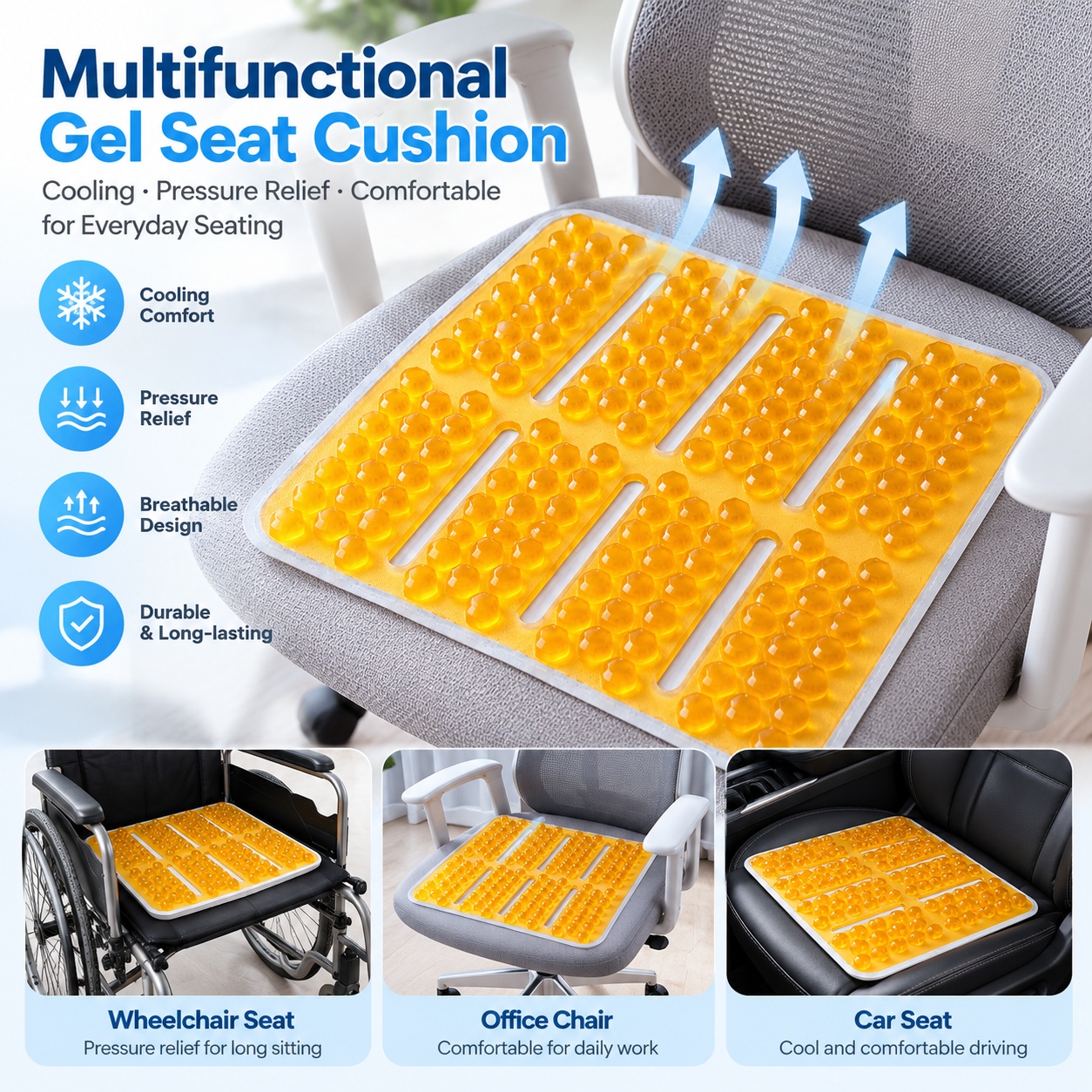
Long hours in one spot turn most cushions into heat traps, but this one refuses to play along. Its open-cell foam core pulls warmth away from your body while letting air move through channels underneath, so the surface stays noticeably cooler than your chair.
The cover uses a breathable mesh weave that feels dry against your legs, even during marathon work sessions or gaming nights. Unlike gel pads that start cold and slowly warm up, this cushion keeps a steady temperature without any condensation or sticky residue.
It’s also thin enough to slip onto office chairs, car seats, or wheelchairs without shifting your posture. The non-slip base grips the seat, so you stay planted while the cushion quietly handles the heat you can’t escape.
FAQ
It uses a gel core that distributes weight more evenly and reduces pressure points, so you can sit for long stretches without that dull ache or numbness typical of plain foam pads.
Absolutely. The low-profile design fits most chairs and vehicle seats without adding too much height, and the non-slip bottom keeps it from sliding around during long commutes or desk work.
The gel is breathable and won't trap heat the way dense memory foam often does. It stays cooler to the touch and maintains its shape even after hours of continuous use.
Yes, the outer cover zips off easily and can be hand washed or machine washed on a gentle cycle, so spills and daily grime don't ruin the cushion's look or feel.
Many users find it helpful because the gel channels relieve direct pressure on the tailbone and encourage a more neutral sitting posture, though individual results can vary based on body type and chair setup.
It refers to a product made to original equipment manufacturer specifications, meaning it's built to match the quality and fit of cushions supplied with premium seating rather than being a generic afterthought.
It has a slim profile around 1.5 to 2 inches thick, enough to provide support without throwing off your seat height or making your legs dangle awkwardly.
Yes, it's lightweight and compact enough to fit in a carry-on or tote bag, so you can bring your own comfort to airplanes, bleachers, or hotel desk chairs without extra bulk.
Conclusion
After the third hour, most cushions have already started to surrender. This one doesn't. The gel layer works by spreading pressure so your weight never pools in a single spot, which means the dull ache that usually shows up in your hips or tailbone stays away. Underneath that surface, the core material stays live and springy instead of slowly going flat. You're not sitting on a cushion that merely feels soft at first touch; you're sitting on one that keeps returning that support hour after hour. The difference is subtle at first, but it's the reason you stop noticing the chair entirely.
The shape plays a role too. A well-placed curve shifts your pelvis just enough to keep your lower back from rounding, and that small adjustment changes the whole sitting posture without any conscious effort. Then there's heat. Long periods in one place usually mean trapped warmth and that sticky, uncomfortable feeling. The gel here doesn't hold onto heat the way foam does, so even when you're stuck at a desk or in a driver's seat, the surface stays noticeably cooler. Put all of that together and you get a cushion that still feels the same at hour six as it did at minute ten.
Contact Us
Contact Person: Catherine Peng
Email: [email protected]
Tel/WhatsApp: +86-13434169510
Website: https://www.kbcoolgel.com/