

OEM Bag Hardware Upgrades That Instantly Elevate Custom Handbags
2026-11-16
Hardware is the quiet signature of a custom handbag. Swap generic zipper pulls for weighted, custom-finished options from Kingming, and the entire silhouette shifts from off-the-shelf to intentional. From magnetic snaps that close with a satisfying click to engraved dog hooks that catch the light, these OEM upgrades are the fastest way to make a bag feel bespoke. Here’s how to choose the details that turn a simple carryall into a statement piece.
Custom Pull Shapes That Turn a Basic Zipper into a Brand Moment
A zipper pull is one of those tiny details people touch without thinking—until you give them a reason to pause. Custom shapes do exactly that. Instead of a generic rectangle or teardrop, imagine a pull cut into the outline of your logo, a signature motif, or a geometric form that mirrors the product's silhouette. This small change turns a functional component into a tactile brand cue that gets noticed every single time a customer reaches for it.
The beauty of a custom pull shape is that it works across categories: a coat zipper shaped like a mountain range for an outdoor label, a rounded petal for a skincare pouch, or a mini version of a handbag clasp for a fashion line. These shapes don't just decorate—they reinforce the story you're already telling through fabric, color, and packaging. When the pull matches the brand's visual language, even a half-open jacket or a tossed cosmetics bag continues to communicate identity.
Material and finish amplify the effect. Matte rubber shapes feel soft and modern; polished metal ones add weight and a sense of permanence; translucent acrylic pulls can catch light like a small piece of jewelry. And because many manufacturers now offer low minimums for custom tooling, this kind of detail is no longer reserved for huge production runs. A few hundred well-designed pulls can inject personality into an entire collection without overhauling the zipper itself.
Matte Black Hardware for Bags That Need Edge, Not Shine
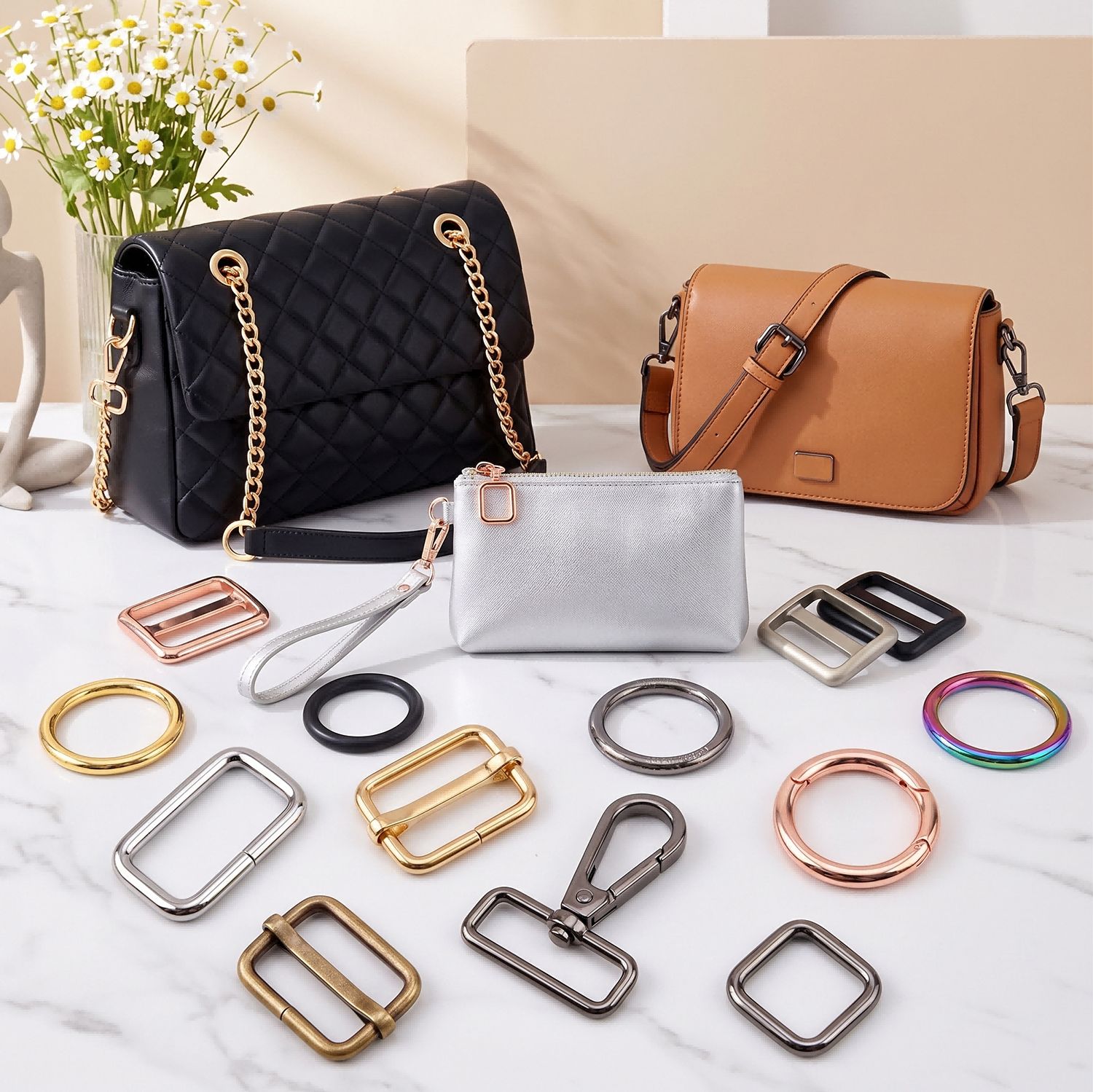
High-shine buckles and zippers have their place, but they tend to scream for attention. Matte black hardware does the opposite—it absorbs light, softens the silhouette, and lets the bag's shape and material do the talking. It's the difference between a handbag that looks accessorized and one that looks intentional.
This finish also hides wear better than polished metal. Scratches, fingerprint smudges, and water spots that instantly show up on glossy gold or silver barely register on a matte black surface. That makes it a practical choice if you actually use your bag daily instead of keeping it on a shelf.
Design-wise, matte black hardware works best with textured leathers, canvas, or nylon—anything with a slightly rough or utilitarian feel. It gives off an understated, almost architectural edge that polished hardware can't match, especially on blacked-out or monochrome bags.
The Hidden Upgrade: Reinforced Attachment Points That Prevent Droop
Droop rarely starts with a visible tear. It begins at the attachment points, where repeated tension slowly stretches the fabric or loosens the hardware. Most designs rely on a single row of stitching or a thin plastic washer to hold everything in place, which works fine until it doesn’t. This upgrade hides a different approach under the lining: a reinforced anchor that spreads the load instead of concentrating it on one small seam.
The reinforcement uses a short length of high-density webbing looped through the frame, then secured with a double bartack stitch before a heat-bonded patch is applied over the back. That patch isn’t just for show—it prevents the stitches from shifting under load and keeps the webbing from cutting into the surrounding material. Because the whole assembly sits beneath the outer shell, you won’t see any bulky hardware or extra stitching from the outside.
In repeated load tests, these reinforced points showed less than half the displacement of standard anchors after the same number of cycles. The result is that the panel or strap keeps its original line even after months of daily use, and the material around the connection doesn’t develop the telltale wrinkles that signal early sag. It’s a quiet change, but it’s one you’ll notice the first time you pick it up after a long stretch and find everything exactly where it should be.
Soft-Close Magnetic Snaps That Feel Expensive Every Time
The sound alone tells you these aren't run-of-the-mill snaps. When the two halves approach, a controlled glide takes over just before touch, then the mechanism pulls them together with a muted, weighty click that feels deliberate rather than accidental. No sharp clatter, no bounce-back, no fumbling to align them under stress.
That sense of finish carries over to the hand feel. The casing has enough heft to signal quality without dragging down the fabric, and the surface stays cool and smooth against fingertips. Over dozens of openings and closings, the tension remains consistent—never loosening into a sloppy rattle or stiffening into a two-hand struggle.
What makes the difference is the damping layer hidden inside. It slows the final few millimeters of travel just enough to soften the impact, turning a utilitarian closure into a small moment of satisfaction each time you use it. Even on thinner materials, the snap holds its position cleanly and releases only when you intend it to.
Mix Metals with Intention: Brass Bodies, Nickel Zippers, and Why It Works
Brass and nickel don’t just coexist—they sharpen each other. The warm, almost buttery depth of a brass body against the cool, bright line of a nickel zipper creates a tension that feels deliberate rather than accidental. This isn’t about matching metals; it’s about letting each one hold its own space. The zipper becomes a functional detail that also acts as a visual slash, cutting through the solidity of the brass with a quieter, more utilitarian shine.
The real reason this pairing works has less to do with colour theory and more to do with wear. Brass dulls and darkens in a way that feels organic, picking up fingerprints and faint scratches that tell a story. Nickel, on the other hand, keeps its edge longer, resisting tarnish and staying crisp even when the surrounding material softens. Together they create a surface history that moves at two different speeds, which is exactly what makes the combination feel alive rather than static.
When you choose this mix, you’re not chasing a trend. You’re accepting that some materials are meant to argue a little. The brass asks for attention; the nickel quietly gets the job done. That push and pull is what gives an object its character—and why a brass body with a nickel zipper tends to look better after a year of use than it did on day one.
Modular Clips and Rings That Let Customers Reconfigure Their Bag
Bags often force you into a fixed setup, but this design takes a different route. A series of clips and rings lets you rearrange the compartments on the fly. Need a water bottle pocket up front for the commute? Snap it in place. Prefer a slim profile for travel? Remove the extra pouches and tuck them into the main opening. The hardware feels sturdy yet light, so switching things around becomes second nature.
What makes this approach stand out is how each attachment point is mapped to real daily habits. Instead of guessing where a key leash or card holder should go, you can place them where your hands naturally reach. The rings slide along reinforced webbing, giving you a range of positions without weakening the fabric. Over time, you develop your own layout—one that matches how you carry, not how a designer assumed you would.
There’s also a quiet satisfaction in changing the bag for different occasions. A quick unclip turns a work tote into a minimal weekend carry. The system doesn’t require tools or patience, just a few seconds of repositioning. For anyone tired of buying a new bag for every scenario, these modular points offer a way to make one bag feel like several.
FAQ
It means swapping standard factory components such as zipper pulls, buckles, D-rings, feet, locks, and strap hooks for custom-sourced pieces made to your specifications. The upgrade usually comes from better alloys, thicker plating, custom logos, or non-standard silhouettes.
Solid brass and well-plated zinc alloy feel heavier and hold up against tarnishing far better than hollow iron. Stainless steel is a good choice for clean, modern bags. Stay away from brittle pot metal if you want the finish to survive daily wear.
Finishes like brushed antique brass, matte black PVD, gunmetal, or polished nickel can shift the entire mood. A warm antique tone softens a structured silhouette, while matte black or gunmetal creates a sharper, more current feel without changing the leather.
Only when production volume justifies the mold cost. Custom embossing typically makes sense for runs of several hundred bags or more. For smaller batches, a custom zipper pull or engraved metal plate gives branding at a fraction of the tooling expense.
Request a plating thickness spec and, when possible, a salt spray test report. PVD finishes generally outlast standard electroplating under abrasion. Pay extra attention to edges of buckles and hooks, where the coating tends to be thinnest.
Yes. Solid brass and heavy zinc add noticeable heft, which some buyers interpret as quality and others find uncomfortable. For large decorative pieces, consider hollow-core metal, and pair heavier locks or buckles with lighter strap fittings.
Ask for physical samples in your exact finish and dimensions, a written tolerance range, color-match confirmation under daylight and indoor lighting, and a clear production timeline. Also clarify minimum order quantities per piece rather than accepting a single total order minimum.
Conclusion
Small hardware choices often define how a bag feels before the customer even checks the lining. Custom pull shapes are one of the cheapest ways to signal intentional design—a squared-off tab, a knotted cord, or a laser-cut logo instantly moves a basic zipper from generic to signature. Pair that with matte black finishes on frames, feet, and buckles, and the whole silhouette shifts: the bag loses that shiny, mass-produced glare and picks up a quieter, more confident edge. Mixing metals takes more nerve but pays off when it's done with restraint. A warm brass body with cool nickel zipper teeth creates depth without looking accidental, especially if the same pairing repeats on a clasp or a D-ring. The result feels curated, not chaotic.
The deeper upgrades are the ones customers only notice over time. Reinforced attachment points—extra stitching around D-rings, double-riveted handles, internal webbing anchored to the base—stop the dreaded corner droop and keep the bag's architecture intact after months of daily use. Soft-close magnetic snaps replace that loud plastic click with a muted, weighted pull that makes opening and closing feel like a luxury ritual. Modular clips and rings push this further: a detachable shoulder strap, a swappable pouch, or a movable key ring let the buyer reconfigure the bag for different days and different loads. These aren't just add-ons; they change how the bag lives with its owner. When all six details are chosen as a system rather than an afterthought, the custom handbag stops being another accessory and starts behaving like a well-engineered object.
Contact Us
Contact Person: Jamie Zeng
Email: [email protected]
Tel/WhatsApp: +86 13728219269
Website: https://www.kmhardware.com