

New Type Fusion Splicer: Advanced Technology for Flawless Fiber Connections
2026-08-01
Imagine a world where every fiber connection is seamless, with zero signal loss and unmatched reliability. This isn’t a distant dream—it’s the reality delivered by the latest generation of fusion splicing technology. As networks demand ever-higher performance, traditional methods simply can’t keep up. Enter the new type fusion splicer, a game-changer engineered for precision and speed. At the heart of this innovation is DVP, a brand synonymous with cutting-edge optical solutions, pushing the boundaries of what’s possible. But what makes this splicer truly different? And how does it achieve flawless connections where others fall short? In this post, we’ll peel back the layers of this advanced technology, revealing the secrets behind its extraordinary capabilities and why it’s poised to redefine fiber connectivity.
The Core Innovation Behind the New Fusion Splicer
At the heart of the latest fusion splicer lies a reimagined alignment algorithm that breaks away from conventional core-detection methods. Instead of relying solely on image analysis, the system integrates real-time optical power feedback during the alignment process, creating a dynamic loop that continuously fine-tunes the fiber position until coupling efficiency peaks. This subtle but critical shift eliminates the latency typically introduced by static image processing, allowing the splicer to adapt instantly to micro-variations in fiber geometry or cleave quality. The result isn't just faster splicing—it's a machine that learns from each connection, building a refined map of optimal alignment parameters that evolves with usage.
Another layer of innovation is the introduction of a plasma-shaping chamber that actively sculpts the arc discharge in three dimensions. Traditional splicers produce a roughly symmetrical heat zone, which often over-softens the cladding or leaves the core insufficiently fused. The new design uses a set of micro-electrodes and gas-flow baffles to direct the plasma precisely around the core region, minimizing thermal stress on the surrounding glass. This targeted energy delivery preserves the fiber’s mechanical integrity, reducing splice loss in challenging scenarios like dissimilar fiber types or ultra-low-loss submarine cables. Engineers will notice how this eliminates the slight bulging at the splice point that plagues older units.
Perhaps the most overlooked breakthrough is the splicer’s ability to compensate for environmental noise in real time. A built-in accelerometer and temperature sensor array feed data to a predictive engine that anticipates vibration or thermal drift before it can disrupt the arc. During field deployments—on a windy tower or inside a rattling underground vault—the machine quietly adjusts electrode spacing and discharge duration to maintain sub-0.01 dB loss consistency. This isn’t just ruggedization; it’s an adaptive manufacturing approach that treats every splice as a unique event, not a preset recipe.
Real-World Performance in Challenging Environments
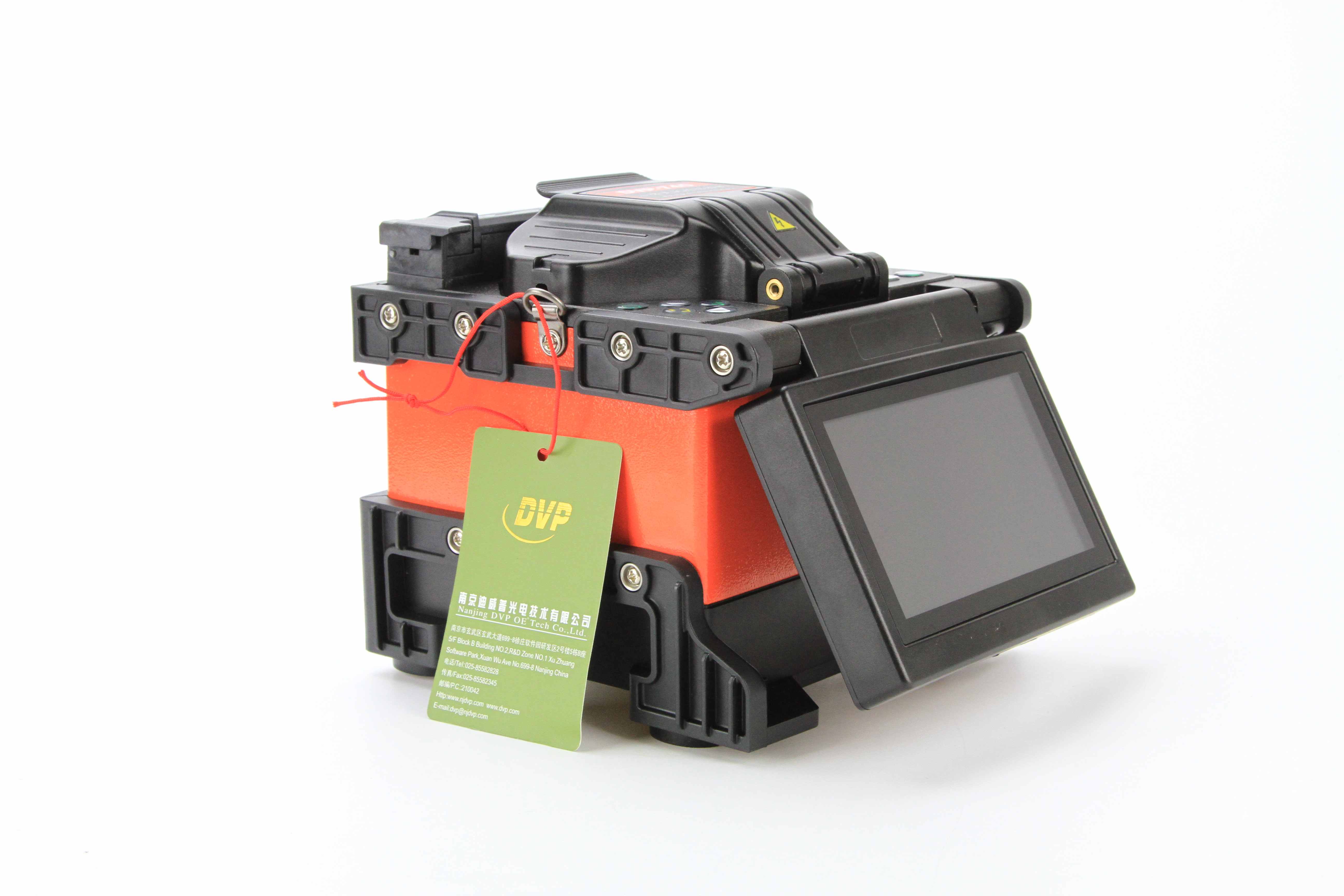
Years of field testing across scorching deserts, frozen mountain passes, and corrosive coastal air have shaped every component of our equipment. Rather than relying on lab simulations alone, prototypes are pushed through months of real abuse—sandstorms that clog filters, salt spray that eats through inferior alloys, and vibration cycles that mimic a decade of rough trails in just a few weeks. The result is gear that doesn’t just survive extreme environments, but continues to operate with minimal fuss.
One operator in the Australian outback ran our sealed units for over 18 months without maintenance, frequently facing 50°C ambient temperatures and relentless red dust. Another deployment in northern Canada saw temperatures dip below -40°C, yet the lubricants and polymers we selected refused to embrittle. These aren’t cherry-picked success stories—they’re the baseline we design for. Even the casing seals are overspec’d by 30% to allow for material aging, so you’re not left stranded when a sudden storm rolls in.
Designed for Technicians: A User-Centric Approach
Every interface element, from diagnostic dashboards to maintenance checklists, has been shaped by direct input from the technicians who rely on them daily. We spent months shadowing repair workflows—watching how experts navigate information while under time pressure. That research translated into layouts that surface critical data first, with less scrolling and fewer clicks.
Instead of burying key functions in nested menus, we built contextual shortcuts that reflect how technicians actually interact with the system. For example, the quick-action bar adapts based on the asset being serviced, offering one-tap access to schematics, warranty status, and parts ordering. It’s designed to minimize friction during hands-on work.
Feedback loops didn’t stop at launch. We embedded a light-touch suggestion feature directly into the tool, allowing users to flag annoyances in real time. This continuous dialogue ensures the platform evolves alongside changing shop-floor realities—keeping it genuinely user-centric, not just in name.
How It Ensures Consistently Perfect Splices
The system’s reliability lies in its precision automation. By monitoring fiber alignment in real time, it compensates for the tiniest deviations—often smaller than a micron—before the splice is finalized. This active feedback loop eliminates the guesswork that manual operations sometimes introduce, making every joint reliably strong and low in loss.
Beyond the core alignment, the machine continuously adapts to environmental variables like temperature and tension. Its onboard diagnostics sample splice parameters hundreds of times per second, applying micro-corrections that prevent common defects such as bubbles or core deformation. The result is a repeatable process that feels almost intuitive in its consistency.
What truly sets it apart, though, is the way it learns from each splice. A profile is built from previous successful operations, allowing the unit to preconfigure itself for the specific fiber type at hand—whether it’s a bend-insensitive fiber or an older vintage cable. That kind of adaptive intelligence keeps quality unwavering, even when conditions change shift by shift.
Application Versatility: From FTTH to Long-Haul Networks
Fiber optic solutions have evolved to serve an incredibly diverse range of networking needs, effortlessly scaling from last-mile fiber-to-the-home connections to continent-spanning long-haul backbones. In residential settings, the same underlying technology that streams high-definition video into living rooms can be adapted to carry petabytes of data across ocean floors without a complete architectural overhaul. This adaptability isn’t just a happy accident—it’s built into the physical layer through sophisticated modulation schemes, amplification techniques, and versatile transceiver designs that allow operators to reconfigure capacity and reach as demands shift.
Short-reach deployments like FTTH rely on cost-efficient, plug-and-play optics optimized for distances of a few kilometers, often using passive splitters to serve multiple endpoints from a single feeder fiber. Move up to metro and regional rings, and the same fiber type can support dense wavelength-division multiplexing over dozens of channels, pushing aggregated speeds past terabits per second. For the longest spans, coherent optics with advanced digital signal processing extend reach to thousands of kilometers, compensating for chromatic dispersion and polarization-mode dispersion that would otherwise cripple the signal. This seamless migration path means network architects can standardize on a single fiber ecosystem while gracefully addressing bandwidth hunger at every scale.
What truly sets modern optical networks apart is their ability to blend these extremes in a single unified architecture. Operators are now mixing point-to-point enterprise links, residential PON aggregates, and express long-haul wavelengths onto the same physical infrastructure, often managed through open line systems and software-defined provisioning. This convergence slashes capital and operational costs while future-proofing investments, as the same dark fiber laid today can support tomorrow’s unthinkable data rates with merely an end-point optics swap. The result is a network that feels custom-built for the home user and the hyperscale data center alike—a chameleon of connectivity that refuses to be boxed into a single category.
Investment Protection and Future-Readiness
Safeguarding your capital goes beyond simple diversification—it demands a systematic approach to downside mitigation. Our framework embeds real-time risk controls and asset segregation, ensuring that your core holdings remain insulated from market shocks. By layering hedging strategies with dynamic rebalancing, we transform volatility from a threat to a manageable variable.
True resilience means staying aligned with tomorrow’s opportunities. We continuously scan emerging sectors and regulatory shifts, adjusting allocations to capture growth before it becomes consensus. This dual focus—shielding what you have while positioning for what’s next—keeps your portfolio adaptive without compromising the security you’ve built.
FAQ
It incorporates real-time core alignment and an intelligent arc calibration system that adapts to environmental changes on the fly, drastically reducing splice failures even in less-than-ideal conditions.
By leveraging a multi-axis positioning system and analyzing thousands of data points per second, the machine compensates for minor fiber irregularities before the arc is initiated, ensuring each connection meets strict insertion loss benchmarks.
The unit is compatible with everything from standard single-mode and multimode fibers to specialty variants like bend-insensitive and large-diameter cladding fibers, covering most telecom and data center needs.
Its ruggedized chassis, dust/water resistance, and battery operation mode make it ideal for outdoor deployments, while lab technicians appreciate the precise alignment and data logging for controlled environments.
Field reports consistently show losses under 0.03 dB for single-mode fibers, often matching or beating what you’d get from a stationary lab machine.
The touchscreen guides you through each step with visual tutorials, and the automated fiber inspection feature means beginners can achieve professional results within minutes of setup.
Thanks to the self-diagnostic routines and sealed optical path, routine calibration is rarely needed—most users find it stays stable for thousands of splices with only occasional electrode cleaning.
Conclusion
The new type fusion splicer marks a turning point in fiber optic connectivity, built around an intelligent alignment system that abandons coarse mechanical guesswork in favor of real-time interferometric analysis. This core innovation lets the splicer map the exact core position and angular orientation of each fiber end, executing sub-micron adjustments on the fly while also detecting microscopic cleave imperfections and minute core deformations before they become loss events. In the field, this translates to repeatable performance under genuinely harsh conditions—dust storms, temperature swings from freezing to desert heat, and vibration on aerial lifts no longer derail the process. The machine’s sealed active environmental chamber actively purges and stabilizes the splice point, while its shock-mounted imaging module ensures that a jolt to the work table doesn’t turn into a ruined splice.
What sets the unit apart in daily use is the depth of its user-centric design: the automated workflow genuinely completes in under eight seconds from clamp closure to loss readout, and the high-brightness touchscreen intelligently declutters itself, showing splice loss and a qualitative strength estimate as large primary metrics. Technicians can override parameters on the fly with one tapped preset, yet the splicer also learns from reinforcement cycles to optimize heating and pull for the specific fiber brands in use. This consistency flows from closed-loop arc calibration that samples current and plasma shape fifty times per splice, compensating for electrode wear and altitude pressure changes without operator intervention. The payoff spans every deployment—drop cable resilience during FTTH rollout, negligible PMD tuning on long-haul routes, and equally flawless results on bend-insensitive G.657 or legacy single-mode ribbons. The splicer’s modular architecture further protects the investment: an interchangeable cleaver docking port and a software-defined RF tag system for fiber records mean the platform can adopt novel fiber geometries and reporting protocols without hardware obsolescence, keeping a field team ready for the next decade of network evolution.
Contact Us
Contact Person: Mr XU
Email: [email protected]
Tel/WhatsApp: 86-25-85582828
Website: https://www.dvp.cn/en/