
Logo Projector Wholesaler Tips for Smart Bulk Purchasing Decisions
2026-10-17
Placing a bulk order for logo projectors comes with a hidden trap: the cheapest quote rarely survives real-world use. Between inflated lumen claims, fragile mounting brackets, and warranty fine print that vanishes when you need it, one wrong call can wipe out your margin on the entire shipment. That’s why smart buyers treat wholesale purchasing as a series of deliberate checks—not a race to the bottom. TNT has built its reputation on helping distributors and AV companies navigate these decisions with confidence. In this guide, we’ll break down the factors that actually matter when you’re buying in bulk, so your next order doesn’t become an expensive lesson.
Don't Trust the Sample: Verify Factory Capacity First
A polished sample can easily mask serious production bottlenecks. Many suppliers keep a small batch of near-perfect units on hand, made by their most experienced workers under relaxed conditions. That says little about what happens when an order jumps to thousands of pieces and the line has to run at full speed.
Before placing a deposit, ask for evidence of real capacity: current production schedules, machine lists, shift rosters, or a live video walkthrough of the floor. If possible, have someone visit without notice. A factory that hesitates to show normal operations or can't explain how it would fit your order into its existing workload is already telling you something.
Capacity problems usually show up late, as missed ship dates, rushed quality checks, or last-minute outsourcing. Checking capacity first doesn't guarantee perfection, but it turns a vague promise into something closer to a measurable plan.
Custom Logo Projectors: The Spec Traps That Sink Bulk Orders
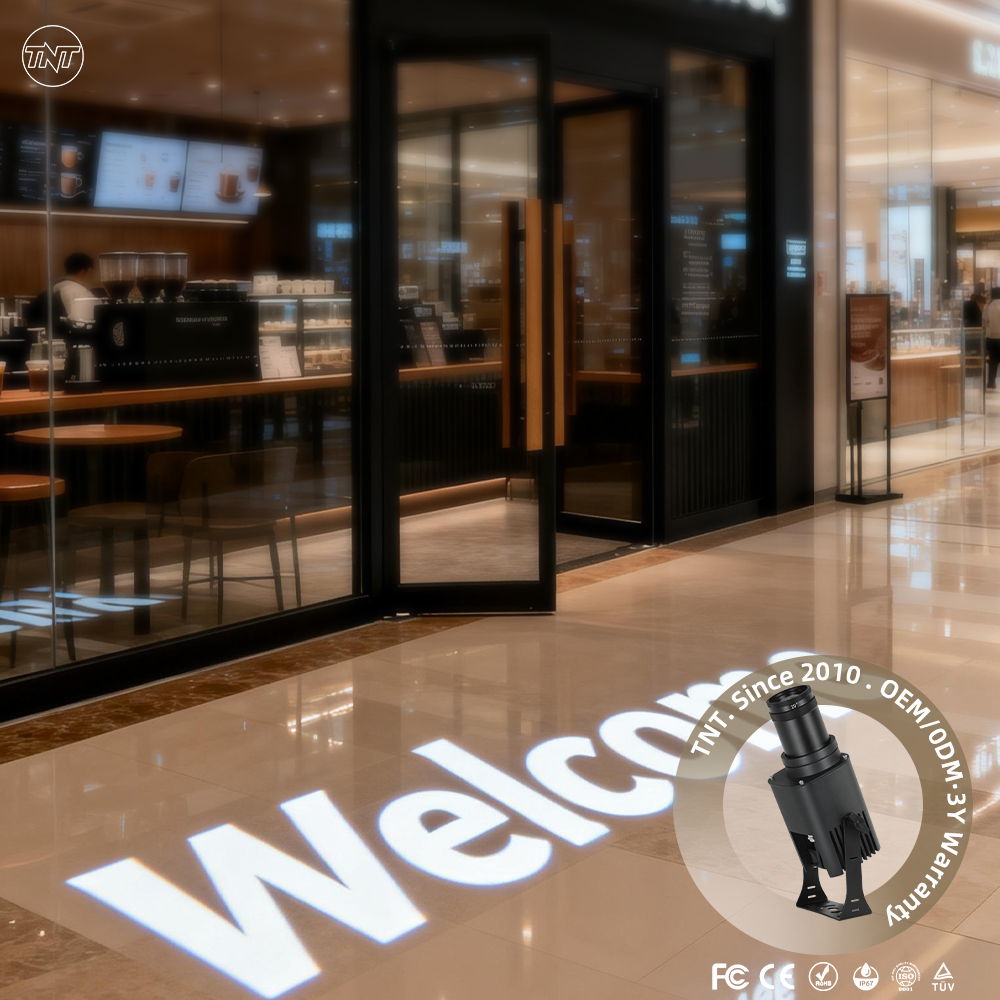
Most bulk orders for custom logo projectors fall apart not because the design is wrong, but because the spec sheet hides the wrong numbers. A classic one is brightness. Suppliers love to quote LED lumen ratings of 3,000 or 5,000, but that figure measures the raw light source, not what actually lands on the wall. Ask for ANSI lumen output and a photo taken in a normally lit room, not a dark closet. If they refuse or send only a beam shot against a black background, you can expect the logo to wash out in any real retail or event space.
Resolution claims are another trap. A projector that advertises 1080p support or 4K input often uses a display chip natively rated at 320p or 480p, then upscales the signal. Your logo might look crisp on a business card but turn into a blurry mess when projected at two or three meters. Demand a native resolution test pattern and a close-up photo of fine lines and small text. Also check the lens material. Some bulk suppliers use acrylic lenses that start to yellow and warp after a few weeks of heat from the LED, which causes edge distortion and color shift. Glass optics cost more but hold up far better over a full day of continuous use.
Finally, the custom slide itself is often the weakest link. Cheap film or printed gobo discs fade, bubble, or peel when sitting next to a hot LED module. A batch that looks perfect on day one can become unreadable within a month. Insist on high-temperature glass film or a metal chrome gobo, and ask for an aging test report showing the projected image after at least 100 hours of runtime. That single request filters out most low-quality factories before you wire a deposit.
Heat and Light Decay: Test Units Before Committing to Volume
There's a quiet problem that shows up weeks after a batch lands: colors shift, materials turn brittle, brightness drops. Heat and light work slowly, so the damage isn't obvious on day one. Running a small batch through accelerated exposure—elevated temperature, UV lamps, long-cycle illumination—reveals whether a unit will hold its specs or quietly fall apart after a few months in the field. This step costs less than a recall and gives you actual data instead of a supplier's word.
One common mistake is assuming that a sample that looks fine under normal office lighting will survive near a window or inside a hot enclosure. Heat and light decay is not linear, and different materials fail at different rates. By testing a handful of units before you sign off on volume, you can catch mismatched polymers, unstable dyes, or poor thermal dissipation early. If the test units show noticeable yellowing, warping, or a measurable drop in output, that's your signal to adjust the design or negotiate a different material spec.
The goal isn't to run a lab-perfect study. It's to get a realistic benchmark. Put the units in the worst environment they are likely to face, run them longer than you think necessary, and document the change. When the time comes to scale up, you'll know whether the product can handle heat and light over its expected lifespan—or whether you need to change suppliers, add coatings, or rethink the housing before thousands of units end up in the field.
Look Beyond the Quote: Lock In Long-Term Supply and Spare Parts
A low initial quote can quickly become a costly mistake if the supplier cannot sustain production or deliver critical spare parts down the road. When you evaluate a vendor, push past the numbers on the first page. Ask about their track record with long-term orders, their warehousing capacity, and how they handle component obsolescence. A supplier that only focuses on the one-time sale will leave you stranded when a gearbox fails or a control board burns out two years later.
Locking in supply means more than signing a contract for a set quantity. It involves understanding where the supplier sources raw materials, how they manage their own sub-tier vendors, and whether they maintain a safety stock for your most critical items. Request a written commitment for spare parts availability—ideally with a guaranteed response time and a capped price escalation formula. This shifts the conversation from a transactional purchase to a partnership built for uptime.
One practical approach is to negotiate a life-cycle agreement that covers not just the initial equipment but also the expected wear items and electronic modules. Make sure the supplier is willing to stock or quickly manufacture legacy parts, even after the main product line evolves. By locking in these terms early, you protect your operation from avoidable downtime and avoid the hidden cost of forced redesigns or emergency sourcing later.
Trial Orders Reveal Wholesaler Reliability Faster Than Any Promise
A supplier can promise 48-hour turnaround, but a modest trial order shows whether boxes arrive intact, paperwork matches, and communication stays clear when something goes wrong. Promises cost nothing; a botched trial costs the wholesaler a customer.
Real issues surface only under real transactions. Payment terms, packaging quality, inventory accuracy, and problem-solving ability cannot be judged from a slick catalog or a polished sales call. A small order forces the wholesaler to actually perform.
Once you see how a wholesaler handles a small order, you know how they'll handle a big one. Reliability isn't declared; it's demonstrated. Suppliers who nail the trial earn larger orders; those who stumble are filtered out fast.
Match Projector Specs to Real Installation Conditions
A projector’s listed brightness and resolution rarely tell you whether it will work in your actual room. Measure the distance from lens to screen first, then check the throw ratio against that number. If the projector will sit on a shelf at the back of a conference room, a short-throw model might be useless no matter how sharp the image looks in the demo.
Lens shift and zoom range matter more than many installers expect. A fixed ceiling mount leaves little room for error, so you need enough vertical and horizontal adjustment to avoid tilting the projector and introducing keystone distortion. Check the offset spec, not just the zoom ratio, because a large zoom range can’t always compensate for a bad mounting location.
Real lighting conditions also shift what specs you should prioritize. In a living room with east-facing windows, a 3,000-lumen projector may wash out by mid-morning unless paired with an ambient-light-rejecting screen. Fan noise and input lag become more noticeable in quiet home theaters or fast-paced gaming setups. Match those secondary specs to how the space is actually used, not to the ideal dark-room benchmark.
FAQ
Look beyond the catalog. A dependable supplier will happily share photometric reports, thermal test data, and examples of previous large orders. They ask about your installation environment before quoting—whether it's a dusty warehouse or a humid storefront—and they don't push the same stock unit for every buyer.
For most indoor retail spaces, 20 to 50 watts of LED output is plenty if the ceiling height stays under 4 meters. Don't chase the highest wattage; a well-focused 30-watt unit with a glass lens can outshine a sloppy 80-watt model. You'll want a projector with adjustable focus and a crisp gobo, not just raw power.
Buyers focus on the logo itself but forget about the gobo material, color temperature, and beam angle. For a brand with strict color matching, request a physical sample before full production. Also specify whether you need a rotating gobo or a static one—adding rotation later often means paying for new internal components.
Order extra gobos rather than extra projectors. The gobo is the part that scratches, fades, or gets swapped when a campaign changes. A spare projector is only useful if the housing or LED fails, which is rare with solid thermal design. A good rule of thumb: add 15% extra gobos and 5% extra projectors for replacements.
Ask for the exact mounting pattern, the available bracket types, and how the unit handles heat if installed in a recessed ceiling. Request detailed dimensional drawings and verify the IP rating if any unit goes outdoors. Many wholesalers will include basic brackets free, but adjustable swivel mounts usually cost extra per unit.
Request a paid sample, but don't stop at one. Ask for two samples from different production batches if possible, so you can check consistency. Run them for 72 hours straight in a warm room and watch for color drift or flicker. Then open one up to inspect wiring, heat sinks, and whether the gobo is real glass or flimsy plastic.
Look for at least a 2-year warranty on the LED module and 1 year on the driver. A wholesaler that replaces a full unit for the first 90 days shows confidence. Avoid vendors who only offer free repair but charge shipping both ways—shipping costs can quickly eat into your margins with heavy metal projector housings.
Conclusion
Many buyers get burned by trusting a polished sample. A projector that looks sharp in a demo room can underperform when produced at scale. Before placing a bulk order, ask for factory floor details, production line data, recent audit reports, or even a live video of the assembly process. Custom logo projectors carry their own risks: tiny differences in lens coatings, LED bins, or housing materials can change throw distance, brightness, and color temperature. Insist on locked specifications for every component, not just a generic datasheet. Heat and light decay are the quiet killers of a bulk deal. Run units for 48 to 72 hours straight in a warm environment, then re-measure output. If brightness drops more than a few percent or the housing warps, that is a signal to walk away or demand a redesign.
The quoted price often hides the real cost of ownership. Ask about spare parts availability, driver replacements, and whether the supplier will still sell you the same LED module two years later. A wholesaler who disappears after the first shipment leaves you with dead inventory. Small trial orders beat any sales pitch. Send a purchase order for 5 or 10 units, note how long fulfillment takes, how the packaging protects the optics, how quickly defects are handled. Then match the projector specs to the actual installation: a logo projector meant for a dark retail floor will fail in a sunlit lobby. Check IP rating, mounting options, and ambient light tolerance before you commit to inventory.
Contact Us
Contact Person: TNT SALE
Email: [email protected]
Tel/WhatsApp: 8613544277910
Website: https://www.tntprojector.com/