

Leading Digital Oscilloscope Manufacturer Advances Precision Testing Solutions
2026-05-29
Precision testing is entering a new era, and TPS is leading the charge. As digital systems push the boundaries of speed and complexity, the demand for oscilloscopes that deliver uncompromising accuracy has never been greater. Discover how this industry pioneer is redefining signal analysis with cutting-edge solutions that empower engineers to see what others miss.
Redefining Signal Clarity in High-Frequency Domains
As frequencies climb into the gigahertz range, even the slightest impedance mismatch or parasitic effect can obscure a signal beyond recognition. Traditional rules of thumb collapse, forcing designers to treat every trace as a transmission line and every via as a potential resonator. The pursuit of clarity here is less about brute-force amplification and more about meticulous impedance control, material selection, and geometry optimization. It’s a domain where a few microns of substrate variation or a poorly placed ground stitch can turn a clean eye diagram into a blurred mess.
What often gets overlooked is how profoundly the physical environment shapes high-frequency behavior. Surface roughness on copper, the glass-weave pattern in laminates, even the soldermask's dielectric properties start to dictate signal fidelity. Engineers who succeed in this space develop an almost intuitive sense for these hidden influences—anticipating where reflections will occur, how crosstalk will propagate, and exactly when a differential pair stops behaving differentially. Tools like 3D electromagnetic simulation become indispensable, but the real art lies in knowing which details matter before the simulation even begins.
Redefining clarity also means recognizing when conventional metrics lose their relevance. At multi-gigabit data rates, a simple signal-to-noise ratio no longer tells the full story. Factors like jitter decomposition, intersymbol interference, and power supply induced modulation creep in and demand a more nuanced view. The clearest signals are the ones that have been designed not just to survive the channel, but to arrive with timing and amplitude margins intact—a result that comes only from treating the entire interconnect as a carefully choreographed system rather than a collection of isolated components.
Built for the Toughest Test Environments
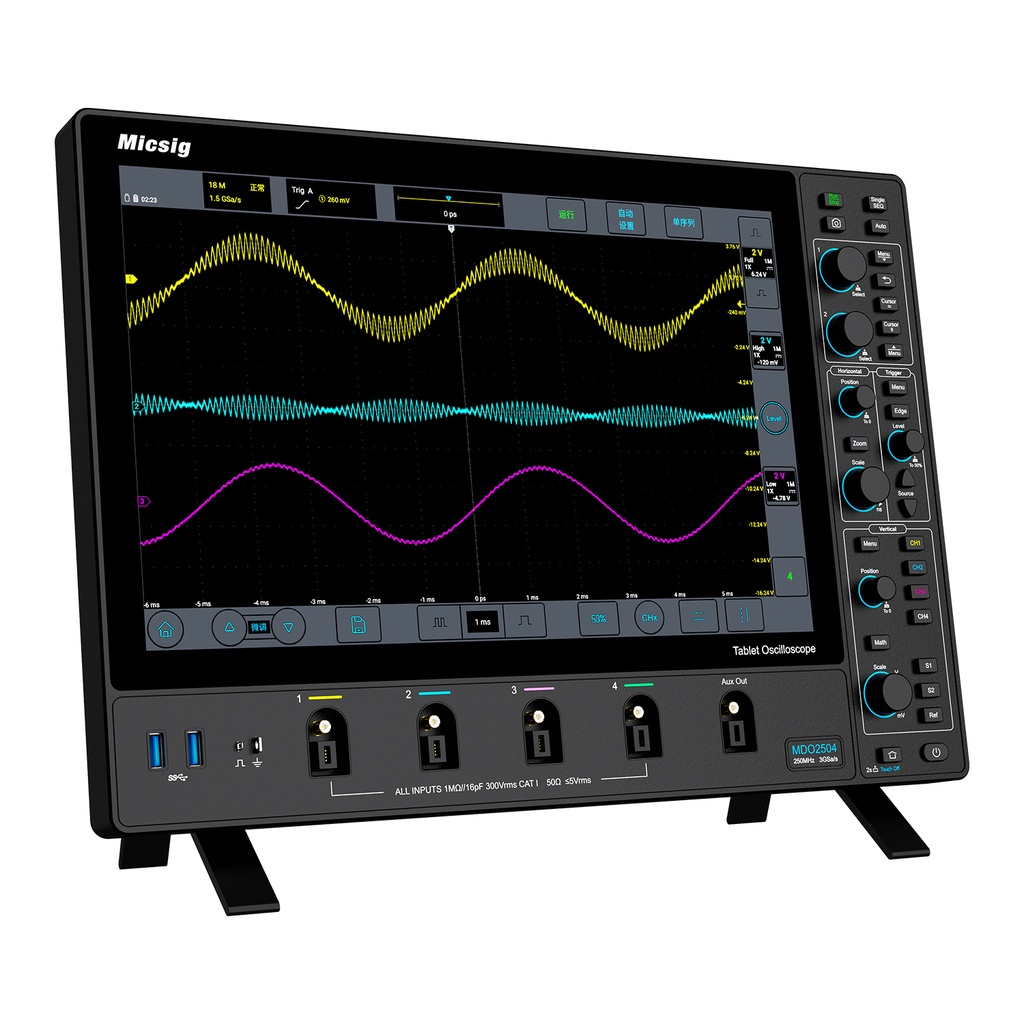
Engineers working in extreme conditions understand that ordinary equipment simply won't cut it. From sub-zero cold chambers to scorching desert heat, every component must withstand punishment without a single misstep. This relentless reliability is woven into every layer of the design, using materials and architectures that laugh in the face of thermal shock, vibration, and sustained peak loads. It's not about surviving one test—it's about enduring thousands of cycles without breaking a sweat.
What truly sets this level of ruggedness apart is the obsessive attention to failure modes that most suppliers overlook. It means qualifying not just for today's spec sheet, but for the freak events that happen in the field: sudden humidity spikes, corrosive salt fog, or a power surge that would fry lesser gear. Each enclosure, connector, and seal is chosen with a paranoid commitment to isolation and integrity, ensuring that the mission keeps running even when the world around it is falling apart.
The result is a platform that doesn't ask you to compromise. Instead of babying fragile instruments, your team can focus on collecting critical data, confident that the hardware will be the least of your worries. When a test campaign pushes everything to the edge, you need a backbone that never bends—one that was literally forged in the crucible of the most unforgiving conditions on the planet.
Bridging the Gap Between Raw Data and Insight
Raw data often feels like a foreign language—endless rows and columns with no obvious meaning. The real challenge isn't just gathering more information, but learning to see the story it's trying to tell. When you approach a dataset, think of yourself as a translator. Your job is to find patterns and connections that turn numbers into a clear message, one that anyone on your team can understand and act on.
The magic happens when you stop treating every data point as equal. Instead of getting lost in the noise, zoom in on what matters most. Ask yourself: What problem are we solving? Which metrics actually move the needle? By filtering out distractions and focusing on the signal, you begin to bridge that gap. The best insights rarely come from a single perfect report; they emerge when you combine curiosity with context—mixing quantitative facts with the qualitative realities of your business.
One practical way to close this divide is by making data visual. A well-crafted chart can reveal trends that a spreadsheet never could. But visuals alone aren't enough; they need to be paired with a narrative that explains why the numbers changed and what it means for tomorrow's decisions. Ultimately, bridging the gap means empowering people to move from “what happened” to “what should we do next?” without needing a data science degree.
Engineered to Outpace Tomorrow’s Waveforms
Signals are getting trickier—faster edges, tighter margins, and transient anomalies that conventional instruments miss by a mile. Our architecture leverages a custom front-end ASIC paired with a hyper-sampled trigger engine, so you capture the quiet chaos riding on your clock lines before it becomes a field failure. No more gambling on glitch-catching blind spots.
We threw out the old rulebook on bandwidth interleaving. By merging staggered sampling with adaptive phase correction in real time, the system redefines what’s achievable at the probe tip. The result? Clean eye diagrams even when tracking multi-gigabit serial streams, and a noise floor low enough to see the whisper of a power rail fluctuation under load.
Tomorrow’s compliance tests won’t announce themselves, so we baked in headroom that feels excessive—until you need it. With hardware-accelerated FFTs running on a distributed compute array, you’re not waiting for post-processing to reveal spectral oddities. It’s the difference between reacting to a waveform and truly keeping pace with what hasn’t been invented yet.
From Lab Bench to Production Floor: Seamless Scalability
Moving a process from the controlled chaos of a research lab into the rigid demands of full-scale manufacturing often feels like translating poetry into a technical manual. The equipment that was hand-calibrated with a wrench and a prayer needs to become a turnkey system that a night-shift operator can run blindfolded. We bridge that gap not by discarding the lab work but by embedding its essential logic into robust, modular workflows that grow with you.
The trick is to build scaling into the very first experiment. Instead of relying on one-off scripts and manual step logging, we treat every lab iteration as a draft for the production line. Parameters are captured digitally, consumables are tracked, and quality gates are defined early—so when volume ramps up from a few grams to a few tonnes, the transition isn't a reinvention but a deliberate unfolding. It's like rehearsing a play on a small stage until the actors and the script are ready for Broadway.
On the factory floor, the result isn't just a bigger version of the bench setup—it's a streamlined, fail-safe operation that preserves the essence of the discovery. Downtime between batches shrinks because the process memory travels with the system, and troubleshooting feels familiar even at scale. This approach turns scalability from a dreaded cost center into a quiet, continuous thread that ties invention to impact.
Where Intuitive Design Meets Precision Engineering
Great design doesn't just happen—it emerges when every curve, every interaction, and every detail feels inevitable. In our approach, intuitive design is the silent hand guiding users, while precision engineering is the backbone that makes that seamlessness possible. Every element is carefully calibrated so that complexity dissolves into simplicity, and the user's instinct becomes the only manual they'll ever need.
Behind the effortless experience lies a ruthless attention to tolerances that most people will never see but will always feel. From fluid mechanical motions to perfectly weighted haptics, our creations bridge the digital and physical worlds through meticulous craftsmanship. The result is something that works so naturally, you'd almost forget it was engineered at all.
This harmony doesn't come from a rulebook—it comes from iterating until logic and intuition become indistinguishable. We obsess over micro-interactions and materiality, ensuring that every touchpoint rewards the senses. When intuitive design and precision engineering truly meet, the product becomes an extension of human intent, not a tool that demands learning.
FAQ
It comes down to their proprietary front-end architecture that drastically lowers noise floors while maintaining high bandwidth. Instead of chasing just headline specs, they focus on real-world signal fidelity, meaning measurements stay accurate even in electrically noisy environments.
Recent models include a new timebase that virtually eliminates jitter on fast edges, which is a game-changer for debugging high-speed digital buses. You spend less time second-guessing whether a signal anomaly is real or an artifact of the scope.
In power integrity testing for AI accelerator boards, their ultra-low-noise input and high-resolution ADC allowed engineers to spot millivolt-level rail droops that other scopes masked. This directly prevented intermittent crashes in the target system.
It ditches the typical one-size-fits-all approach. The analysis suite lets you deeply customize measurement triggers and math channels using a straightforward drag-and-drop interface. You can even script complex compliance tests without leaving the scope environment.
They offer a unified platform that scales from portable units for field diagnostics to high-channel-count systems for ATE. The key is a common software layer, so test sequences developed in R&D seamlessly transfer to manufacturing without rewrite.
Surprisingly, no. They put a lot of effort into contextual help and guided setup wizards that don't treat experienced users like novices. It’s more about surfacing relevant tips based on what you're actively doing rather than burying you in manuals.
They build in a self-calibration routine that uses an internal golden reference, running transparently during idle periods. This guards against drift from temperature swings or aging components, which is critical for long-duration reliability testing.
Rather than rushing to release gear for every new spec, they leverage FPGA-based architecture to add support via firmware upgrades. This means a single hardware purchase can stay current through several generations of standards like PCIe or USB.
Conclusion
A pioneering digital oscilloscope manufacturer is reshaping the landscape of precision testing with a suite of advanced solutions that push well beyond conventional limits. At the core of this evolution is a relentless focus on signal clarity in high-frequency domains, where even the slightest distortion can obscure critical insights. The latest platforms harness new frontend architectures and noise-reduction techniques, delivering unparalleled fidelity that reveals subtle signal behaviors previously lost in the noise. These instruments are not confined to pristine lab settings; they are engineered to withstand the toughest test environments, from temperature extremes on a factory floor to high-vibration field installations. Every component is selected and tested to ensure reliable operation when it matters most, turning harsh conditions into routine affairs rather than obstacles.
Beyond raw performance, the real differentiator lies in bridging raw data and actionable insight. Proprietary analysis engines transform dense waveform captures into clear, contextual intelligence, letting engineers pinpoint anomalies or validate designs in fractions of the time once required. This intelligence is built to keep pace with tomorrow’s waveforms—rising data rates and complex modulation schemes are met with headroom that won’t become obsolete in a product cycle. Seamless scalability ties the entire ecosystem together, allowing the same measurement core to serve from R&D debugging on a lab bench to automated compliance testing on the production floor, without sacrificing consistency. Wrapping this capability in an intuitive, thoughtfully designed interface ensures that precision engineering remains accessible, reducing cognitive load and accelerating time to answer. It’s a holistic approach where every element—from the analog path to the user experience—works in concert to advance what engineers can achieve.
Contact Us
Contact Person: Lily
Email: [email protected]
Tel/WhatsApp: +49 (0) 2161 49526-0
Website: https://tps-elektronik.com/en/