

Industrial SLA 3D Printer Solutions from China: Redefining Precision Manufacturing
2026-06-08
Precision manufacturing has always demanded better tools, but industrial SLA 3D printers from China are now rewriting the rules. Among the innovators leading this shift is ProtoMat, a brand that quietly delivers the accuracy commercial projects can't live without. If you've ever battled layer lines or waited weeks for a functional prototype, you know the old compromises. This post explores how forward-thinking factories are turning to high-resolution SLA systems for parts that rival injection molding, and why ProtoMat keeps surfacing in conversations about speed, surface finish, and downright reliable throughput.
Precision Beyond Microns: How Chinese SLA Printers Push the Boundaries
In the realm of stereolithography, Chinese manufacturers have moved past the micron barrier with systems that routinely achieve layer thicknesses under 50 microns. This isn't just a numbers game—it's about engineering light engines and galvanometer controls that swap out generic motion profiles for ones tuned to specific resin chemistries. The real leap lies in how these printers manage the interplay of laser spot geometry and exposure timing, often relying on real-time feedback loops that inspect each cured line before proceeding. The result is a surface finish so uniform that post-processing steps like sanding become optional for many applications.
What separates these machines from earlier generations is their focus on edge-to-edge consistency across the entire build platform. Instead of calibrating for peak performance at the center and accepting degradation toward the corners, they employ dynamic focus adjustments and dual-axis scanning to maintain spot sharpness everywhere. Some models also integrate a closed-loop resin temperature system that stabilizes viscosity, ensuring the recoater blade deposits layers with identical thickness regardless of ambient conditions. This obsession with uniformity means a dental aligner printed in the top-left corner matches the accuracy of one built in the bottom-right, something that was elusive just a few years ago.
Beyond hardware tweaks, Chinese SLA printers are rewriting the rulebook on accessible precision. By blending proprietary light-curing algorithms with expanded material libraries—from heat-resistant ceramics to flexible biocompatible resins—they let small studios tackle jobs that once required industrial-class equipment. The printers don't just hit nominal resolutions; they sustain them over marathon 72-hour builds thanks to predictive maintenance alerts and adaptive layer time compensation. As a result, designers and engineers are exploring geometries—lattice structures with walls thinner than a human hair, intricate fluid channels—that push the very limits of what additive manufacturing can achieve.
Bridging Prototyping and Production with Seamless Scalability
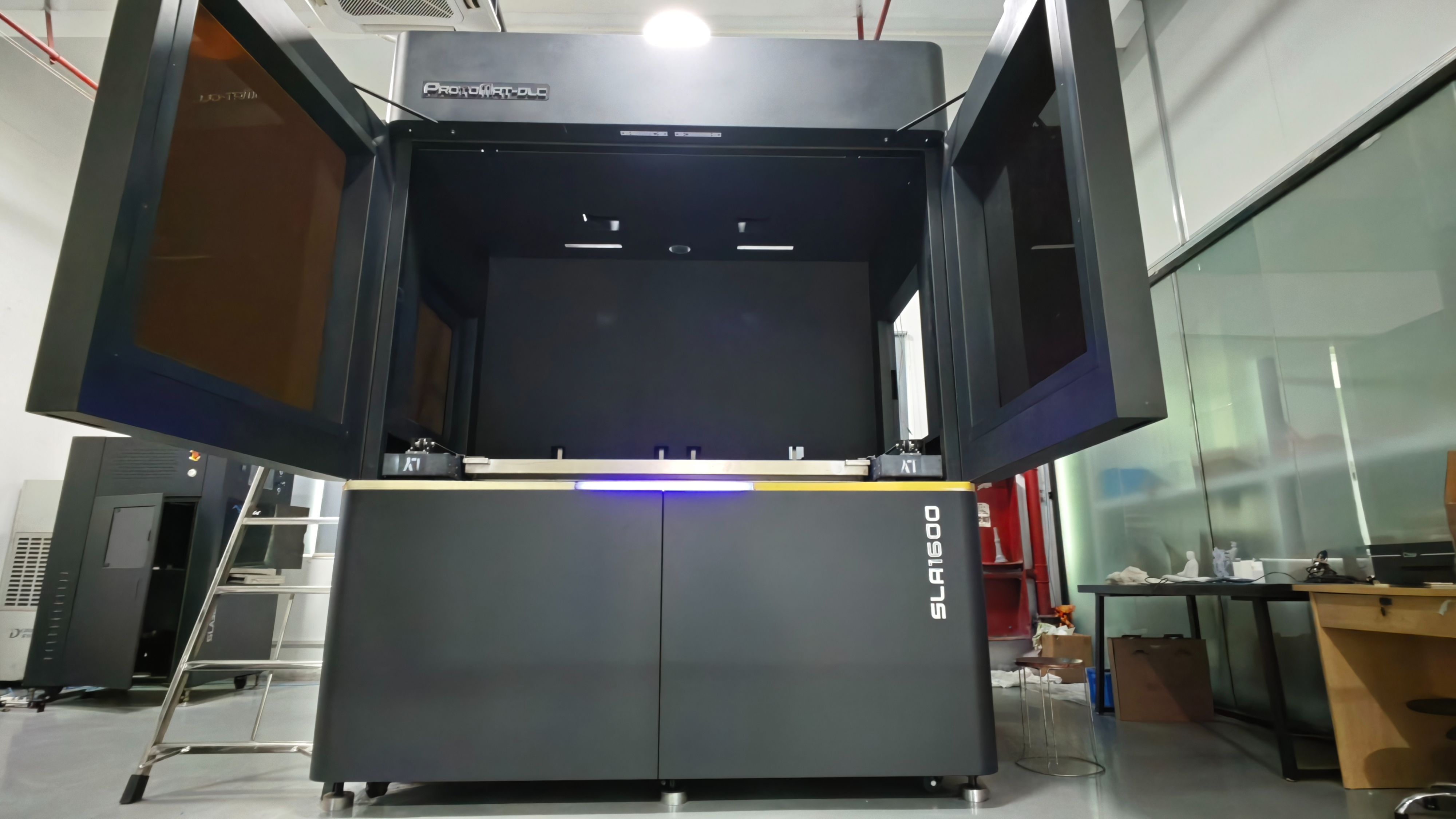
Moving from a rough prototype to a full production system often feels like swapping a bicycle for a jet mid-flight. The real trick is weaving scalability into the fabric of your design from day one, without letting future concerns paralyze early experimentation. Start with a modular core that lets you swap components as needs evolve, and keep your services loosely coupled so a spike in one area doesn’t cascade into a system-wide meltdown. It’s about choosing boring technology where it matters and reserving innovation for the parts that actually differentiate your product.
Operationally, this means setting up deployment pipelines that treat infrastructure as code and enforce environment parity from your laptop to the cloud. Automated scaling rules should be baked into your stack early, even if you’re only running on a couple of boxes. When the load does hit, you won’t have time to rethink your data layer or frantically optimize database queries—those decisions need to be rooted in production patterns, not wishful thinking. Instrument everything from the first commit, so you can see the cracks forming before they become outages.
The bridge isn’t just technical; it’s a mindset across the team. Code reviews should routinely ask, “What happens when this becomes the bottleneck?” and documentation should map out the scaling levers for each component. Prototyping is about speed, but production is about resilience—bringing the two together means you’re always building with one eye on the present and another on where the traffic patterns will be six months from now.
Material Mastery: Expanding the Palette of High-Performance Resins
The evolution of resin chemistries has steadily pushed the boundaries of what's achievable in demanding applications. Beyond the workhorse epoxies and polyesters, a new generation of high-performance resins is emerging, each tailored to solve specific challenges like extreme thermal cycling, aggressive chemical exposure, or the need for flawless surface finishes. Formulators are now blending uncommon monomers and catalysts to create materials that retain structural integrity at temperatures that would degrade conventional polymers, opening doors in aerospace, oil and gas, and advanced electronics.
This expansion isn't just about reaching higher heat deflection temperatures; it’s about achieving a delicate balance of properties. Newer cyanate esters and benzoxazines deliver outstanding dielectric properties crucial for high-frequency circuits, while specialized vinyl esters are bridging the gap between corrosion resistance and mechanical toughness in infrastructure projects. The palette now includes resins that can be tailored for specific curing profiles, dramatically reducing cycle times without sacrificing ultimate performance. These advances are shifting the conversation from simple material substitution to true design optimization, where the resin is selected as early as the conceptual phase to unlock geometries and functionalities previously deemed impossible.
Perhaps most intriguing is the growing toolkit of bio-based and recyclable high-performance resins, challenging the long-held assumption that sustainability must come at the cost of durability. Through clever molecular design, some of these systems now rival their petrochemical counterparts in key metrics like glass transition temperature and chemical resistance. As the palette expands, the role of the materials engineer becomes less about matching a spec sheet and more about curating a formulation that synergizes with the manufacturing process and end-use environment—a true mastery of material possibility.
Smart Engineering: Automated Calibration and Real-Time Process Control
Automated calibration has shifted from a periodic chore to an ongoing, intelligent process. Instead of relying on scheduled maintenance windows, modern systems continuously assess sensor drift and adjust parameters on the fly. This not only cuts downtime but also catches deviations before they affect product quality.
Real-time process control takes that idea further by feeding live data into algorithms that tweak machine settings instantly. A slight change in ambient temperature or material viscosity no longer requires a manual override; the system adapts within milliseconds, keeping output within spec without operator intervention.
When calibration and control work together seamlessly, the factory floor becomes almost self-regulating. Engineers spend less time troubleshooting and more time optimizing—a quiet shift that has turned complex production lines into predictable, resilient operations.
From Concept to Creation: Accelerating Time-to-Market Without Compromise
Every great product begins as a raw spark, but the real challenge lies in transforming that spark into something tangible without letting the clock bleed the life out of your vision. It’s not about rushing through the stages—it’s about refining the messy, human process of iteration so that each decision moves you closer to launch without diluting what made the idea worth chasing in the first place. We’ve found that the fastest path is rarely a straight line; it’s a series of intentional shortcuts carved by deep understanding of what your audience actually needs, not just what competitors are shipping.
The old trade-off between speed and quality is a myth kept alive by rigid workflows that treat creativity like a factory line. By embedding real-time feedback loops and cross-discipline collaboration from day one, you stop waiting for perfect and start building with purpose. Prototypes that once took months now surface in weeks—not because corners are cut, but because the team is aligned on the core problem, not just the feature list. This isn’t about magical tools or silver bullets; it’s about trusting the people in the room to make bold calls, fail fast on the small stuff, and keep the essence of the product intact all the way to the finish line.
Tailored Solutions for Niche Applications: Dentistry, Jewelry, and Beyond
In dentistry, off-the-shelf tools rarely meet the exacting demands of patient-specific care. The move toward digital impressions and same-day restorations hasn’t eliminated the need for nuance—crown margins, implant guides, and occlusal splints still require software that can handle organic geometries without forcing clinicians into rigid workflows. A truly tailored approach means the interface adapts to the way a lab technician thinks, not the other way around. Subtle adjustments in scan alignment or automated trimming of undercut regions save hours over a week, but they only work when the algorithms are tuned to the real quirks of intraoral data.
Jewelry design presents a different set of constraints: the interplay of light, the fragility of wax models, and the need to preserve artistic intent during digital translation. Generic CAD packages often stumble when filigree gets too fine or when a stone setting demands variable wall thicknesses measured in tenths of a millimeter. Purpose-built solutions step in here, offering lattice generation that respects both aesthetics and castability, or file repair tools that spot issues like non-manifold edges before they ruin a precious metal print. It’s not just about geometry—it’s about understanding that a slight distortion during shrinkage compensation can turn an heirloom into scrap.
Beyond these familiar domains, the same principle applies anywhere that mass-market platforms fall short. Archaeological preservation teams need to reconstruct fragmented artifacts from noisy 3D scans, balancing accuracy against the urge to over-smooth history away. For custom orthotics and prosthetics, a one-click “auto-generate” button often produces shapes that ignore critical pressure points. The common thread is a willingness to build from the ground up, encoding domain-specific rules not as an afterthought but as foundational logic. When the problem is narrow enough, a generalist tool can waste more time than it saves—the right fit feels almost invisible, leaving the expert free to focus on the work itself.
FAQ
They combine high-resolution laser curing with robust machine architectures, delivering micron-level accuracy across complex geometries. The ability to repeatedly produce intricate parts with smooth surfaces eliminates extensive post-processing, making them a natural fit for industries where tight tolerances are non-negotiable.
These systems are designed for flexibility—they accommodate a wide range of photopolymer resins, from durable ABS-like materials to castable wax and transparent formulas. Whether the task is functional prototyping, investment casting patterns, or end-use parts, the build chambers and material handling are engineered to switch between applications with minimal downtime.
Absolutely. While SLA is often associated with prototyping, modern Chinese industrial models feature large build volumes and fast scanning speeds. Many are built for 24/7 operation with automated resin refilling and smart monitoring, allowing them to churn out hundreds of parts per week without sacrificing fidelity.
Most top-tier providers offer comprehensive packages including remote diagnostics, on-site training, and readily available spare parts. They often assign dedicated application engineers to help optimize print parameters for specific materials and geometries, ensuring customers get maximum uptime and quality out of their machines.
They play well with industry-standard software ecosystems. Most come with intuitive slicing software that accepts common file formats, and they often provide APIs or plug-ins for popular CAD and simulation tools. This means engineers can move from design to print-ready file without complex conversions, keeping the entire process seamless.
Dental and medical device manufacturing benefit hugely from the biocompatible material options and ultra-high resolution for custom implants and surgical guides. Similarly, the jewelry, automotive, and consumer electronics sectors rely on them for rapid prototyping and short-run production of detailed parts that would be costly or impossible to mold.
They typically offer a compelling value proposition—lower initial investment without cutting corners on core technology. Combined with competitive resin pricing and energy-efficient components, the total cost of ownership often undercuts Western systems by a significant margin while maintaining tight tolerances and reliable repeatability.
Conclusion
Chinese industrial SLA 3D printers are setting new benchmarks in precision manufacturing, moving beyond mere micron-level accuracy to deliver reliable, sub-microscale details that were once considered impractical for high-volume production. This leap stems from tightly integrated optomechanical systems and advanced laser scanning strategies, which maintain consistent fidelity even on large-format builds. Alongside precision, a broad palette of high-performance resins—ranging from heat-defiant ceramics to biocompatible medical-grade materials—enables engineers to meet strict functional requirements without sacrificing printability. Smart engineering elevates the entire workflow through automated calibration, real-time process monitoring, and adaptive parameter adjustments that minimize human intervention and scrap rates.
Crucially, these solutions bridge the long-standing gap between prototyping and full-scale manufacturing. Seamless scalability allows users to replicate identical part quality across fleets of printers, accelerating time-to-market while preserving design integrity. Beyond general industry, tailored systems now dominate niche sectors like dentistry and jewelry, where high-resolution surface finish and customizability are paramount. By combining hardware excellence with application-specific expertise, Chinese SLA platforms are redefining what is possible in additive manufacturing—offering a complete ecosystem where precision, speed, and material versatility converge to turn ambitious concepts into production-grade realities without compromise.
Contact Us
Contact Person: Joe
Email: [email protected]
Tel/WhatsApp: +8613799507208
Website: https://www.3dprotomat.com/