

Import Reactor Electric Heaters: Key Considerations for Global Buyers
2026-08-18
Importing reactor electric heaters means juggling thermal efficiency, safety certifications, and regional voltage standards—one overlooked detail can stall a project or inflate costs. That's why Shenzhou Chemical Industry keeps the buyer's perspective front and center: every heater must match the reactor's specs and the destination market's rules. Below, we break down the factors global buyers actually need to weigh before signing off.
Matching Heater Specs to Your Reactor's Actual Duty
Heater selection often starts with a reactor's volume or surface area, but those numbers rarely capture what the heater actually needs to deliver. The real starting point is the heat duty: the total energy per unit time required to bring the vessel contents to temperature and hold them there under real operating conditions. A heater sized solely on vessel dimensions can end up struggling during a cold start, or cycling excessively once the process reaches steady state. By pinning down the required duty first, you avoid both underpowered systems that extend batch times and overpowered ones that create unnecessary thermal stress.
Calculating that duty means accounting for more than the sensible heat of the liquid inside. You have to include heat absorbed by the vessel walls, internal coils or baffles, the heat lost through insulation and fittings, and any endothermic reaction requirements. Start-up conditions often set the peak load, especially if the contents are viscous or if a fast ramp rate is non-negotiable. Then compare that peak demand against the heater's allowable watt density and sheath temperature in the actual process fluid, because a heater that can supply the calculated watts on paper may fail quickly if the local surface temperature causes fouling or degradation.
Finally, look at the operating window rather than a single design point. If future batches will use different fluids, lower fill volumes, or slower agitation, the heater should still modulate cleanly without hot spots or short cycling. A well-matched heater specification balances the maximum expected duty with enough turndown to handle partial loads, and it reflects the way the reactor is actually run, not just its nameplate size.
Reading Past the Spec Sheet: What Suppliers Leave Out
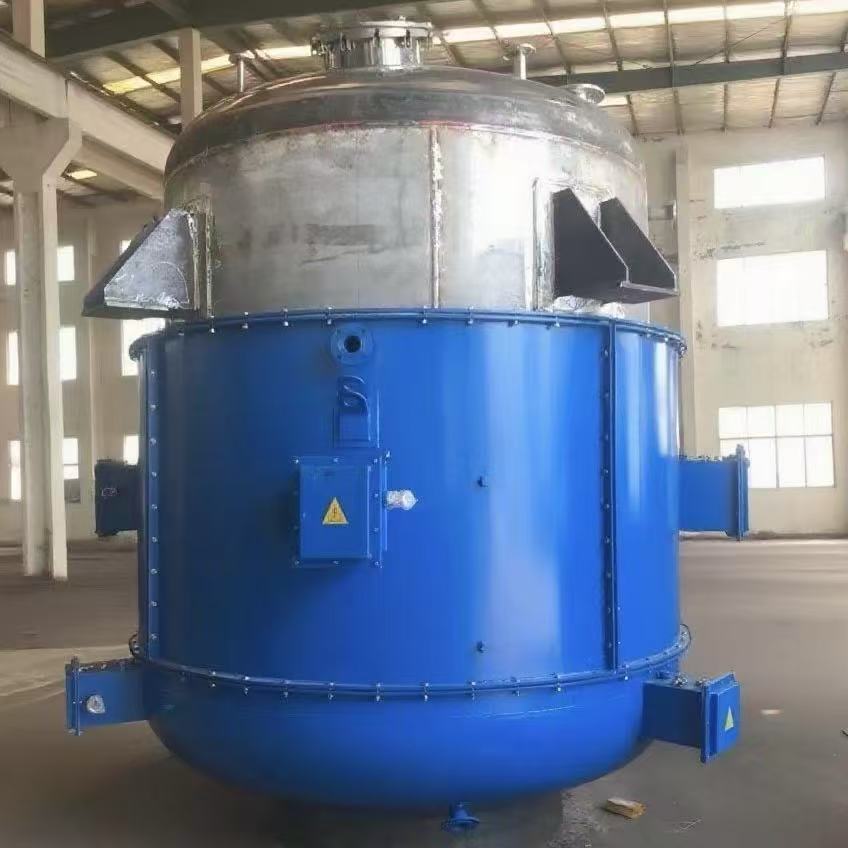
A spec sheet can feel like the most honest document in the room—until you realize how much it quietly skips. Numbers for wattage, tolerance, or throughput look precise, but they rarely survive contact with your actual workflow. A motor rated for continuous duty might still overheat after six hours in a dusty enclosure. A battery's advertised cycle life assumes a perfectly controlled temperature that your warehouse never matches. Suppliers count on you not asking why the fine print has no footnotes.
What disappears even faster are material choices and assembly details. Two components can share identical dimensions and electrical ratings, yet one uses a cheaper alloy that corrodes after a single humid season. The difference won't appear anywhere in the datasheet, because it isn't a measurable line item—it's a decision made quietly on the factory floor. You find out months later, when the connectors start turning green or the plastic housing cracks along a seam that looked fine in the CAD render.
Then there are the costs that never make it into a column. Firmware updates that require a proprietary cable you'll buy twice. Mounting brackets designed for a rail size nobody stocks locally. Recommended operating conditions that quietly void the warranty if you deviate by a few degrees. The spec sheet is not a lie, but it is a curated performance. The missing pages are where the real product lives, and they only get written after you've already signed for delivery.
Navigating Regional Voltage and Classification Gaps
Voltage mismatches rarely announce themselves until a drive faults out or a control transformer runs hotter than it should. North American sites often treat 480 V three-phase as the default, while many facilities in Europe and Asia run on 400 V, and Japan still carries pockets of 200 V and 400 V depending on legacy grid design. Rather than viewing these as minor label differences, commissioning teams need to check actual tolerance bands, frequency, and grounding arrangements before connecting equipment. A 380 V motor fed from a 400 V supply may hold up for a while, but the accumulated thermal stress shortens insulation life.
Classification gaps add another layer of confusion. An area marked Zone 2 under IEC 60079 does not map cleanly to NEC Class I Division 2, even though both imply an occasionally hazardous atmosphere. Protection concepts, wiring methods, and certification marks differ enough that a component approved under one framework can fail an audit under the other. On projects that cross regions, the more reliable route is to fix the classification scheme early, list every interface point, and require the supplier to confirm which certificate applies to each terminal box, gland, and cable entry.
Freight, Duties, and the Hidden Cost of Wrong Paperwork
Most shippers budget for freight and import duties, but they overlook the quiet damage caused by paperwork errors. A single mismatched HS code or missing commercial invoice detail can trigger customs holds that eat up days of waiting. Those delays often carry demurrage and storage charges that were never part of the original quote.
Beyond the immediate fees, incorrect documentation invites scrutiny. Customs officials may flag the shipment for a full inspection, which adds handling costs and sometimes leads to fines if the declared value or origin appears inconsistent. In the worst cases, goods get rejected at the border and sent back at the exporter's expense, turning a profitable order into a loss.
The real fix is treating paperwork as a core part of logistics, not an afterthought. Double-checking tariff codes, harmonizing the invoice with the packing list, and confirming importer details before dispatch can prevent most of these hidden costs. A few minutes of careful review often saves more than any freight negotiation ever will.
Verifying Long-Term Support Before You Commit
Jumping into a dependency based on a slick demo or a burst of recent commits feels natural, but it can sour fast if maintainers vanish six months later. Before you wire anything into your core stack, dig past the star count and check how issues actually move—look for consistent release history, responsiveness to security patches, and whether the project survives key maintainers stepping away.
A useful checkpoint is examining the project's bus factor and funding model. If a single person handles most commits and there is no documented sponsorship or corporate backing, you are betting your roadmap on one person's free time. Look at the past two years: did the library keep pace with upstream changes? Are there stale pull requests that address critical bugs? These signals tell you whether long-term support is a stated goal or just a hopeful assumption.
Also, do not confuse popularity with longevity. A library with 30,000 stars can still be effectively abandoned while a smaller project with a few steady maintainers and a clear governance model stays reliable. Check if they cut clean deprecation paths, maintain thorough changelogs, and have a public process for handing over maintainership. If you cannot verify that level of continuity, treat the dependency as temporary—and plan your abstraction layer accordingly.
Comparing Real Operating Costs, Not Just Purchase Price
A low sticker price can hide a machine that bleeds money through energy consumption, maintenance, and downtime. Two compressors with the same capacity might differ by thousands of dollars a year in electricity alone once efficiency ratings and duty cycles enter the picture. Instead of stopping at the invoice, pull a year of utility bills, service logs, and spare part invoices for your existing setup to establish a real baseline.
Maintenance schedules and consumable costs are where the real trap lies. A cheaper unit may demand filter changes twice as often, use a proprietary oil that costs triple the standard, or require a technician on speed dial for recurring faults. Factor in expected lifespan, warranty coverage, and whether the manufacturer has local parts stock rather than shipping from abroad. These hidden drains can easily outpace the initial savings within eighteen months.
For a fair comparison, calculate total cost per operating hour over a realistic horizon—say five years or 10,000 hours. Include not just energy and parts, but also lost production during repairs and the labor hours your team spends nursing a temperamental machine. A unit that costs ten percent more upfront but runs reliably with lower wear will usually come out ahead once you stop treating the purchase price as the final word.
FAQ
Different national grids vary significantly, so buyers need to verify that the heater matches the local power supply, such as 480V/60Hz in North America or 400V/50Hz in Europe, and ensure the control panel is compatible to avoid costly on-site modifications.
Heating elements and sheaths must withstand corrosive media and operating temperatures inside the reactor, so specifying materials like Incoloy, titanium, or stainless steel requires sharing the complete chemical environment data with the manufacturer to prevent premature failure.
Explosion-proof certifications such as ATEX, IECEx, or UL/CSA, along with pressure equipment directives or local electrical safety marks, are frequently required, and missing any single document can hold up customs clearance for weeks.
Reactor conditions often involve agitation, phase changes, or exothermic reactions, so estimating power density from basic volume alone can lead to localized overheating or runaway reactions; a proper selection should rely on actual heat load, fluid properties, and temperature control curves.
On-site installation guidance, spare parts availability, remote diagnostics, and warranty response time matter greatly, because even a simple sensor fault can shut down a production line if no local technician is available.
Request case studies with similar reactor volumes, media, and temperature control accuracy, speak directly with past customers, and assess whether the engineering team understands process control rather than just selling heating elements.
Tariffs, value-added taxes, destination port inspection fees, fumigation treatment for wooden crates, and transformer upgrades due to voltage mismatches can raise total landed cost by fifteen to thirty percent above the invoice price.
Material certificates, welding procedure qualifications, explosion-proof certificates, electrical schematics, operation manuals, warranty statements, and declarations of conformity should all be included, preferably endorsed by a third-party inspection agency.
Conclusion
Importing a reactor electric heater rarely goes wrong because of one big mistake; it is usually a slow accumulation of overlooked details that surface later as downtime or rejected shipments. Start by matching the heater to the actual duty cycle, not just the nominal kilowatt rating written on the vessel datasheet. A unit that works perfectly on a clean-water test can struggle with viscous fouling, uneven flow distribution, or rapid cycling. Ask for calculated heat flux at the hottest point, sheath material compatibility with trace chlorides or acids, and whether the watt density allows a safety margin without pushing the element into early burnout. Then dig past the marketing sheet: lead time, thermocouple placement, terminal enclosure ingress protection, and spare element lead times are often missing from brochures but decide whether a heater survives commissioning.
Regional differences multiply the risk once the equipment leaves the factory. Verify the supply voltage, frequency, hazardous-area certification, and local wiring codes before paying the deposit, because a 480 V heater specified for a 400 V site can burn out or fail inspection. Freight and customs are rarely neutral; incorrect harmonized codes, vague descriptions of flameproof enclosures, or missing test reports can hold the shipment for weeks and add storage fees that erase any upfront saving. After arrival, confirm the supplier has local service partners, stocking programs for replacement elements, and a clear warranty process that does not require shipping the heater back across an ocean. Finally, compare total lifecycle cost: energy wasted through poor insulation or excessive watt density, shorter element life, and unplanned shutdowns usually outweigh a lower purchase price within the first operating year.
Contact Us
Contact Person: Mr. Wang
Email: [email protected]
Tel/WhatsApp: 8613705299955
Website: https://vip.e-baixing.com/szhgyw