

Forged Steel Ball Valve Exporter Qualities That Ensure Long-Term Valve Performance
2026-11-28
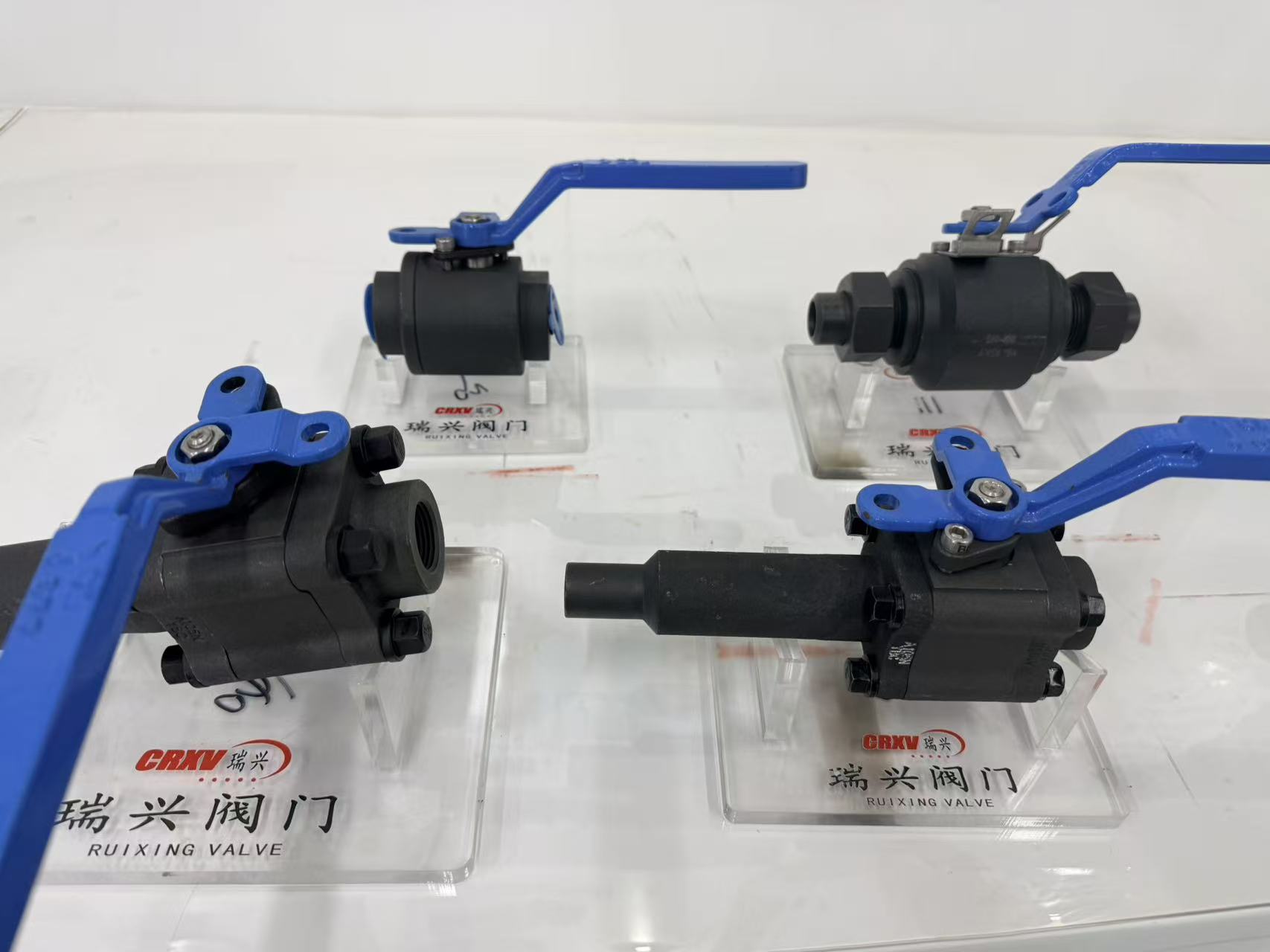
For a valve to hold up under years of pressure, heat, and aggressive media, the real test isn't just the casting or the pressure rating—it's the exporter's commitment to precision, testing, and traceability. Many suppliers can ship a forged steel ball valve, but few can prove that every component will perform after thousands of cycles. That's where CRXV has built a different reputation: by treating export quality not as a final inspection step, but as a standard that begins with raw material selection and never stops. In this post, we'll look at the specific exporter qualities that separate a valve that lasts a decade from one that becomes a maintenance headache.
What the Mill Certificate Actually Tells You About Longevity
A mill certificate lists chemical composition and mechanical properties, but those numbers only describe the starting material. Longevity depends on how the steel behaves after fabrication, under load, and in the actual environment. Yield strength and elongation tell you if the metal can withstand stress once, not whether it will resist fatigue over thousands of cycles. A high-strength alloy may carry an impressive certificate yet fail early through stress corrosion or poor weldability. The certificate is a snapshot of a heat, not a prediction of service life.
What matters more are the details often buried in fine print: heat treatment condition, grain size, inclusion content, and supplementary testing. Fine grain structure generally improves toughness and fatigue resistance, while coarse inclusions can become crack initiation sites. Charpy impact values at low temperature give a better sense of how the material behaves when conditions turn unfavorable. If the certificate lacks these data, the claimed mechanical properties mean little for long-term performance.
Traceability also plays a role. A mill certificate connects a batch to a specific heat and production date, allowing you to verify consistency across deliveries. Repeated orders with stable chemistry and stable mechanical results suggest a controlled process, which translates into predictable behavior in service. In contrast, a single certificate with excellent numbers but no history of consistent production offers a false sense of confidence. Longevity is earned through reproducible quality, not a single impressive test report.
Grain Flow Direction: The Overlooked Factor in Leak-Proof Sealing
Most sealing failures get blamed on surface finish, bolt load, or gasket choice. Grain flow direction rarely enters the conversation, yet it quietly shapes how a flange face behaves under compression. When a sealing surface is machined from bar stock or plate, the exposed grain boundaries can run nearly parallel to the face instead of perpendicular. That orientation leaves long, shallow micro-channels at the interface, giving process fluid a low-energy path once pressure climbs.
The problem becomes more visible in forgings and cold-drawn parts. A forged flange may have excellent strength in one axis but a sealing face that intersects the grain flow at an angle. Under thermal cycling, those elongated grains relax unevenly, opening gaps that a soft gasket cannot fully close. Flipping the blank or changing the machining sequence can shift the grain ends away from the seal contact line, often improving leak resistance without a single material upgrade.
In practice, this means grain direction should be listed alongside flatness and roughness when qualifying a sealing component. A quick macroetch on a sample slice shows whether the flow lines run perpendicular to the clamped face or wander across it. Where reorientation is not possible, a harder facing or a controlled compressive stress layer can interrupt those paths, but ignoring the microstructure will keep leak investigations running in circles.
Heat Treatment Windows That Determine Whether a Valve Survives Thermal Cycling
The survival of a valve under thermal cycling is rarely decided by alloy selection alone. It is the heat treatment window that sets the balance between retained austenite, carbide distribution, and residual stress. When solution annealing runs at the lower end of the permitted range for too short a time, the microstructure may look acceptable under a microscope, but the resulting hardness gradients across thick and thin sections become initiation sites once cyclic thermal strains accumulate.
Aging and tempering windows are even more unforgiving. For precipitation-hardened trim materials, a hold time just twenty or thirty minutes shorter than the specified soak can leave the structure under-aged, so in service the material continues to precipitate and shift its dimensions. Run the same parts near the upper temperature limit for too long, and over-aging removes the very strengthening phases that resist low-cycle fatigue at the seating surfaces. The useful window is often narrower than the nominal specification suggests, especially for valves with unequal wall thicknesses where the thermocouple reading may not reflect the coldest internal section.
Cooling rate deserves equal attention. In martensitic stainless valve bodies and bonnets, a slow quench or delayed transfer from furnace to quench tank permits grain-boundary carbides to form. Those precipitates are not harmful as a single event, but under repeated heating and cooling they act as preferred paths for microcracking, particularly in weld heat-affected zones and behind seat pockets. Recording furnace uniformity, actual part temperature, and quench delay replaces guesswork with a usable window, which is often what separates a valve that survives hundreds of thermal cycles from one that fails early.
Pressure Testing Methods That Separate Confident Suppliers from the Rest
Many buyers mistake politeness for capability. A supplier that can absorb pressure without changing tone or hiding details is rare. Start by compressing the timeline on a modest order and watch whether the response is a clear revised schedule or a vague promise. Confident suppliers push back with data, not excuses.
Raise volume suddenly or introduce a custom specification after initial quoting. Strong suppliers ask precise questions about tolerances, packaging, and lead time instead of immediately agreeing to everything. They also share constraints early. One useful test is to request production floor photos or raw yield data without notice; suppliers who hesitate often have something to hide.
Finally, simulate a real failure. Tell the supplier that a batch arrived with quality issues and measure how fast they move from blame to containment. Confident partners usually request batch codes, quarantine instructions, and corrective action before discussing compensation. That behavior is worth more than any certificate.
Coating Choices That Stand Up to Salt, Sulfur, and Rough Handling
Salt spray, hydrogen sulfide, and careless handling destroy most coatings long before the base metal gives out. The coatings that survive share a few traits: a dense cross-linked resin network, an adhesion profile that tolerates thermal cycling, and enough flexibility to absorb impact without micro-cracking. Instead of chasing a single "tough" coating, we test candidates by intentionally abusing them—sanding edges, dropping fittings onto concrete, exposing them to salt fog for weeks at a time, then checking for underfilm corrosion with a razor blade. Coatings that pass this kind of abuse almost always rely on surface-tolerant primers rather than perfect surface prep, because real field conditions never match a lab spec sheet.
One pattern emerges after enough cycles: thin-film systems built around epoxy or moisture-cured urethane tend to outperform thick, heavily filled coatings that look impressive but crack at sharp corners. The difference is in how they handle sulfur compounds. Sulfur attacks many coatings through acid formation, and a coating with evenly dispersed inert pigments resists that path far better than one with a glossy, sacrificial zinc layer that burns away in a few months. We have also moved away from single-coat systems in handling zones—where chains drag or wrenches slip—toward a two-coat approach: a hard, chemically resistant base and a slightly softer, impact-absorbing topcoat. The topcoat scuffs and dulls, but it stops the base from fracturing.
Rough handling is the easiest variable to underestimate. A coating that passes a 5,000-hour salt spray test can still fail in three months if it embrittles at low temperatures and gets struck by tools. So we check impact resistance at -20°F and 120°F, not just at room temperature, and we bend coated coupons until they crack as a crude but honest measure of real-world ductility. The coatings that make the final cut are rarely the ones with the boldest marketing claims. They are the ones whose datasheets show a narrow viscosity range, a realistic overcoat window, and a history of surviving in places where maintenance crews do not have time to baby the finish.
Post-Delivery Support and Maintenance Records That Keep Performance Honest
After the installation crew packs up and the invoices are settled, the real test of a delivery begins. Too often, support ends at the handshake, leaving operators to fend for themselves when a drive unit misbehaves or a control panel throws an unfamiliar fault code. A dependable record of post-delivery support does more than list warranty dates and phone numbers; it captures the actual rhythm of upkeep, the small adjustments made at odd hours, and the honest logs of downtime that no polished brochure would volunteer. Those pages, scrawled with dates and part numbers, become the only trustworthy narrative of how the equipment truly behaves in daily operation.
Maintenance records that avoid the usual gloss tend to include the unglamorous details: a tensioner re-torqued three times in the first month, a software patch applied after an intermittent sensor dropout, or a bearing replacement that was predicted two weeks before it failed. When these notes are kept without the pressure to impress a future auditor, they reveal patterns that prevent larger failures. A shift supervisor who jots down “vibration felt at 42 Hz, checked mounts, found one loose” is contributing more to long-term reliability than any generic checklist. The value lies in the ordinariness—the record becomes a working memory rather than a compliance artifact.
What keeps such documentation honest is its lack of polish. There is no attempt to smooth over a week of recurring alarms or to disguise a technician's second visit as a routine inspection. Instead, the record shows the back-and-forth: the first fix that did not hold, the follow-up call placed on a Sunday, the swapped component that finally changed the behavior. For anyone inheriting the system later, these notes are far more useful than a stack of stamped service reports. They tell the truth about what was touched, what was missed, and what still needs watching.
FAQ
Genuinely durable valves start with clean mill-certified bar or billet stock. A dependable exporter will confirm the heat number, verify chemical composition with positive material identification, and reject stock with unusual segregation or surface defects before forging. This prevents hidden weak spots that shorten pressure boundary life.
Forging compresses the grain structure along the body and end connections instead of leaving the random grain of a casting. Under cycling loads this gives the metal a more consistent fatigue path and reduces micro-porosity. The result is fewer leak paths through the body wall and better dimensional stability at the seat pockets over thousands of cycles.
The body may never fail, but a worn seat or a leaking stem is what takes a valve out of service. A strong exporter will match the seat insert to the actual fluid, temperature range, and duty cycle, and will offer blowout-proof stem designs with live-loaded packing where thermal movement is expected. If the sealing components are an afterthought, the best forged body will not save the valve.
At minimum, every valve should be shell-tested and seat-tested to a recognized standard such as API 598. For critical service, ask for low-pressure pneumatic seat testing, fugitive emission testing on the stem, PMI on all pressure-containing parts, and a documented dimensional check. A supplier that only provides a visual check is not proving much.
The external surface is often the first place corrosion starts, especially around flange faces, fasteners, and the stem area. Exporters focused on longevity will specify the right pretreatment and coating for the environment, such as zinc-nickel plating, epoxy coating, or corrosion-resistant top coatings, and will avoid damaging machined surfaces after coating.
Expect a full material certificate for the body, ball, stem, and end caps tied to heat numbers, along with pressure test reports, coating certificates, and dimensional inspection records. When the valve is destined for high-pressure or sour service, NACE compliance and additional NDE reports should also be available. This traceability is what allows failures to be investigated and prevented later.
Anti-static grounding prevents spark erosion between the ball and stem, which gradually degrades seats and sealing surfaces in dry gas service. Fire-safe construction with graphite or metal backup seals keeps the valve from becoming a major leak source after a plant fire. These details usually appear only when a manufacturer designs for worst-case events, not just for a catalog spec.
Conclusion
A reliable forged steel ball valve exporter rarely leans on polished claims alone. The mill certificate matters when it carries traceable heat numbers, chemical composition limits, and mechanical test results that correlate directly with how the valve body will behave under years of pressure and temperature swings. Longevity also comes from forging details that many buyers overlook, especially grain flow orientation. When the grain follows the contours of the body and seat pocket instead of being cut through by machining, the sealing faces keep their integrity and resist the slow weeping that leads to leaks. Heat treatment records deserve the same scrutiny as the certificate itself. A narrow and consistently controlled normalizing or quenching and tempering window helps the steel handle repeated thermal cycling without cracking or losing dimensional stability.
Confidence in a supplier grows when pressure testing goes beyond a quick shell test. Hydrostatic and pneumatic tests at staged pressures, with enough hold time to expose micro-leakage, reveal whether the exporter respects the difference between a passing valve and a proven one. Coatings then determine how the valve survives in the field, whether the threat is salt spray, sulfur-laden gas, or gouges during handling. A well-chosen phosphate, epoxy, or zinc-rich system, backed by adhesion checks, keeps corrosion away from sealing surfaces and stems. After delivery, the exporter’s value shows in maintenance records and support that do not fade. Clear torque values, spare part availability, and periodic follow-up documentation help operators spot wear before it becomes failure. Together these qualities turn a commodity ball valve into equipment that stays tight, cycles smoothly, and remains honest over its service life.
Contact Us
Contact Person: TIM
Email: [email protected]
Tel/WhatsApp: 8615857807381
Website: https://www.crxv.com/en/