

Export High Tenacity Nylon 66 Filament Yarn: A Complete Guide for Global Buyers
2026-08-28
Global buyers sourcing high tenacity nylon 66 filament yarn often face a tangled mix of inconsistent quality, unclear specs, and supply chain risks. This guide cuts through that noise, covering everything from performance benchmarks to supplier evaluation. Along the way, one name keeps surfacing for dependable supply: Changshu Polyester.
Reading Between the Lines of Nylon 66 Spec Sheets
Most engineers treat a Nylon 66 spec sheet like a menu: they glance at tensile strength, melting point, and density, then move on. But the real story hides in what's left unsaid. Molecular weight distribution, for example, rarely appears in the headline numbers, yet it dictates whether the material will flow smoothly through thin-wall molds or turn brittle after repeated thermal cycling. A spec sheet that lists a broad viscosity range without specifying the test method or shear rate is quietly telling you that batch-to-batch consistency may be a gamble.
Water absorption is another quiet variable. Nylon 66 can soak up over 2% moisture by weight, and that shifts dimensions, lowers stiffness, and changes electrical properties. A spec sheet might mention equilibrium moisture content at 50% relative humidity, but it won't emphasize that your part in a humid warehouse will behave differently than the dry-as-molded data used for the tensile modulus. Smart buyers ask for conditioned vs. dry-as-molded comparisons—or they learn the hard way when gears swell and bind.
Finally, compare two suppliers' Nylon 66 and the numbers may look identical, yet one lot runs perfectly while the other clogs hot runners. That's because specs often omit additive packages, nucleating agents, or regrind content. A tiny shift in heat stabilizer can mean the difference between a connector housing that survives 5,000 thermal shocks and one that cracks at 3,000. Reading between the lines means requesting lot-specific data, asking about regrind limits, and testing under your actual processing conditions—not just trusting the glossy one-pager.
How Tenacity Really Translates to End-Use Performance
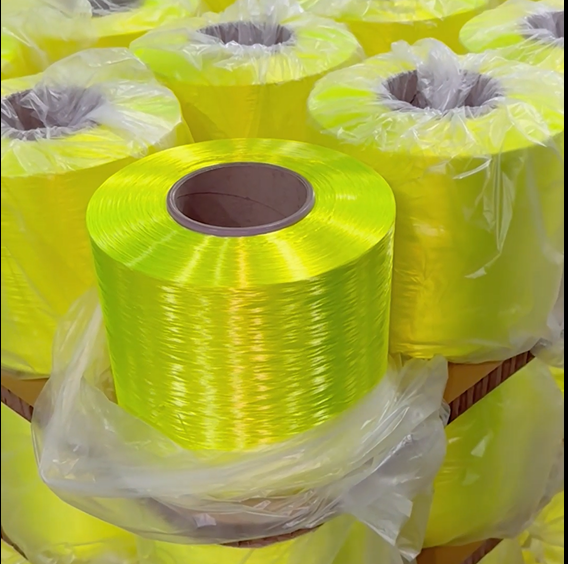
Tenacity often gets reduced to a single number on a data sheet—grams per denier, centinewtons per tex. That figure tells you how much force a fiber or yarn can take before it breaks, but it says almost nothing about what happens before that point. In real use, materials rarely fail in a clean, straight pull. They get caught, twisted, rubbed, and loaded unevenly. A high-tenacity fiber that's also brittle can snap at a fold or under a sharp impact, while a slightly lower-tenacity fiber with greater elongation might survive because it can distribute stress instead of concentrating it at one weak point.
End-use performance depends on how tenacity interacts with other properties. Take a conveyor belt or a climbing rope: the load is rarely static, and the direction of force shifts constantly. Here, tenacity works alongside abrasion resistance, fatigue resistance, and knot strength. A material with excellent straight-pull tenacity but poor knot strength will fail at the tie-off, no matter how impressive the lab result looks. That's why product developers test finished articles under conditions that mimic actual abuse—cycling loads, wet-dry transitions, UV exposure, and repeated flexing—rather than relying on raw fiber tenacity alone.
The translation from tenacity to performance also depends on construction. The same high-tenacity yarn can be woven, braided, or knitted into structures that either amplify or undermine its inherent strength. Tight weaves and balanced twist can convert fiber tenacity into dimensional stability and tear resistance. Loose or uneven structures create stress points where failure begins long before the fiber reaches its rated breaking strength. In practice, this means two products made from the identical fiber can behave very differently in the field, simply because one was engineered to let the tenacity do its job and the other was not.
Moisture Control from Factory Floor to Container
Controlling moisture isn't a single step—it's a chain of small, deliberate choices that start the moment raw materials hit the production line. On the factory floor, humidity sensors tucked near drying ovens and mixing stations feed real-time adjustments to air handlers, preventing damp pockets before they can settle into the product. Workers trained to spot condensation on chilled surfaces or subtle clumping in powders become the first line of defense, turning what could be a silent defect into an instant correction.
Once goods leave the line, the battle shifts to the container. Smart desiccants placed not just on pallets but inside packaging crevices absorb residual moisture during transit, while ventilated corner posts keep airflow moving through stacked cartons. Data loggers tucked discreetly into shipments capture temperature and humidity swings across ocean crossings, giving logistics teams a clear record of exactly where and when moisture risk spiked—so the next load can be packed with that lesson already baked in.
The real differentiator is treating the floor and the container as one continuous environment rather than separate stages. A factory that calibrates its final moisture readings to match the expected dew point inside a forty-foot reefer doesn't just prevent mold or corrosion—it builds a repeatable, observable system. And that system, quietly documented and refined with every shipment, is what keeps a brand's promise intact from the first seal to the final unboxing thousands of miles later.
Customs Codes That Trip Up First-Time Yarn Importers
Many first-time yarn importers assume all yarns fall under a single catch-all code. That assumption leads to costly delays. A 100% cotton yarn may have a different code than a cotton-polyester blend, and even the yarn's ply or whether it's put up for retail sale can shift the classification. You need to check the exact fiber content and packaging before filing.
One common mistake is treating elastic or textured yarns as if they were ordinary spun yarn. The tariff schedule separates filament yarns, textured yarns, and yarns containing elastomers. A small percentage of spandex can push your product into a completely different heading. Another trap: sewing thread has its own set of codes, and if you misclassify it as regular yarn, customs may reclassify and charge back duties.
First-timers also confuse yarns with cords or twine when the yarn is thick or plied. Once you get past a certain decitex or number of plies, the classification can flip. Avoid guessing based on product photos. Get a binding ruling or ask your broker to confirm the exact HTS code before your first shipment. A little extra time on the front end saves a lot of money on the back end.
Sampling Strategies to Catch Weak Filament Batches
Catching weak filament batches takes more than grabbing a few spools off the line. Weak spots often cluster by production shift or raw resin lot, so a simple random sample can easily miss them. Start by splitting incoming or produced batches into strata based on the extruder line, the time window, or the supplier lot. Then pull proportional samples from each stratum, taking short segments from the outer, middle, and inner layers of each spool rather than testing only the outer wrap. That layering matters because diameter drift or contamination can appear only after the extruder has been running for a while.
If a supplier has shown uneven quality before, raise the sample count well above the usual acceptance threshold. For diameter and ovality, a CUSUM chart will flag small shifts earlier than standard control limits. When even one spool in a batch falls below your tensile or bending strength floor, quarantine the whole batch and switch to a tightened sampling plan—say, testing every third spool instead of every tenth. This staged response keeps pressure on weak lots without over-testing stable production.
A hybrid approach also works well. Use in-line laser gauges or ultrasonic sensors to check every meter for diameter and voids, then run destructive tensile and impact tests on a smaller stratified subset. Keep the raw resin lot number and extrusion temperature recorded for each batch so a weak result can be traced back to a specific condition. Over time, that paper trail lets you adjust sampling frequency based on which variables actually predict failures.
Negotiating with Suppliers Who Overpromise on Strength
When a supplier's pitch leans heavily on "unmatched tensile strength" or "guaranteed load capacity," your first move is to ask for the raw test reports—not the marketing summary. Too many deals stall because buyers accept a glossy spec sheet without checking the date, sample size, or testing standard behind the numbers. Request third-party certification from an accredited lab, and compare it against your actual application requirements rather than a generic industry benchmark. If the supplier hesitates or offers to "send more details later," that's often a sign the original claim was inflated.
A practical way to anchor the negotiation is to tie a portion of the payment to verified performance after delivery. For instance, hold back a percentage—say 10 to 15 percent—until the material passes your own independent testing under real working conditions. This shifts the risk back to the supplier and quickly separates those who genuinely stand behind their product from those who were hoping you wouldn't check. Make sure the acceptance criteria are written into the contract with exact numbers, not vague phrases like "high strength" or "durable."
Finally, ask the supplier how they plan to handle a shortfall. A confident partner will discuss remedy options upfront—replacement, price adjustment, or expedited rework—without you having to push. If they deflect or blame "normal variation," that's a red flag. Negotiate a clear consequence for non-compliance, and document every performance promise in the purchase order. Overpromising usually collapses under the weight of specific, measurable terms, so keep the conversation focused on numbers, timelines, and accountability.
FAQ
High-tenacity grades are drawn and heat-set to achieve much higher molecular orientation, so you typically get breaking tenacity above 8.5 cN/dtex with lower elongation. That makes them suitable for load-bearing uses like tire cord, conveyor belts, ropes, and industrial sewing thread, whereas regular nylon 66 yarns prioritize drape and dyeability.
Automotive, industrial textiles, rope and netting, footwear, and outdoor equipment are the big ones. You need to know the exact end use because a safety airbag fabric, a conveyor belt, and a climbing rope each demand very different elongation, shrinkage, and fatigue resistance values.
Denier, filament count, breaking tenacity in cN/dtex, elongation at break, hot air shrinkage at a specified temperature, oil pick-up, package weight, and tube dimensions. If you need dyed yarn or UV resistance, say so early, otherwise the quote will be built around a generic first-grade specification.
Nylon 66 absorbs moisture quickly, so shipments need moisture-barrier bags, desiccant, and palletized cartons with proper bracing. If the yarn gets wet or sits in high humidity, its moisture content shifts and can affect downstream processing and strength. Confirm the supplier uses export-grade packaging and check unloading conditions at your warehouse.
OEKO-TEX, REACH, RoHS, and lot-specific test reports from third parties like SGS or TÜV are common. For technical uses, buyers often ask for heat aging strength retention, chemical resistance data, or fatigue test results. Match the certificate to the destination country and the application rather than asking for everything at once.
Hexamethylenediamine and adipic acid costs, energy prices, exchange rates, and supply-demand balance in the polyamide chain. Spec complexity and order volume also move the number. Some buyers reduce risk by agreeing on a quarterly price linked to raw material indexes instead of spot buying every time.
Request pre-shipment samples from actual production, ask for data from the last three to five batches, and get a third-party inspection or audit report if possible. A small trial order with independent testing will tell you more about batch-to-batch consistency in tenacity, elongation, and package quality than any brochure.
Conclusion
Global buyers chasing high tenacity nylon 66 filament yarn quickly learn that a spec sheet is not a promise but a puzzle. The headline numbers for denier and tenacity often hide the details that matter on a production floor: elongation at break, hot-air shrinkage, and fatigue resistance after repeated flexing. A yarn can hit 9.5 grams per denier in the lab yet fail in webbing or sewing thread if its elongation is too low or its shrinkage too erratic. Smart importers read between the lines, asking for full load-elongation curves instead of single-point values. They also track how tenacity translates to end use, because a filament that looks strong on paper may lose its edge after dyeing, coating, or exposure to heat. Moisture control is equally decisive. Nylon 66 absorbs water from the air, and if the yarn leaves the factory too dry or too wet, its strength and elongation can shift before it even reaches the container. Buyers who insist on sealed packaging, desiccant packs, and documented moisture levels avoid the costly surprise of a shipment that tests fine at origin but fails at destination.
The logistics of importing high tenacity nylon 66 often trip up first-time buyers in less obvious ways. Customs codes for synthetic filament yarns are not always intuitive, and a wrong HS classification can trigger higher duties or delays at the port. Experienced importers keep a close watch on the exact composition, denier per filament, and whether the yarn is single or plied, because these details change the code. Beyond paperwork, sampling strategies separate serious buyers from hopeful ones. Random samples from a single carton prove little; instead, pull cones from multiple pallets, test the inner layers as well as the outer, and send a portion to an independent lab. Many suppliers overpromise on strength, showing only the best test data or quoting dry values. When negotiating, ask for the full test report with date, lot number, and moisture content. Tie final payment to acceptance testing at the destination, and agree in writing on what happens if the yarn falls short. This practical, sceptical approach turns a complex import into a defensible purchasing decision.
Contact Us
Contact Person: CONNIE
Email: [email protected]
Tel/WhatsApp: 86-0512-53671634
Website: https://www.lida-yarn.com/