

Custom Floor Protection Film Manufacturer Shares Proven Surface Shield Solutions
2026-11-16
A single misplaced tool or a dragged ladder can undo weeks of meticulous work on a job site. What if the very surfaces you’re trying to protect become the weakest link in your project timeline? At Shire, we don’t just manufacture custom floor protection film - we engineer proven surface shield solutions that adapt to your specific challenges, because every square foot tells a different story.
Beyond Standard Rolls: Crafting Protection Films That Match Your Floor’s Exact Demands
Off-the-shelf floor protection rarely considers the specific surface underneath. A film that works on polished concrete can slide on textured vinyl or leave marks on sealed hardwood. Rather than forcing a single solution into every job, the real advantage comes from films engineered to the floor’s porosity, texture, and finish. We look beyond generic mil thickness and adhesive tack, starting with the surface itself—how it breathes, how it wears, and what it can’t tolerate during construction or renovation.
That means a delicate marble foyer gets a low-tack, breathable film that won’t trap moisture or discolor the stone. High-traffic epoxy garage floors demand puncture resistance and a bond that stays firm under heavy equipment but releases cleanly when the project ends. Even short-term carpet shielding requires careful adhesion balancing—too strong and it lifts fibers, too weak and it bunches into trip hazards. Custom-cut sheets and lay-flat dynamics aren’t extras here; they’re the baseline for avoiding callbacks and re-cleaning.
Getting the match right often starts with a quick sample test on an inconspicuous spot, or by referencing the floor’s installation specs if they’re available. Temperature swings, UV exposure, and the duration of the project all shift the equation, so the film that works in an air-conditioned showroom might fail on a sun-baked loading dock. By treating protection as a tailored layer instead of a roll of plastic, you stop reacting to damage and start preventing it from the first sheet you lay down.
From Jobsite to Showroom: How Custom Films Prevent Costly Surface Damage
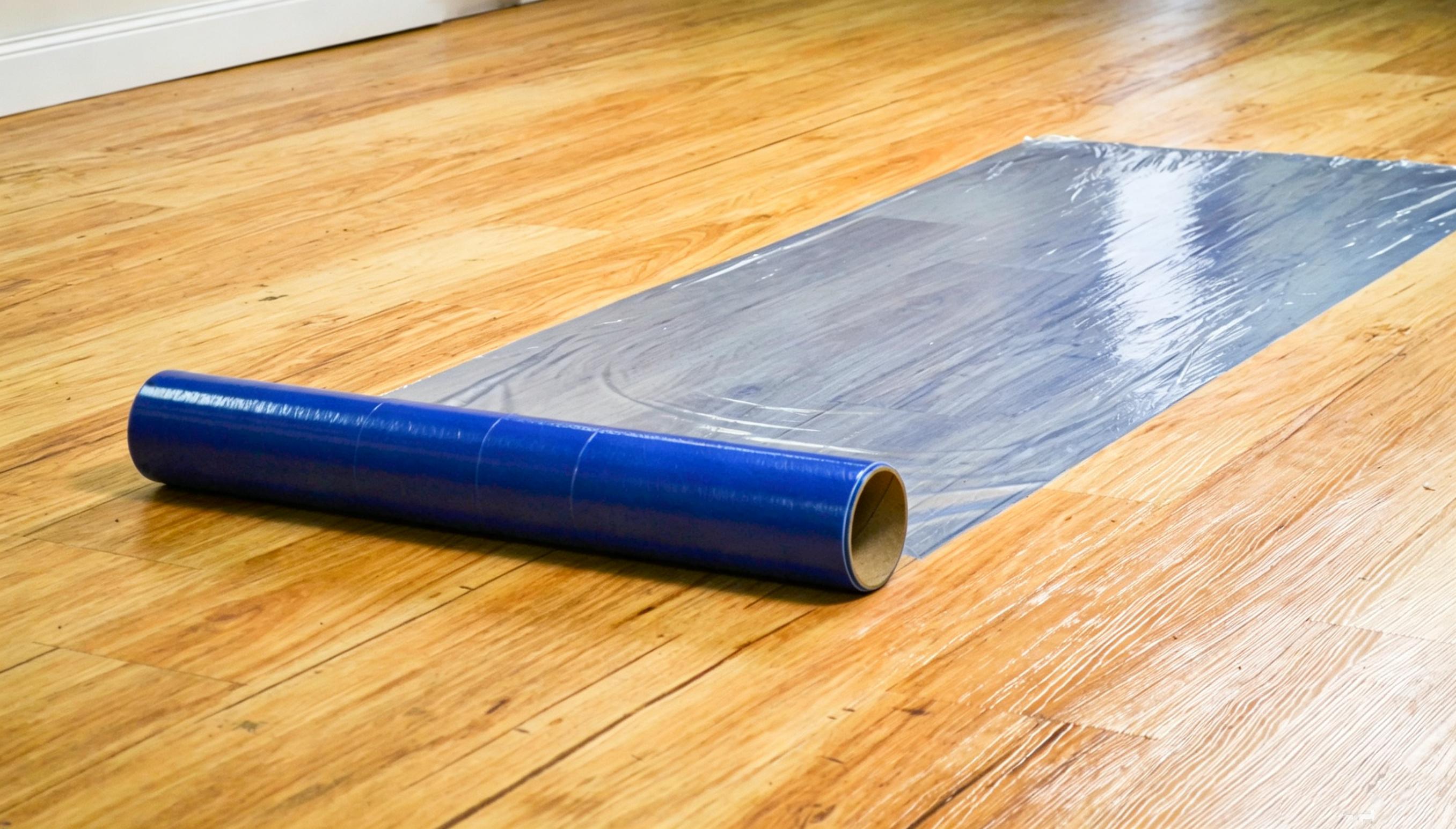
High-traffic construction sites and elegant showrooms share one common vulnerability: surfaces that scratch, scuff, or stain in an instant. A dropped tool, a ladder leaned carelessly, or even the constant shuffle of work boots can etch permanent damage before the final clean-up even begins. Custom protective films are deployed precisely here—they wrap vulnerable edges, floors, and panels in a durable, transparent shield that stays put for weeks or months, yet peels away cleanly without leaving residue. Unlike generic rolls of plastic, these films are engineered for specific substrates, whether it's polished marble, brushed metal, or delicate glass. The result isn't just protection—it's an invisible insurance policy that lets contractors work at full speed while designers know their pristine vision remains intact beneath.
Off the jobsite, the threat simply changes form. In the showroom, it's the customer with a metal watchband grazing a countertop, or a chair being repositioned repeatedly across stained hardwood. Here, custom films morph into an ultra-clear second skin that preserves the tactile experience—buyers can still run their hands over a flawless surface without ever touching it directly. Because the films are cut precisely to the geometry of each piece, seams disappear, and the showroom reads as untouched. When a product sells, removal takes minutes instead of the hours needed for polishing out micro-scratches, turning the film into a logistical advantage that keeps inventory moving and presentation flawless.
Beyond simple shielding, these films become part of a broader damage-prevention strategy. They're often printed with directional cues, safety markers, or temporary branding, turning a passive barrier into an active communication tool throughout the construction and sales cycle. By mapping custom films to project phases—from rough-in to final walkthrough—teams eliminate the costly back-and-forth of repairs, touch-ups, and replacement materials. It's a shift in mindset: instead of budgeting for inevitable damage, they invest in eliminating the conditions that cause it. The price of admission is a fraction of what a single damaged slab or scratched fixture would cost to replace, making the journey from jobsite to showroom not only safer but noticeably more profitable.
The Unseen Armor: Why Thickness and Adhesion Aren’t One-Size-Fits-All
There's a quiet assumption in protective coatings that thicker always means tougher and stickier always means safer. Walk through most industrial facilities and you'll hear it echoed: just add another layer. But coating performance rarely follows such a straightforward path. Excessive thickness can turn an otherwise flexible shield into something brittle, developing internal stresses that cause cracking at the edges where protection is needed most. Meanwhile, overly aggressive adhesion can prevent a film from breathing or moving with the substrate, leading to blistering or peeling when temperature and humidity swing. The real art lies not in piling on more material but in matching the coating's physical personality to the demands of the environment it inhabits.
Environments rarely cooperate with lab tests. A coating that clings perfectly to clean steel in a controlled booth faces a very different adversary when submerged in fluctuating chemical baths or exposed to salt-laden gusts on an offshore platform. Here, the interplay between thickness and adhesion becomes a negotiation rather than a specification. A thinner, slightly more flexible film might tolerate thermal expansion far better than a rigid thick coat, preserving its integrity without pulling away from micro-cracks. Adhesion too isn't just about a high pull-off value. Sometimes a coating needs a touch of controlled release, allowing it to sacrifice its own outermost layer to preserve the bond underneath, much like skin shedding dead cells instead of tearing.
Getting this balance right demands looking beyond datasheets. It requires understanding the substrate's moodiness, the presence of moisture, the frequency of impact, and whether failure would mean a gradual fade or an overnight catastrophe. In many cases, the optimal solution isn't the strongest product on paper but the one that dances with these hidden rhythms, staying put without suffocating what lies beneath. That's the unseen armor: a coating system calibrated not for a single exaggerated threat but for the quiet, persistent beats of its working world.
Real-World Tests: Proving Our Films Outlast and Outperform Generic Alternatives
When a logistics company wrapped its fleet with our film and a generic competitor’s product side by side, the difference became impossible to ignore after eighteen months of highway grit and sun exposure. The generic film had faded to a chalky finish, its edges lifting on nearly every panel, while ours held its gloss and adhesion without a single raised corner. That kind of head-to-head endurance isn’t what you get from accelerated lab simulations—it’s what happens when a product actually lives in the environments it was designed to conquer.
We put our films through a gauntlet of uncontrolled, messy, real-life conditions: coastal salt spray, desert UV saturation, sub-zero ice scrapers, and automatic car washes that would chew up lesser materials. In every case, our film repelled staining and resisted scratching far beyond the replacement cycles of generic films. Fleet managers who used to schedule rewraps every fourteen months now push that timeline past three years, which speaks more plainly than any spec sheet ever could.
What ultimately sets these tests apart is that we don’t stop at survival. We measure how much longer the colour depth stays consistent, how reliably the adhesive releases cleanly without residue, and how little time installers spend correcting failures compared to bargain alternatives. In tradeshow booths, we don’t hand out data charts—we hand visitors a panel that spent two years bolted to a roof rack in Phoenix, and let the film do the talking.
Behind the Manufacturer’s Blueprint: Tailoring Solutions for Tile, Hardwood, and Concrete
Most manufacturers stop at the surface, designing products that treat tile, hardwood, and concrete as if they share the same needs. We took a different route. Our team spent months inside production facilities, not just to understand the machinery, but to listen — to the subtle differences in how raw materials respond to humidity, how curing times shift between porous concrete and dense porcelain, and why a urethane adhesive that works beautifully on oak fails on glazed ceramic. Those insights reshaped our entire approach, leading to systems that are built from the ground up for each substrate, not retrofitted later.
The real work happens in the gaps between industry categories. While one lab focused on reducing ghosting on polished porcelain, another was testing how our levelling compounds interact with heat-treated hardwood — a forgotten combination that trips up many installers. By refusing to treat these as separate problems, we uncovered crossover solutions that no single trade manual could offer. The result isn’t a universal product with a different label; it’s a tightly integrated family of formulas, each one respecting the thermal movement, porosity, and chemical sensitivity of its intended surface.
Walking a contractor through our blueprint reveals how far standard specs fall short. For concrete, we accounted for moisture vapor emission rates that only show up six months after pouring, not the fresh-lab samples most competitors rely on. For hardwood, we mapped expansion across three seasons in different climate zones before finalizing bond strengths. On tile, we broke free from the “one adhesive fits all” mindset by matching polymer chains to surface energy metrics. These aren’t marketing bullet points — they’re the behind-the-scenes decisions that turn an average installation into one that holds its integrity for decades.
Peel Without Residue, Protect Without Compromise: The Science of Clean Removal
True adhesion science has long wrestled with a stubborn paradox: the stickier something gets, the messier its departure tends to be. We’ve all met that tape or label that clings ferociously to glass, metal, or painted walls, only to surrender its grip by tearing, ghosting, or smearing a sticky epitaph across the surface. Breaking that trade-off took a fundamental rethinking of what adhesion actually looks like at the molecular scale—not just how a bond forms, but how it gracefully unforms.
The breakthrough lies in engineering the adhesive layer as a continuous viscoelastic film that dissipates stress evenly during removal. Instead of relying on aggressive chemical tackifiers that embed themselves into surface pores, this approach uses a crosslinked polymer network tuned to respond to peel forces with steady, controlled crack propagation. The result is a lift-off so clean that even sensitive substrates—freshly cured automotive paint, optical films, or low-energy plastics—come away without a trace. There’s no residue because the adhesive film stays whole and attached to its own backing, never fragmenting or smearing onto the bonded surface.
Protection isn’t an afterthought here; it’s built into the same molecular design that enables clean removal. The same polymer architecture that peels cleanly also forms a durable barrier against moisture, UV light, and mild chemical exposure during its life on the surface. Because the adhesive doesn’t depend on migrating plasticizers or short-chain molecules that could leach out over time, it ages gracefully. You get a shield that performs reliably under daily wear and then lifts off in one quiet motion, leaving the original surface exactly as it was—unmarked, unblemished, and ready for whatever comes next.
FAQ
Custom films are tailored to exact surface types, traffic levels, and project timelines. Instead of one-size-fits-all, you get the right adhesion level, thickness, and material composition for the specific floor you're safeguarding—whether it's delicate hardwood, polished concrete, or high-gloss tile. This minimizes residue risks and tear-outs during removal.
One of our contractor clients was renovating a luxury hotel lobby with intricate marble floors. Using a standard film would have left adhesive ghosting. We developed a low-tack, breathable film that stayed put for six weeks under heavy foot traffic and equipment, then peeled away cleanly. The marble remained flawless, saving them a potential six-figure refinishing bill.
We start with a site assessment or detailed specs from the client. Different zones might require different films—for example, a high-bond film for carpeted areas to prevent shifting, and a gentle adhesive for adjacent wood floors. We can produce a single cohesive system with varied properties across the rolls, so the installation team doesn't have to juggle multiple products.
Assuming higher adhesion equals better protection. Excessive tack can leave behind residues, peel up finishes, or become almost impossible to remove after heavy use. It's about balancing secure placement with clean release, which changes based on temperature, humidity, and the floor's sealant. That's where manufacturing expertise makes a real difference.
We engineer films with puncture-resistant cores and UV-stabilized top layers for prolonged outdoor or high-UV exposure. For heavy machinery traffic, reinforced woven backings can be incorporated without adding bulk. We've supplied films that endured months of scissor-lift movement and dropped tools on sensitive epoxy coatings—without a single breach.
Absolutely. We can print lane markings, safety warnings, or your company logo directly on the film during manufacturing. This turns a protective layer into a communication tool—guiding foot traffic, labeling zones, or promoting your brand throughout the worksite without requiring extra tape or signage.
Conclusion
When it comes to safeguarding flooring investments, off-the-shelf rolls rarely deliver the precision that professional projects demand. A custom floor protection film manufacturer approaches each surface as its own challenge—tile, hardwood, and concrete each react differently to adhesives, moisture, and foot traffic. By moving beyond standardized thicknesses and one-size-fits-all tack levels, they engineer films that bond securely during heavy use yet release without a trace. This tailored philosophy eliminates the guesswork on jobsites and in showrooms alike, ensuring that polished marble, engineered oak, or cured concrete remain flawless from installation through final walkthrough. The hidden armor lies in those calibrated variables: a slightly thicker backing for high-impact zones, a gentler adhesive for delicate finishes, and the chemistry that leaves zero haze after removal.
Real-world performance sets these solutions apart. Accelerated wear simulations and on-site trials consistently show that purpose-built films withstand abrasion, spills, and dragging equipment far longer than generic substitutes. Contractors no longer need to double-layer or constantly patch torn coverings—a single application survives the chaos of construction while preserving the showroom gleam underneath. Clients notice the difference when the peel-back moment arrives: no sticky residue, no adhesive transfer, and no last-minute scrubbing that eats into the schedule. Behind every durable sheet is a manufacturer’s blueprint that maps material science to the specific substrate, turning temporary protection into a reliable extension of the project’s quality control. The result is less repair, less waste, and a surface shield that functions as an invisible guarantee.
Contact Us
Contact Person: Jack Xu
Email: [email protected]
Tel/WhatsApp: 8615257328825
Website: https://www.temporaryprotectivefilm.com/