
China Roller Hearth Furnace Technology: Key Features and Industrial Applications
2026-08-13
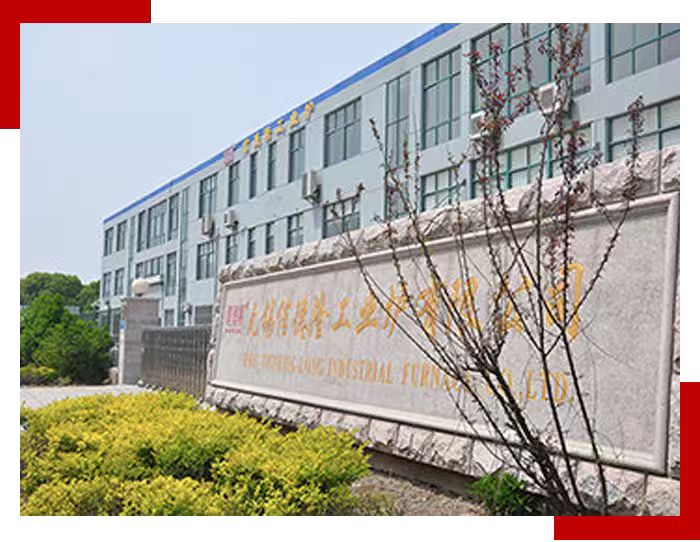
In the high-stakes world of industrial heat treatment, China's roller hearth furnace technology has quietly redefined what's possible. Whether it's precision annealing of specialty alloys or continuous sintering of advanced ceramics, these furnaces deliver unmatched temperature uniformity and throughput. But what exactly sets them apart from conventional designs? And which sectors are reaping the greatest rewards? This article breaks down the key features—from advanced atmosphere control to energy-efficient recuperation—and maps out the industrial applications that matter most. Before diving in, it's worth noting that THINKING-LONG has been at the forefront of these innovations, helping manufacturers turn thermal challenges into competitive advantages.
The Steady Shift to Roller Hearth Furnaces in Chinese Production
Across Chinese manufacturing hubs, the move toward roller hearth furnaces has gathered momentum less through sudden disruption than through a steady recalibration of production logic. Plant managers in steel, ceramic, and specialty alloy sectors have found that the continuous material flow these furnaces enable trims cycle times and fuel consumption, while the even heat distribution reduces rejection rates tied to thermal gradients. The shift is especially visible in medium-width strip processing and the firing of advanced ceramics, where batch kilns once dominated.
A less obvious driver is the tightening of emission and energy-intensity standards in provinces like Jiangsu, Hebei, and Shandong. Older pusher-type or box furnaces, with their inherent door-opening losses and uneven temperature profiles, increasingly fail to meet revised benchmarks without costly retrofits. Roller hearth designs, by contrast, offer a cleaner path: better recuperation, lower surface losses, and easier integration with automated charging and discharging. This has made them a default specification in new lines rather than an optional upgrade.
The transition also reflects a maturing domestic supply chain for high-temperature alloy rollers and precision drive systems. A decade ago, reliance on imported rollers added risk and capital cost; today, local fabricators can supply rollers that survive continuous service at 1100–1200 °C for ceramic tile and stainless steel annealing applications. As a result, total cost of ownership arguments that once favored older furnace types have inverted, accelerating the steady replacement wave now visible across mid-tier Chinese producers.
Temperature Uniformity Strategies That Reduce Part Distortion
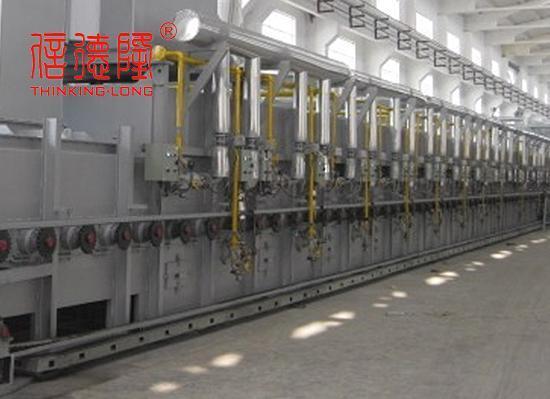
Controlling temperature uniformity within a furnace or heating system is often the first line of defense against part distortion. When heat is applied unevenly, different regions of a workpiece expand at different rates, creating internal stresses that can permanently alter geometry. A practical starting point is to map the temperature profile of the heating chamber under production conditions, then adjust burner placement, heating element zones, or gas flow to smooth out hot spots and cold zones.
Also consider the use of radiant tubes or baffles to redirect heat, and install circulation fans to promote a more even convective environment. For high-mass parts or complex geometries, staged heating with hold periods at intermediate temperatures allows the core and surface to equilibrate, reducing the thermal gradient that drives warping. Additionally, insulating the chamber uniformly and sealing any air leaks prevents localized cooling that can go unnoticed until parts come out distorted.
Regularly verifying uniformity with multiple thermocouples placed at critical locations on a test part or a dummy load can reveal drift in system performance. Rather than relying solely on the controller's setpoint, operators should record actual part temperatures during the cycle and adjust zone offsets or cycle recipes accordingly. Small changes, such as rotating the part midway through heating or repositioning it relative to the heat source, can also make a measurable difference in distortion outcomes.
Lower Fuel Bills Through Smarter Combustion and Insulation
Getting more heat from every unit of fuel starts with the combustion process itself. A burner that runs slightly rich or has worn nozzles can waste a surprising amount of oil or gas without you ever noticing. Regular tune-ups—cleaning the burner, checking air-to-fuel ratios, and replacing clogged filters—often pay for themselves within a single heating season. Newer modulating burners adjust output to actual demand instead of cycling on and off at full blast, which cuts fuel use by 10 to 15 percent in many homes. Even small tweaks like preheating combustion air or installing an outdoor reset control can shave noticeable dollars off your monthly bill.
Insulation is the other half of the equation. Heat always moves toward cold, and if your attic, walls, or basement aren't properly insulated, your furnace has to work overtime just to maintain a comfortable temperature. Upgrading attic insulation to R-60, sealing rim joists, and wrapping hot water pipes are low-cost projects with fast paybacks. Pay special attention to air leaks around windows, doors, and electrical outlets—a tube of caulk or a can of spray foam can stop drafts that feel like a hole in your budget. Combined with smart combustion settings, a well-insulated envelope can reduce total fuel consumption by 20 to 30 percent without sacrificing comfort.
The real savings come when you treat combustion and insulation as one system. A high-efficiency burner paired with a leaky, under-insulated house still wastes fuel. Conversely, a tightly sealed home with a sloppy old burner won't reach its potential either. Have an energy audit or at least a professional walkthrough to find where your fuel dollars are leaking. Many utilities offer rebates for insulation upgrades and burner replacements, which shortens the payback period even further. By addressing both the fire and the envelope, you lower fuel bills today and protect against rising energy costs tomorrow.
Roller and Conveyor Engineering for Demanding Throughput
High-throughput conveyor lines live or die by the quality of their rollers. Under sustained heavy loading, even slight shaft deflection or bearing misalignment cascades into premature wear, belt drift, and unplanned downtime. The best designs start with crowned or precision-machined rollers matched to the expected load envelope, then pair them with sealed bearings that shrug off dust and moisture. Frame cross-members are often doubled or box-reinforced so the whole bed stays straight when product weight surges during peak shifts.
Speed alone is not the goal—control is. In demanding throughput environments, roller spacing, diameter, and surface finish directly influence conveying stability. Larger diameter rollers reduce rpm for a given line speed and lower bearing heat, while textured lagging on drive rollers keeps belts from slipping under acceleration. Engineers also look closely at transfer points, where small gaps or height differences between sections can turn a smooth flow into jams that throttle the entire line.
Durability testing should replicate real abuse rather than ideal lab conditions. Run rollers under overloaded cycles, off-center loads, and sudden stops to expose weak points before installation. Modular designs help here: interchangeable roller cassettes allow quick replacement without cutting the frame or removing adjacent sections. When maintenance drops from hours to minutes, the line returns to full throughput faster, and that uptime advantage shows up directly on the production floor.
Where These Furnaces Excel in Gears, Bearings, and Fastener Lines
Gear manufacturers face a constant tug-of-war between case depth consistency and distortion control. The furnaces built for these lines handle both without forcing a compromise. Instead of relying on a single zone with marginal temperature swings, they pull the workload through carefully staggered heating and carburizing stages. Tooth flanks pick up a uniform carbon profile, while the slower, more even heat transfer keeps root diameters and pitch circles within tight tolerances. In practice, that means less post-heat grinding and fewer scrapped batches after quenching.
For bearings, the real test is hardness uniformity across every rolling element and raceway. A furnace that lets temperature drift even a few degrees can create soft spots that fail under load. The designs used here keep the atmosphere circulating continuously around each basket or tray, so inner rings and outer races see the same thermal history. This also reduces the likelihood of retained austenite pockets that show up later as dimensional growth. Operators can run mixed loads without constantly tweaking recipes, which matters when a single line handles both deep-groove ball bearings and tapered roller types.
Fastener lines demand throughput, but not at the expense of thread integrity. These furnaces handle long, dense loads of bolts, screws, and studs without creating the kind of atmosphere stagnation that leads to decarburization on sharp crests. The load support and belt or roller systems are tuned to prevent parts from nesting or shadowing one another, so even small-diameter fasteners get full exposure. The result is a clean, scale-free surface with consistent tensile properties from batch to batch, letting hex-head and socket-head products move straight to plating or patching without an extra cleaning step.
Extending Service Life With Practical Maintenance and Safety Checks
Routine upkeep does more than keep machines running; it directly adds years to their working life. A quick walk-around each morning catches small leaks, worn belts, or loose fasteners before they turn into expensive failures. Keeping fluids clean and at the right levels, greasing pivot points, and swapping filters on schedule are simple habits that pay off far beyond the cost of the parts.
Safety checks work hand in hand with these maintenance tasks. Testing emergency stops, inspecting guards, and verifying pressure relief valves only takes a few minutes but prevents both injuries and equipment damage. When operators know what to look for and log what they find, hidden problems surface early. This kind of attention reduces unscheduled downtime and keeps the whole setup dependable.
Finally, respect the manufacturer's intervals rather than stretching them to save a little time. Track hours or cycles, not just calendar days, and adjust for harsh conditions like dust, heat, or heavy loads. A well-kept log of previous repairs and replacements helps spot patterns, so you can plan major work before a breakdown forces your hand.
FAQ
The main distinction lies in how Chinese manufacturers integrate modular roller drive systems with zone specific atmosphere control. This allows continuous processing of long or oddly shaped parts while keeping temperature uniformity tight across the chamber. Many units also pair regenerative burners with lightweight refractory linings, which cuts cycle times without sacrificing surface quality.
Automotive component makers are big users, especially for annealing gears, shafts, and stampings. The wire and fastener industry also depends on roller hearth designs for spheroidizing and normalizing. Additionally, bearing manufacturers and tool steel processors favor them because the gentle roller transport avoids dents or scratches on finished surfaces.
It is crucial. Chinese systems often use multiple independently controlled zones, typically five to nine, so operators can fine tune heating, soaking, and cooling stages. Precision thermocouples and PID based logic keep deviations within a few degrees, which matters for alloys with narrow processing windows. Poor profiling leads to mixed hardness or microstructural banding.
Modern units typically include PLC driven roller speed synchronization, automatic loading and unloading via robotic arms or conveyors, and recipe based thermal programs. Some factories add IoT sensors that monitor belt tension, bearing temperature, and gas flow in real time. This reduces manual intervention and makes unattended overnight operation feasible.
Roller hearths eliminate the repeated heating and cooling cycles of batch processing. Materials move steadily through the chamber, so throughput stays high and energy consumption per kilogram drops. The flat roller bed also supports heavy loads or stacked trays more uniformly than chain or walking beam systems, reducing warpage risk.
Look beyond the spec sheet. Check the supplier experience with your exact material and cycle requirements, not just their brochure capacity. Ask about refractory quality, roller material grades, and whether they provide on site commissioning support. It is also wise to request references from plants running similar products for at least two years.
Generally yes, particularly when equipped with waste heat recovery and low thermal mass insulation. Many Chinese manufacturers now design combustion systems with flue gas recirculation and oxygen trimming, which pushes thermal efficiency above standard chamber furnaces. However, actual savings depend on loading density and whether the line runs near its rated capacity.
There is a clear push toward hydrogen ready burners and electric heating options to meet carbon reduction targets. Suppliers are also adding more digital twins for virtual commissioning and remote diagnostics. In parallel, demand for larger roller widths and multi layer loading is rising as automotive and new energy hardware manufacturers seek higher throughput per square meter.
Conclusion
Across Chinese heat-treating shops, roller hearth furnaces have quietly become the backbone for continuous processing of high-volume parts. The shift away from batch systems is driven by the need for predictable cycle times and consistent case depths on parts that cannot tolerate distortion. In practice, temperature uniformity is achieved not by a single control loop but through zoned burners, carefully placed thermocouples, and work supports that let the load see a stable thermal profile. This attention to thermal balance is what keeps gear teeth and bearing races from warping during carburizing or hardening.
Fuel savings follow from tighter combustion control and better insulation rather than from derating the furnace. Many Chinese builders now use regenerative burners, low-mass fiber linings, and modulated gas-air ratios that trim excess air without risking sooting. Roller and conveyor design has also matured: high-temperature alloy rolls, segmented drives, and adjustable speed profiles allow dense loading without skid marks or jams. These furnaces now handle gears, bearings, bolts, and fasteners in continuous lines, with practical maintenance centered on roll alignment, lubrication of drive components, and regular atmosphere safety checks to extend service life.
Contact Us
Contact Person: Qian Xijun
Email: [email protected]
Tel/WhatsApp: 8613961736750
Website: https://www.thinkinglong.com/