

China Oil-Immersed Transformer Technology Powering Reliable Grids Worldwide
2026-08-20
Every time a city stays lit through a storm or a factory keeps humming without a flicker, there's an unsung hero working behind the scenes: the oil-immersed transformer. For decades, Chinese manufacturers have been refining this technology to deliver remarkable reliability, and Chang Song stands at the forefront of that evolution. But what exactly makes these transformers the backbone of modern grids from Southeast Asia to South America? In this post, we'll pull back the cover and explore the engineering, materials, and real-world performance that are quietly powering a more stable energy future.
The Silent Workhorses Behind Urban Power Reliability
At 3 a.m., when the city finally slows down, an unglamorous network beneath the streets is still ticking. Oil-filled transformers the size of minivans hum inside sealed vaults, absorbing voltage swings that would otherwise ripple through office towers and hospital wards. They do not get thank-you notes, but they are the reason a midnight subway surge doesn’t knock out a neonatal unit.
Further along the chain, air-insulated switchgear and vacuum circuit breakers wait in concrete basements. They do not care about weather forecasts or budget meetings. When a fault current spikes—say, a crane touches an overhead line or a rat chews through an underground splice—these devices interrupt the arc in milliseconds, often before a single apartment notices a flicker. Their speed is not heroic; it is engineered boredom.
The reliability most people take for granted rests on layers like these: ring main units that reroute power around a failed cable, protection relays that learn normal load patterns and trip only when something genuinely breaks, and aging lead-sheathed cables still carrying current decades after their design life. None of it makes headlines. All of it keeps the lights on.
Oil as More Than a Coolant: The Dual Role of Insulation
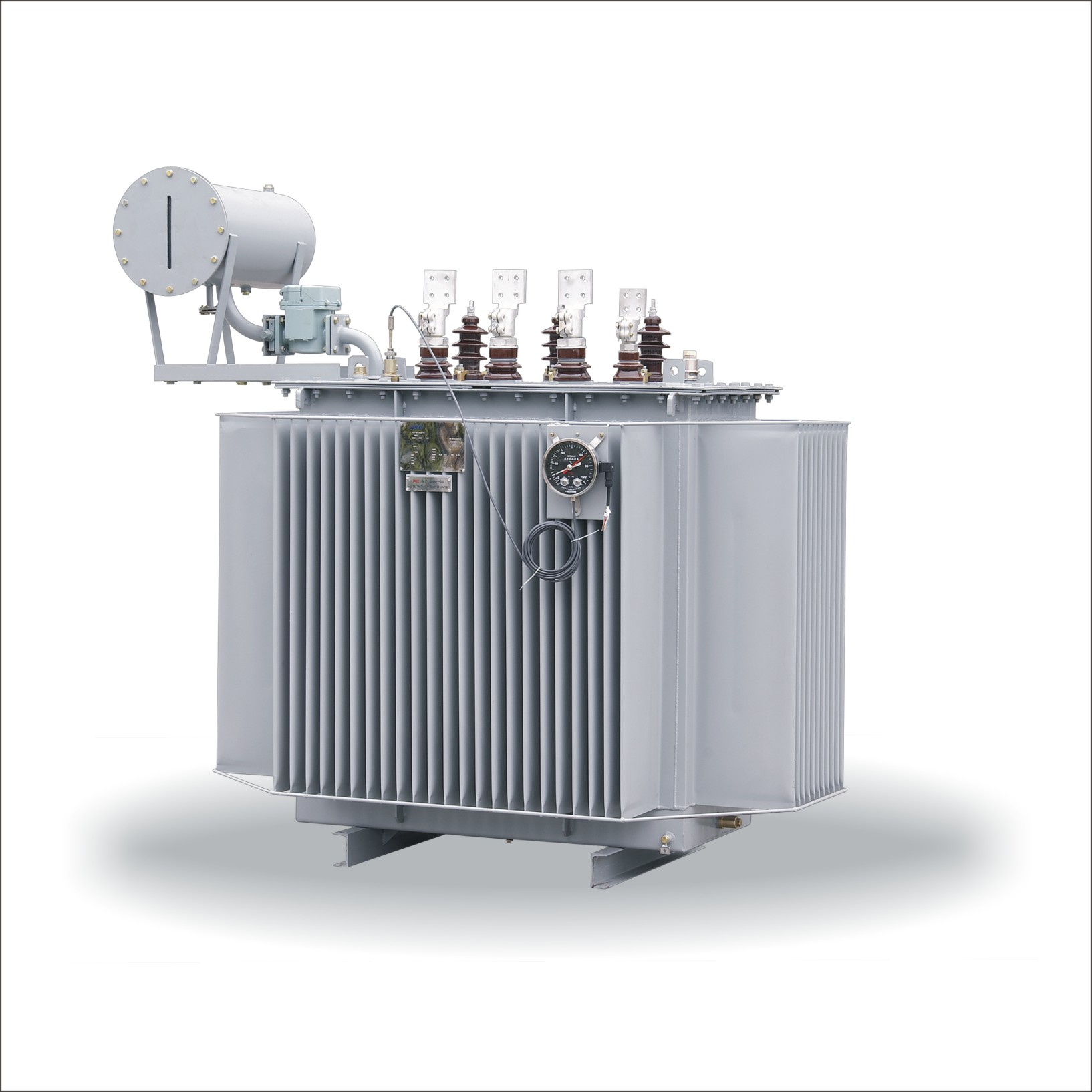
Transformer oil rarely gets the credit it deserves. Most operators see it as a heat sink, something that circulates through radiators and keeps winding temperatures in check. But that view misses half the story. The same fluid filling every gap between core, windings, and tank wall is also the primary electrical barrier inside the unit. Without its insulating properties, even a modest voltage spike would find a path to ground through the paper-air interface, and the transformer would fail long before thermal issues ever showed up.
The insulating function comes down to dielectric strength. Fresh mineral oil can withstand voltage gradients of 30 kV or more across a standard 2.5 mm test gap. That field strength is not a static number, though. Moisture, dissolved gas, and suspended particles all chip away at it. A tiny water content increase from 10 ppm to 30 ppm can cut the breakdown voltage by half. So while the cooling loop keeps the oil moving and the radiator fins dissipate heat, the real maintenance challenge is keeping the oil clean enough to act as a dependable dielectric. Every filter change, every vacuum dehydration cycle, every dissolved gas analysis is really about preserving that second job—the one nobody sees until an arc happens.
The two roles also feed into each other. Heat accelerates oxidation and sludge formation, which in turn weakens the oil's insulating capability. A hot spot near a loose connection might only raise the top-oil temperature by a few degrees, yet locally the oil breaks down into acids and carbon particles. Those byproducts migrate through the tank and settle on paper insulation, creating conductive paths. By the time the cooling system shows an alarm, the dielectric margin has already eroded. That is why field engineers check both the temperature gauge and the oil's power factor during routine inspections. Cooling performance tells you if the transformer is running hot; insulation performance tells you if it is silently losing its ability to hold voltage apart.
Taming Voltage Fluctuations in Developing Grids
Voltage swings in emerging power systems rarely come from a single dramatic event. More often they build up quietly: a cluster of new irrigation pumps switching on before dawn, a neighborhood's air-conditioning load spiking after work, long rural feeders that were never designed for today's demand. Each disturbance on its own looks manageable, but together they push the network past its reactive power limits. The result is flickering lights, motors that overheat, and protective relays that trip for no obvious fault.
Older fixes like capacitor banks and tap-changing transformers still have their place, but they respond too slowly for the fast, repetitive dips common in developing grids. What has changed is the availability of small, modular power electronics. Distributed static compensators, smart inverters on rooftop solar, and even second-life battery packs can now inject or absorb reactive power within a few cycles. These devices don't require a major substation rebuild, which matters when capital budgets are tight and outages are already too frequent.
The harder part is not the hardware but the operating culture. A device that works perfectly in a lab can be defeated by poor grounding, missing firmware updates, or a technician who has never seen a voltage sag waveform. Successful projects tend to pair the installation with simple monitoring tools that let local engineers watch the feeder's behavior in real time, not just after a complaint arrives. When that feedback loop exists, even modest investments in voltage support can produce a noticeable drop in equipment failures and customer calls.
Why Transportation Logistics Shape Transformer Reliability
Every mile a transformer travels adds mechanical stress to components that were never designed for repeated movement. Railcar humping, rough road joints, and port crane handling transmit sharp accelerations through the tank, loosening winding clamping forces and initiating micro-fractures in aged cellulose insulation. These changes rarely show up immediately, but they quietly lower the margin against future through-fault forces and overvoltage events.
Moisture control during transit is equally decisive. A transformer breather left exposed to humid coastal air or a delay that pushes delivery into a rainy season can allow silica gel to saturate and let moisture migrate into the oil and paper insulation. Even a small increase in water content measurably reduces dielectric strength and accelerates paper depolymerization, meaning the unit enters service with a shorter thermal life than its factory test report suggests.
Reliability after commissioning also hinges on whether logistics data is treated as engineering data. Shock loggers, tilt sensors, and GPS records tell a story about what happened between factory and pad, but many owners file that information away without cross-checking it against post-delivery electrical tests. When a transformer trips unexpectedly two years later, the root cause often reaches back to a rough stretch of highway or a hurried crane lift that no one thought to investigate.
Field Stories: Transformers Thriving in Extreme Weather
In the Sonoran Desert, a utility crew once found a pad-mounted transformer half-buried in wind-blown sand, its cooling fins caked with dust, yet still humming at full load. The crew expected a thermal shutdown, but the oil temperature gauge barely moved past the first warning mark. That transformer had been built with a heavier core and a larger oil volume than standard models, a choice made years earlier after a string of summer failures. The lesson spread through the region: when temperatures top 115°F, standard ratings mean little.
Two thousand miles north, a different kind of test unfolds each January. In North Dakota's Bakken oil fields, transformers sit on gravel pads exposed to fifty-below wind chills. One field technician described walking up to a unit that had been de-energized for three days; the oil inside was so cold it resembled thick molasses. A standard re-energization would have caused thermal shock. Instead, the crew used a portable load bank to warm the windings gradually. That practice, born from a cracked bushing incident in 2017, is now written into the company's winter startup checklist.
Offshore wind farms in the North Sea present a third extreme: salt-laden air, constant motion, and storm-driven moisture. A transformer inside a nacelle 90 meters above the water must handle vibration from turbine blades and the occasional sideways rain. One operator found that a special hydrophobic coating on the bushing insulation prevented flashovers that had plagued earlier models. The biggest surprise came during a Force 10 gale, when a transformer kept operating normally while the access hatch was torn off and the control cabinet filled with spray. It wasn't the storm that stopped it; it was a scheduled maintenance window three weeks later.
The Shift Toward Eco-Friendly Insulating Oils
The electrical industry's long reliance on mineral oil is being reassessed as utilities and manufacturers turn to biodegradable ester-based fluids. Natural esters derived from seeds and synthetic esters built from petrochemical feedstocks both bring higher flash and fire points than traditional mineral oil, which changes risk calculations for substations located in urban or environmentally sensitive areas. Spills that once triggered expensive remediation now break down more readily, and the reduced fire hazard simplifies compliance in tightly packed installations.
Beyond safety, the operational picture has shifted too. Ester fluids can hold significantly more water than mineral oil without losing dielectric strength, and that property helps paper insulation age more slowly by pulling moisture out of the cellulose. Operators are finding that transformers filled with these fluids can run hotter or handle overloads without accelerating insulation breakdown, a practical advantage that older specifications never anticipated.
Adoption is no longer a niche experiment. Some grid operators now specify natural ester fluids for new distribution and even small power transformers, while retrofits of existing units are becoming common where leak containment is expensive or where fire barriers are impractical. The upfront cost remains higher, but when the total cost includes spill remediation, fire suppression, and extended asset life, the shift starts to look like a pragmatic engineering decision rather than an environmental gesture.
FAQ
Chinese manufacturers combine decades of field experience with modern insulation materials and precision winding techniques. Their units are often factory-tested under load conditions that mimic real network stress, giving utilities confidence before deployment.
Designs frequently include sealed tanks with nitrogen blankets, corrosion-resistant coatings, and specially selected mineral or synthetic ester oils. Thermal and dielectric margins are calculated for the specific altitude and ambient temperature range, not just a generic standard.
Beyond competitive pricing, buyers get customized impedance values, tap changer configurations, and cooling options that match their existing protection schemes. Delivery times are often shorter because many factories keep core laminations and bushings in stock.
Many models now come with embedded dissolved gas analysis sensors, winding temperature fiber optics, and partial discharge detectors. These feed data to local SCADA systems, allowing operators to schedule maintenance before a fault escalates.
Yes, several large producers cover the full range from 10 kVA pole-mounted units to 500 kV substation transformers. This breadth helps utilities standardize spare parts, documentation, and service contracts across their network.
Reputable exporters routinely meet IEC 60076, IEEE C57, ISO 9001, and regional marks like CE or UKCA. Third-party witness testing by firms such as KEMA or CESI is common for critical grid projects.
The shift toward biodegradable natural esters and low-loss grain-oriented steel reduces both spill risk and no-load losses. Leak containment bunds and oil preservation systems are standard on many outdoor units.
High efficiency at rated load and low auxiliary cooling power cut annual energy losses. Combined with modular components and accessible bushings, routine maintenance is quicker, and many units exceed 30 years of service life.
Conclusion
Across the world's dense urban centers and sprawling industrial zones, China's oil-immersed transformer technology has quietly become the backbone of grid resilience. These machines are not just silent workhorses; they are engineered to manage the dual role of mineral oil—acting as both electrical insulator and thermal regulator—so effectively that even in grids plagued by erratic voltage swings, power delivery remains stable and safe. Developing nations especially benefit from this robustness, as Chinese manufacturers have honed designs that tame voltage fluctuations without costly add-ons. Yet reliability begins long before energization: the logistics of moving these massive, oil-filled units across rough terrain or crowded ports demand precision engineering in tank bracing, sealing, and shock absorption, a detail often overlooked until a transformer arrives compromised. Field reports from Scandinavia to the Middle East show units thriving under extreme cold, desert heat, and salt-laden coastal air, proving that the technology adapts to far more than factory test conditions.
Equally significant is the ongoing shift toward eco-friendly insulating oils—natural esters and synthetic alternatives—which Chinese firms are integrating without sacrificing dielectric strength or cooling performance. This evolution addresses both environmental spill risks and fire safety in densely populated substations. The result is a generation of transformers that not only power reliable grids worldwide but also align with stricter sustainability mandates. Rather than chasing single breakthroughs, Chinese suppliers have refined the entire value chain: from oil chemistry and core steel metallurgy to transport logistics and field service networks. That holistic approach, grounded in decades of operational data and pragmatic engineering, is why utilities from Buenos Aires to Bangkok increasingly look to China for transformers that do not merely meet specifications—they outlive them in the real world.
Contact Us
Contact Person: Tonglun Chen
Email: [email protected]
Tel/WhatsApp: 8618906642555
Website: https://www.cncsele.com