

China Basketball Socks Manufacturer Explains What Makes a Great Basketball Sock
2026-10-23
Basketball socks rarely get the credit they deserve. Most players spend hours comparing shoes, but the right sock can be the difference between staying locked in and feeling your foot slide on a hard drive. That's exactly what Fuli Socks—a China-based basketball socks manufacturer—has learned after years of testing, knitting, and re-testing. Here's what they've found separates the real deal from the rest, from yarn choice to the way the heel hugs your foot. If you've ever blamed your shoes for a blister, you might want to read on.
It Starts With the Right Yarn Blend
The magic rarely lives in a single fiber. Cotton alone can feel flat, wool alone can itch, and silk alone can be too slippery to hold a stitch. The real character emerges when you pair a sturdy base like Peruvian highland wool with a touch of baby alpaca for loft, or fold a little linen into cotton to give summer knits that crisp, rumpled texture. These blends aren't just about softness—they shift how the yarn moves through your fingers, how it blocks, and how it wears over years of washing and sunlight.
One of my favorite discoveries came from a mill in Biella that spun a 70/30 merino and yak blend. The yak wasn't there to make it exotic; it deepened the heathered tones in the dye and took the edge off merino's natural elasticity. That slight resistance changed the drape of a simple raglan sweater, letting it hang close to the body instead of springing back like a sports knit. When you read a yarn label, don't just scan for fiber percentages—imagine how those fibers argue or agree with each other under tension and moisture.
There's also a practical side that many knitters overlook. A well-chosen blend can rescue a project from pilling, sagging, or losing shape at the elbows. Nylon added to sock yarn isn't a shortcut; it's a strategic move to keep heels intact. A bit of silk in a laceweight gives shawls a subtle gleam and memory after blocking. So before you cast on, spend time with the yarn cake. Rub a strand between your fingers, stretch it gently, watch how the plies separate. The right blend will tell you what it wants to become.
Cushioning Isn't Just About Thickness
Most runners assume a thicker midsole automatically means softer landings, but that's only a fraction of the story. The way foam cells compress, rebound, and distribute force matters far more than raw stack height. A slim layer of highly responsive material can absorb impact more effectively than a bulky slab of basic EVA, simply because it manages energy differently on each stride.
Geometry plays an overlooked role too. Strategic cutouts, sidewalls that flare outward, and a rockered profile can guide your foot through the gait cycle while reducing localized pressure. You might find that a shoe with less visible cushioning actually protects your joints better, thanks to how the platform rolls and stabilizes under load. It's the difference between landing on a mattress and landing on a well-tuned spring.
Then there's consistency over time. Some thick midsoles feel plush on day one but pack out quickly after a hundred miles, leaving you with dead foam that neither cushions nor returns energy. A smarter design balances initial softness with long-term resilience, so the ride stays dependable as the miles accumulate. Next time you compare shoes, ignore the numbers on the spec sheet and pay attention to how the cushioning behaves when you actually run.
The Arch Needs More Than a Logo
A logo can mark a place, but it can’t hold one. The Arch, for all its immediate graphic power, has spent decades reduced to a postcard silhouette—easy to slap on a coffee mug, harder to feel as a living part of the city. What’s missing isn’t another polished emblem or a clever typeface pairing. It’s the friction of real experience: the wind whipping across the tram platform, the weird hush of the observation deck, the long walk across the grassy grounds where locals actually sit and waste an afternoon. Those sensations don’t fit in a brand guide, and that’s exactly why they matter more.
Think of what people remember after a visit. It’s rarely the official signage. It’s the odd detail—the way the stainless steel feels cool even in July, the bent-back neck of a kid trying to see the top, the man playing saxophone near the north tram entrance with a tip jar that’s seen better days. A logo says “here is the Arch.” A story says “here is what it’s like to be beside it.” The difference is the same as between reading a menu and tasting the food. One is information. The other is memory.
So instead of another revision of the same monogram, the Arch needs more human texture. More small, imperfect moments that can’t be trademarked—uneven busker sets at dusk, a sudden rainstorm scattering families under the legs, a park ranger who actually tells you why the tram still uses those tiny round windows. Those aren’t branding failures. They’re the reason anyone returns. The monument already stands on its own. What it lacks is the surrounding noise of real life, the part no design team can draw.
Toe Seams Are the Silent Enemy
You rarely notice them during the first ten minutes of wear. Then, somewhere around hour two, that faint pressure across your smallest toe starts to whisper. By midday it's a steady, dull throb you can't quite shake. Toe seams—especially bulky, poorly placed ones—have a way of turning an otherwise comfortable sock into a slow-burning irritant. It's not dramatic, but it's relentless.
The real trouble is that most people blame their shoes. They swap insoles, loosen laces, even size up half a size. Yet the culprit sits right at the end of the sock, where fabric folds over itself and digs into tender skin. Over weeks, that minor friction becomes a callus, then a hotspot, and eventually a blister that sidelines your run or ruins a long shift. The seam never looks threatening—just a thin ridge of thread—but it works against you step after step.
The fix isn't complicated, but it does require attention. Look for socks with hand-linked or flat-knit toe closures, which eliminate the bulky ridge entirely. If you're between sizes, err on the smaller side so the seam sits snug against the tips of your toes instead of sliding around. And never settle for a sock that makes you aware of its existence forty minutes in. Discomfort that quiet is still discomfort—and it only compounds.
Durability Shows Up After Ten Washes
The first wash tells you almost nothing. Fabrics that feel crisp and promising out of the package often start losing shape by the third cycle, but the real test happens later. Around wash number ten, the stitching either holds its line or begins to wander, the collar keeps its structure or turns soft and shapeless, and the color finally admits whether it was dyed to last or just to look good on the shelf.
Pay attention to the small failure points after repeated laundering: cuffs that no longer snap back, seams that pucker along the shoulders, a hem that hangs uneven despite careful folding. A genuinely durable piece doesn't need special treatment to survive ten washes. It comes out looking less like it has endured something and more like it has settled into itself, still doing its job without visible complaint.
Compression Levels Make or Break Performance
Compression levels often get overlooked until files pile up, storage fills, or transfer times crawl. A setting that seems minor at first glance can reshape how quickly data moves, how much space it occupies, and how hard a CPU has to work. The same archive can feel snappy at one level and sluggish at another, so the choice is never just about size.
Higher compression squeezes bytes tighter, but the processor pays for every extra pass. On older machines or shared servers, that trade-off shows up as lag, timeouts, or a machine that simply cannot keep up. Lower levels, by contrast, leave larger files but free up compute cycles for other tasks. The sweet spot depends on what matters more at the moment: shrinking payloads or keeping systems responsive.
Real-world performance swings can be dramatic. A backup job that finishes in minutes at default settings may drag on for hours when compression is pushed to maximum, only to save a few percentage points of disk usage. Conversely, streaming or real-time applications often benefit from faster, lighter compression because the bottleneck is throughput, not capacity. Tuning this setting is less about finding one perfect value and more about matching it to the workload, hardware, and how users experience the delay.
FAQ
We blend combed cotton with nylon and a small percentage of spandex or elastane. The cotton gives a soft hand feel, nylon adds abrasion resistance, and the stretch fiber keeps the sock snug around the arch and ankle without cutting off circulation.
We use zone-specific terry loops under the heel and forefoot, but keep the toe area thinner. This way players absorb impact where they land and push off, while still feeling the floor through the toes for quick direction changes.
Sweat-soaked socks cause friction, and friction leads to blisters. We knit hydrophobic yarns into the footbed and use mesh ventilation channels on top of the foot so moisture moves away from the skin quickly. Dry feet stay cooler and less prone to slipping inside the shoe.
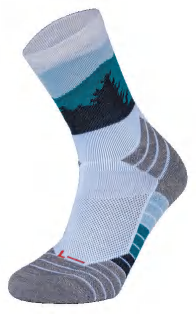
We avoid bulky toe seams by using hand-linked or seamless toe closure. The heel is reinforced with a Y-shaped pocket so the sock doesn't slide down. We also add a subtle arch band that keeps the sock in place, which reduces the rubbing that creates hot spots.
Mild graduated compression supports the calf and arch, which can reduce muscle vibration during jumps and sprints. It also helps blood flow back toward the heart, so players often report less leg fatigue late in the game. We keep it gentle, around 15-20 mmHg, because too much squeeze hurts mobility.
Check the heel and toe yarn blend. A good basketball sock should have reinforced nylon or polyester in high-wear zones, and it should bounce back after washing. We pre-shrink our cotton and use a heat-set process on the elastic so the sock doesn't turn baggy after a few months.
They can affect both. We can change yarn thickness, cushion zones, and even add targeted ventilation patterns without altering the outer look. Custom colorways are easy, but real performance customization comes from adjusting the knit structure to match a player's movement or shoe fit.
A mediocre sock is basically a thick tube with a logo. A great one fits like a second skin, manages sweat before it becomes a problem, and protects only the areas that need it. The difference is in the details: toe seam, arch support, heel lock, and the exact blend of fibers.
Conclusion
Most people think a great basketball sock starts with thick cotton, but the real foundation sits in the yarn blend. A China-based basketball socks manufacturer notes that premium pairs combine synthetic fibers like nylon and polyester with just enough stretch, because pure cotton soaks up sweat and loses shape fast. The right blend keeps feet dry and holds the sock in place through sharp cuts and jumps. Cushioning, too, isn't about piling on foam; it's about targeted zones under the heel and forefoot that absorb impact without making the shoe feel tight. A sock that's padded everywhere just slides around and causes blisters, so smart design beats raw bulk.
The less obvious details matter even more. The arch area needs real compression, not just a printed logo, to support the foot and reduce fatigue over four quarters. Toe seams are the silent enemy—flat, hand-linked seams prevent rubbing and blisters that players often blame on shoes. Durability shows up later: cheap socks lose their fit and cushioning after a few washes, while a well-built pair should feel nearly the same after ten cycles. Finally, compression levels make or break performance; too little gives no support, too much cuts circulation, so a graduated squeeze around the arch and ankle keeps energy up without numbness. All these factors working together separate a truly great basketball sock from an ordinary one.
Contact Us
Contact Person: Ryan Li
Email: [email protected]
Tel/WhatsApp: +86 13757342500
Website: https://www.fulisocks.com/