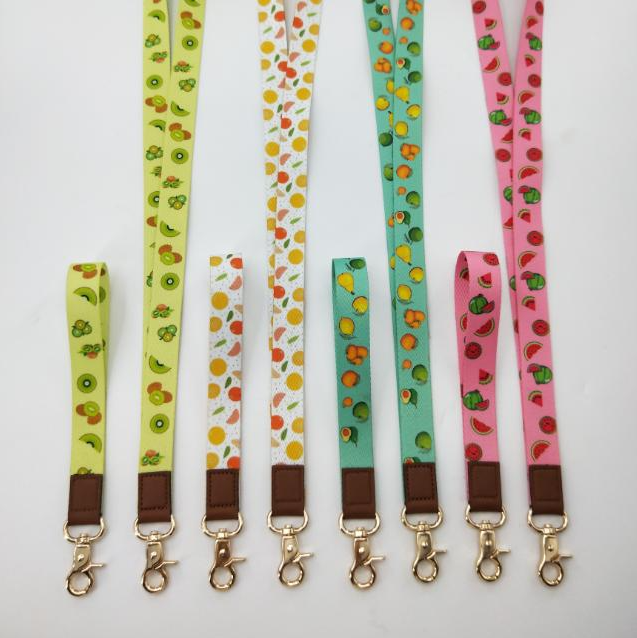

Cartoon Lanyard Manufacturer Guide to Custom Wholesale Lanyards
2026-10-18
Sourcing custom cartoon lanyards in bulk often starts with the same tired advice: pick polyester, add a safety break, done. But the real buying decisions are messier. Can the factory keep a character's face crisp at 15mm? Will the colors bleed on woven edges? Does the MOQ actually match your rollout? This guide strips away the generic filler. We're DONGCHUANG, a lanyard manufacturer that has handled everything from licensed mascots to original character merch—and we've learned what separates a reliable wholesale partner from an expensive gamble. Here's what to check before you commit.
Your Cartoon Artwork Is Too Small for Lanyards—Here's How to Fix It
When a cartoon looks crisp on your screen but turns into a smudged mess on a lanyard, the usual culprit is resolution. Most digital drawings start at 72 DPI, which is fine for websites but far too low for printing at small physical sizes. The fine details that give the character personality—like thin outlines, tiny facial expressions, or small text—simply disappear when the artwork is shrunk to fit a one-inch-wide strap.
To fix this, start by reopening your original file and bumping up the resolution to at least 300 DPI before you export. If your artwork is raster-based, increasing the DPI won't magically add detail, but it will give the printer more information to work with. Better yet, switch to vector software like Adobe Illustrator or Inkscape and redraw the key elements as paths. Vector files scale without losing sharpness, so you can shrink the cartoon to lanyard size and still keep every line crisp.
Once you've adjusted the resolution or switched to vectors, do a test print at the actual lanyard dimensions. Hold it at arm's length and check whether the main features—eyes, mouth, logo—are still recognizable. If certain details vanish, simplify them: thicken the outlines, remove tiny decorative elements, and increase the contrast between the character and the background. A slightly bolder, cleaner design often reads much better on a lanyard than a highly detailed one that nobody can see clearly.
Nylon vs Polyester for Cartoon Lanyards—What 20 Washes Revealed
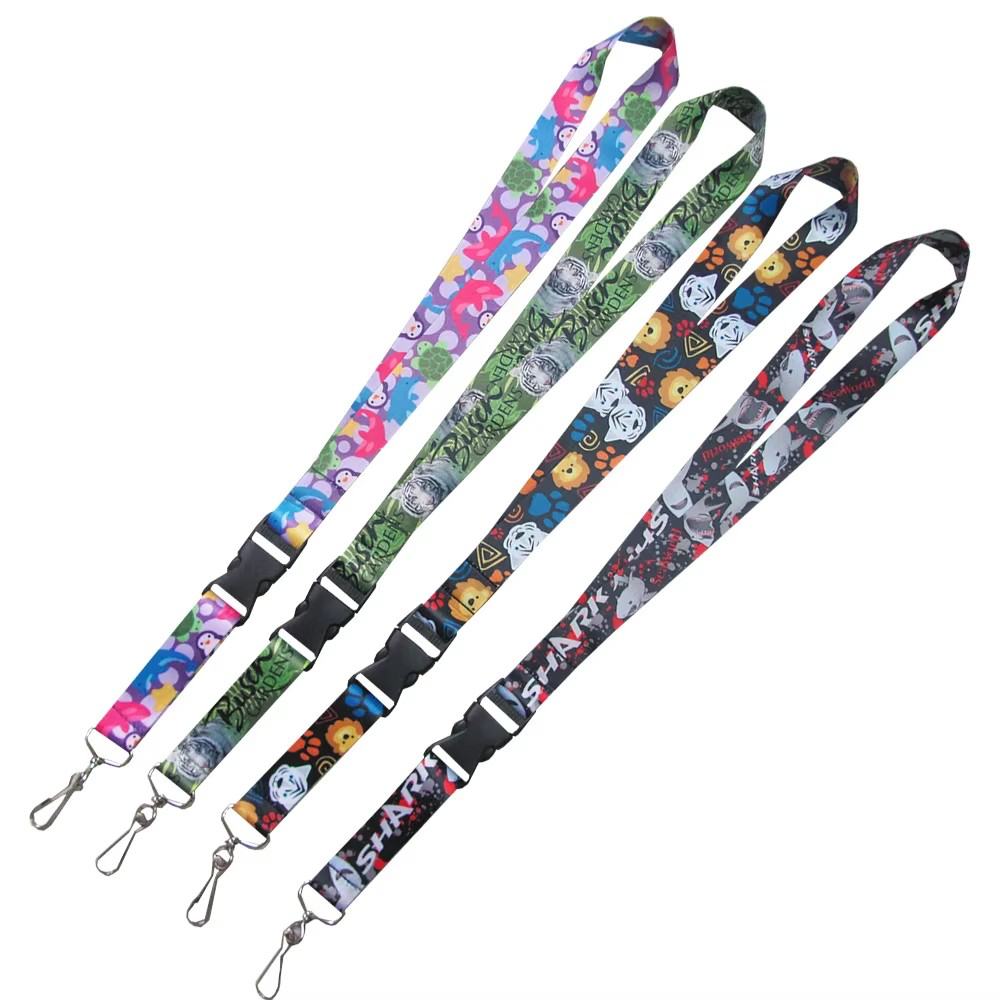
After running twenty identical cartoon lanyards through a standard wash-and-dry cycle, the nylon versions came out looking nearly new. The printed characters kept their sharp outlines, and the fabric itself showed only a slight loss of sheen. Polyester, while still acceptable, began to show fine pilling along the edges and a subtle but noticeable fading of the brighter inks. If you want a lanyard that survives repeated laundering without turning fuzzy or dull, nylon is the clear winner.
But durability isn't the only story. Wet nylon dried faster and felt smoother against the skin, whereas polyester retained a hint of stiffness that some testers found mildly irritating after hours of wear. On the flip side, polyester held its shape better when yanked or stretched—those cartoon designs didn't distort as much under pressure. So if your lanyard doubles as a fidget toy or gets caught in doors, polyester's resilience might outweigh its faster visual wear.
The biggest surprise came from color retention on dark backgrounds. Black cartoon outlines on nylon stayed crisp and deep, while polyester showed a slight blue-gray shift after ten washes. For bold, high-contrast designs—like classic cartoon characters with thick ink lines—nylon preserves the original art far longer. Polyester remains a solid budget option, but after twenty washes, the visual difference is impossible to ignore.
Why the Cheapest Quote Often Loses the Cartoon's Outline
A cartoon's outline isn't just a list of scenes—it's the nervous system that carries timing, emotional turns, and visual rhythm. When you hire the cheapest quote, you're often paying someone who sees that outline as a checkbox exercise. They'll give you a dry sequence of events: character enters, says something, leaves. What's missing is the connective tissue: why the audience should care when the tension spikes or when a gag breathes. That flatness doesn't just weaken the outline; it quietly erases the cartoon's personality before a single frame gets drawn.
Low-cost providers rarely have room to absorb the back-and-forth that makes an outline shine. Good outlines come from wrestling with character motivation, beat-by-beat pacing, and visual storytelling—work that demands time and attention. Cut the budget to the bone, and you get recycled templates, generic arcs, and character beats that could belong to any cartoon. The humor misses because nobody had the hours to test a joke's timing. The emotional payoff falls flat because nobody mapped the protagonist's subtle shift from stubborn to vulnerable.
The real cost of the cheapest quote shows up later. You'll spend far more on revisions, storyboard redos, and lost momentum than you saved upfront. A skilled outline writer costs more because they're protecting the foundation—making sure the cartoon's logic, heart, and humor are baked in at the outline stage. When the outline is right, production moves faster, and the final cartoon actually looks like the idea you fell in love with.
The One Attachment Your Team Will Thank You For
Most people attach files without thinking about what actually moves a project forward. The attachment your team will thank you for isn't another PDF to read or a spreadsheet to fill in on top of everything else. It's a single, clear decision log that captures what was agreed, who owns each action, and when it's due. When you send that, you're not adding noise; you're giving everyone a way to get aligned in under a minute.
Instead of long email chains or hunting through chat history, your team can open one document and see exactly where things stand. The best version keeps it to one page, uses plain language, and leaves room for updates rather than locking people into a rigid template. That small shift turns an ordinary attachment into a reference point people actually revisit.
Try it after your next meeting: summarize decisions, assign owners, set dates, and attach it with a short note that says here is the single source of truth. The reply you get will probably be a simple thank-you, because you saved everyone from another round of follow-ups.
A Straight Answer on Minimum Order Quantities for Cartoon Lanyards
If you're sourcing custom cartoon lanyards, the minimum order quantity (MOQ) you'll run into usually sits between 100 and 500 pieces. That's the sweet spot for most factories that handle full-color sublimation or woven designs. A few smaller workshops will accept orders as low as 50, but expect a noticeable jump in per-unit cost because the setup work stays the same whether you're making 50 or 500.
The reason cartoon designs push MOQs higher than plain lanyards comes down to production steps. Each character or logo needs accurate color matching, sometimes with multiple proofing rounds, and the printing plates or weaving looms have to be configured for that specific artwork. Factories spread those fixed costs across the whole batch, so anything under a few hundred pieces simply isn't worth their machine time. You might find lower minimums if you're okay with a simpler single-color print or using standard hardware.
If you only need a small batch for a pilot run or a fan meetup, your best bet is to ask about stock lanyards with a custom attachment, or negotiate a sample order at a higher price. Once you move past 500 pieces, the pricing per lanyard tends to drop fast, which makes the larger order feel more like the real "minimum" that makes sense for both sides.
Spotting Print Flaws Before Your Cartoon Lanyards Ship
When your cartoon lanyards come off the press, don't just glance at a couple and call it a day. Lay a full batch out under natural light and run your finger along the printed edge. Blurry outlines around a character's eyes or a slight ghosting behind the logo are the first signs that the ink didn't cure evenly. If the colors look muddy where two shades meet, that's a registration slip waiting to become a customer complaint.
Flip each lanyard over and check the reverse side for show-through. Cartoon prints with heavy fills often bleed through thin polyester, leaving a faint mirror image that cheapens the whole piece. Bend the strap gently at the printed area—if the design cracks or flakes off onto your thumbnail, the adhesion is too weak for daily wear. Small dots or specks of foreign color scattered across the white of a character's eye are another giveaway that dust settled on the mesh before printing.
Finally, compare a few lanyards from the start and end of the production run. The very first pieces might look crisp while later ones drift out of alignment as the screen wears down. Hold a sample next to the approved proof and squint—slight shifts in a character's smile or a misshapen letter won't be obvious at arm's length, but they'll stand out once everyone at the event is wearing them side by side.
FAQ
Cartoon artwork demands sharp linework and solid color fills. Dye-sublimation onto polyester works best because it lets fine outlines and gradients print directly into the fabric without cracking or fading.
Soft woven polyester is the usual pick. It feels comfortable around the neck, resists fraying, and shows detailed characters clearly. Nylon is shinier but less forgiving with intricate cartoon faces.
You can add a safety breakaway buckle, a metal swivel hook or lobster clasp, a rubberized cartoon charm, embossed logo on the buckle, or even double-sided printing so the design wraps around.
Most factories set the minimum at 100 pieces, but per-unit cost drops noticeably at 500, 1,000, and 5,000. Smaller runs are possible, just expect a higher rate because setup remains fixed.
Vector files like AI, EPS, or high-resolution PDF work best. If you only have a PNG or JPG, make sure it is at least 300 DPI at the actual print size, otherwise thin cartoon lines turn blurry.
Normal production runs take 7 to 12 business days after artwork approval. Express options can cut that to 4 or 5 days for a rush fee. Shipping then adds 3 to 7 days depending on the destination.
Yes. A breakaway closure is strongly recommended for school events, camps, or kids' promotions. It releases under pressure to reduce choking risk. Some buyers also request CPSIA-compliant materials and lead-free attachments.
Stick to original characters or artwork you have written permission to use. Reputable manufacturers will ask for proof of ownership or a license before running a batch with recognizable characters.
Conclusion
Most custom cartoon lanyard projects go sideways long before production starts, and the usual culprit is artwork that was never scaled for a thin fabric strip. Enlarging a low-resolution image won't save it; you need clean vector files with bold outlines and a simplified palette. Once the design holds up, material choice becomes the quiet decision that determines whether the lanyard still looks good after twenty washes. Woven polyester keeps colors locked in and resists fraying better than printed nylon, which tends to fade and soften around the edges. The cheaper quote often cuts corners by reducing stitch density or using thinner thread, so the cartoon's outline turns blurry or drops out entirely after a few wears. Instead of chasing the lowest bid, ask for a pre-production sample and compare the outline sharpness under normal office lighting.
Attachments matter more than most buyers expect. A lightweight plastic swivel hook might save pennies, but a metal bulldog clip or a reinforced split ring will survive daily badge pulls and keep your team from cursing the lanyard. Minimum order quantities aren't as scary as they sound; many manufacturers will run a trial batch of 100 to 300 pieces, though the per-unit price drops sharply at 500 or more. Before anything ships, request close-up photos of the first few finished pieces. Look for ink bleeding where colors meet, uneven edges on the cartoon's face, or loose threads near the attachment point. A reliable manufacturer will catch these flaws and redo the batch without making you beg. If you nail these details, the result is a lanyard that people actually want to wear, not one that ends up in a drawer.
Contact Us
Contact Person: Bill Huang
Email: [email protected]
Tel/WhatsApp: 8613829102720
Website: https://www.dclanyard.com