

Carrageenan Factory Processes That Shape Texture and Quality
2026-11-19
Most people assume carrageenan is just a gelling agent, but the real story happens long before it reaches your food. At ZIPIN, we treat every extraction, purification, and drying step as a chance to shape the final mouthfeel—whether that means a creamy dairy alternative, a firm deli slice, or a smooth nutritional drink. In this post, we walk through the factory processes that actually control texture and quality, and why small changes on the production line can make a big difference on the plate.
Seaweed Quality Sets the Bounds for Gel Strength Later
The gel strength you achieve in a final carrageenan or agar product does not start in the extraction tank; it starts on the seaweed farm. Different harvests of the same species can behave quite differently depending on how much sunlight the fronds received, the water temperature during the growth phase, and whether the crop was picked before or after reaching peak maturity. These factors influence the molecular weight and sulfate ester pattern of the polysaccharides stored in the cell walls, and those two properties are what ultimately cap how firm a gel can become.
Take Kappaphycus alvarezii, a common source of kappa-carrageenan. When the raw seaweed is young and clean, the extracted polymer chains remain long and largely intact, giving the gel a high potential strength. But if the same species is harvested late, stressed by epiphyte growth, or sun-dried too slowly, the chains begin to break down before processing even starts. Later steps like alkali modification or bleaching can clean up color and adjust gelling temperature, but they cannot rebuild the lost chain length. That means a batch of aged seaweed will always produce a softer gel than a batch of prime material, no matter how carefully you run the extraction.
For processors, this sets a practical rule: screen incoming seaweed lots by measuring the viscosity of a small test extract before committing to large-scale production. The viscosity reading gives a rough proxy for molecular weight, and therefore for the ceiling on gel strength. While blending different lots or adding small amounts of potassium chloride can push the gel firmness up within a narrow window, those adjustments only work inside the bounds set by the seaweed itself. Once you know the raw material's limit, you can stop chasing improvements that are physically impossible and focus on consistency instead.
Alkali Modification Can Shift Texture More Than Purity
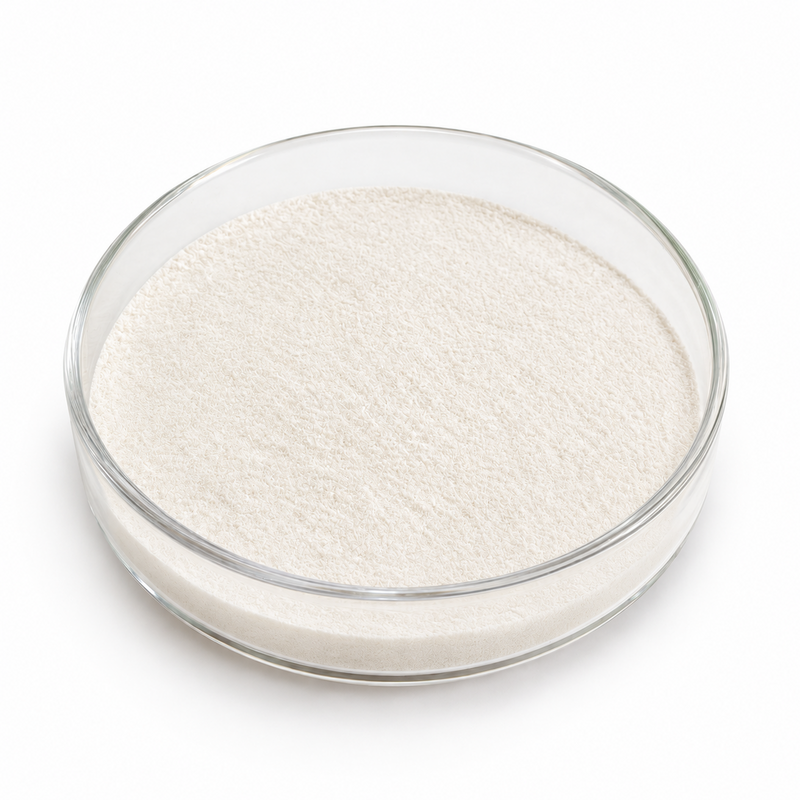
Purity numbers tend to dominate the conversation, but alkali modification often rearranges how a material behaves long before it changes what the material is on paper. A starch gel can move from tight and sliceable to slack and spoonable, a pressed protein can become springier, and a fiber slurry can lose its gritty drag. In each case, the tactile or rheological shift may be unmistakable while the compositional readout still looks nearly untouched.
That gap comes from where the alkali does its early work. It tends to act at surfaces, interfaces, and amorphous regions rather than rewriting the core chemistry all at once. Surface groups are stripped or rearranged, charge balances shift, and small structural channels open up. Those changes rewrite friction, swelling, and particle-to-particle contact, so texture responds first. Purity, by contrast, may only move after the treatment is pushed harder, which makes it a sluggish indicator when sensory or handling properties are the real target.
This does not make purity data useless, but it suggests the order of attention should be reversed in many cases. If the aim is to adjust mouthfeel, spreadability, or rehydration behavior, the more immediate evidence comes from how the material deforms, holds water, or flows. Waiting for a large purity swing can mean overlooking a modification that has already done its most useful work at the textural level.
Extraction Heat and Time Decide What Survives in the Final Powder
Heat does more than dry a liquid extract; it acts as a selective force. Much of what ends up in the finished powder depends on which compounds can tolerate the chosen temperature window. Delicate aromatics and certain enzymes vanish quickly above 60°C, while heavier polyphenols and minerals tend to remain. A lower heat setting can preserve a brighter, more floral note, but it drags out the drying time and gives sticky sugars longer to bind moisture.
Time matters just as much as the dial on the dryer. Even at moderate temperatures, prolonged exposure slowly erodes volatile oils and can push browning reactions forward. The result is not always worse, but it is different: longer residence often deepens color, rounds off sharp top notes, and leaves behind a powder with a heavier, more cooked character. Short, aggressive drying may keep more of the original aroma yet risks scorching fine particles near the heating surface.
The final powder is less a copy of the raw extract and more a record of the heat-and-time path it traveled. Adjusting one variable without the other rarely works. If the target is a fresh, grassy profile, the extraction and drying steps both need cooler air and a shorter window. If a deeper, malted or caramelized profile is wanted, slightly higher heat with controlled residence can push the powder in that direction without destroying everything.
Precipitation and Dewatering Turn Thin Liquor into Workable Curd
The change starts when the coagulant meets the warm liquid and the dissolved protein begins to link into a loose lattice. At first it looks like streaks and small clumps drifting through a thin, milky base, then the clumps join into larger, softer masses. Letting the pot sit undisturbed for a few minutes gives the curd time to firm enough to handle, while the whey rises to the top as a pale, almost clear liquid.
Moving the fragile curd into a cloth-lined mold begins the dewatering step. A light, even weight lets the mass settle and knit at the edges; too much force too soon can seal the surface and trap whey inside. As the pressure increases slowly, the remaining liquid drains through the cloth and the texture changes from loose and spoonable to a solid, springy block that cuts cleanly and holds together on a plate.
Drying and Grinding Influence How the Powder Rehydrates
Rehydration starts with the structure left behind by drying, not just the powder's surface. A spray-dried particle often has a hollow center and a thin, porous shell, so water enters quickly and the particle breaks apart. Freeze-dried material behaves differently: its ice crystals leave an open sponge-like network, which absorbs water fast but can also float if air is trapped. Drying methods that overheat the surface or collapse the pores create the opposite effect—slow wetting, clumping, and a gritty mouthfeel.
Grinding works on top of that structure. Freshly exposed surfaces help water bind, but fine grinding can push the powder into a packed bed that blocks liquid from moving downward. A blend of particle sizes often rehydrates more evenly than a perfectly uniform fine powder, since coarser grains hold open micro-channels and smaller grains fill the gaps without fully sealing them.
The way grinding is carried out also matters. If the mill runs hot or applies heavy shear, sensitive components such as proteins or starches can denature or partly gelatinize, altering how the powder holds water later. That means two powders with the same chemical composition can rehydrate very differently because one was dried gently and milled in short passes while the other was overheated and over-milled.
Blending and Testing Keep Batch Performance Predictable
Raw material variation rarely announces itself. A new supplier lot, a change in moisture, or a slight shift in particle size can nudge a batch away from its intended behavior without any obvious warning. Blending gives the process a steadier starting point by folding those small differences into a more uniform feed, which keeps early-stage variability from compounding later.
Testing then acts as the routine check rather than a last-minute rescue. Samples are pulled at the points where drift tends to begin, and the results are fed back into mixer speed, hold time, or dosing adjustments while there is still room to correct course. That loop matters more than the individual measurements; it turns occasional fixes into a repeatable practice.
The benefit shows up as fewer unwelcome surprises. Predictable batch performance does not mean every run matches the last one exactly, but it keeps the spread narrow enough to plan around. Rework drops, downstream equipment sees a more consistent material, and operators spend less time chasing problems that blending and testing have already contained.
FAQ
The alkali step removes sulfate groups and creates the 3,6-anhydro bridge, which turns a weakly thickening precursor into a strongly gelling kappa or iota fraction. Temperature, time, and caustic concentration have to be balanced because aggressive treatment can increase gel strength while also making the final gel more brittle.
Raw material maturity, extraction pH, cook temperature, alcohol concentration, drying heat history, and the final salt balance all shift molecular weight and ion sensitivity. Factories standardize after drying because upstream steps never deliver exactly the same starting material twice.
Drying method and temperature control porosity, rehydration speed, and solubility. Gentler low-temperature drying tends to preserve viscosity and gel strength, while harsh heat can degrade the polymer and produce a powder that hydrates slowly or forms lumps.
No. Milling also controls particle size distribution, which affects dispersibility and hydration behavior. It can generate enough heat to damage the polymer if not managed, so some facilities use controlled milling to improve dispersion without sacrificing gel quality.
Alcohol precipitation washes away salts, sugars, color compounds, and low-molecular-weight material. That improves clarity, reduces off-notes, and raises gel strength, but it also influences which salt form remains in the finished carrageenan.
They blend kappa and iota fractions, adjust ion levels, and standardize viscosity, gel strength, and particle size. Dairy applications rely on milk protein reactivity and smooth gel formation, while meat systems need water binding, brining performance, and clean sliceability.
Syneresis usually comes from overly strong kappa gels or excessive potassium, which tightens the network and squeezes water out. Blending in iota carrageenan or adjusting the ionic environment creates a more elastic gel that holds moisture better.
Conclusion
The way a carrageenan factory handles raw seaweed, chemical treatment, and heat extraction leaves a clear fingerprint on the final powder. Poor or mixed seaweed stock caps gel strength before any downstream step can fully compensate for it. Alkali modification often matters more than simple purity because it rearranges sulfate groups and alters the balance between gelling and thickening behavior. Extraction temperature and residence time then determine which polymer fractions survive; harsher conditions may raise yield but can shear molecular weight and weaken texture. Once the hot liquor is clarified, precipitation and mechanical dewatering convert a thin solution into a cohesive curd that is much easier to handle and dry.
Drying and grinding should not be treated as afterthoughts. The particle size, moisture profile, and surface structure of the milled powder influence how quickly and evenly it rehydrates, and uneven hydration commonly shows up later as lumps or inconsistent viscosity in the customer’s batch. Final blending and testing are where a factory irons out natural variation. By combining lots, adjusting standardized grades, and running rheological checks against reference samples, producers keep gel strength, syneresis, and mouthfeel within predictable limits. These controls do not replace earlier steps, but they prevent minor shifts in seaweed supply or processing from turning into visible quality problems downstream.
Contact Us
Contact Person: TANG JUN
Email: [email protected]
Tel/WhatsApp: +86-523-87608619
Website: https://www.zipinbiotech.com