

Carbon Neutral Wastewater Treatment for Concrete Batching Plants: A Sustainable Solution
2026-07-25
Concrete batching plants are essential to modern construction, but their water footprint often goes unnoticed. Every day, vast amounts of wastewater are generated, loaded with sediment and high pH levels. Treating this water sustainably isn’t just an option—it’s a necessity. That’s where carbon-neutral solutions come in, redefining how we think about industrial water management. At Sinou, we’ve seen firsthand how innovative treatment systems can turn a costly liability into an environmental asset, all while slashing carbon emissions. In this post, we’ll explore how the concrete industry can achieve true sustainability without compromising efficiency.
Why Concrete Plants Are Rethinking Water Management
For decades, concrete production has relied on vast amounts of water, often treated as a cheap and endless input. But tightening environmental regulations, rising water costs, and growing community pressure are forcing plant managers to rethink their reliance on fresh water. Discharge limits are stricter than ever, and in many regions, water scarcity is no longer a distant threat—it’s a daily operational hurdle. The old approach of simply pumping in municipal water and discharging process wastewater is becoming unsustainable, both financially and ecologically.
Beyond compliance, there’s a growing recognition that smarter water use can unlock operational efficiencies. Closed-loop recycling systems, for example, can cut freshwater intake by up to 90%, while also eliminating costly settling ponds and sludge disposal. New sensor-driven technologies allow plants to monitor water quality in real time, ensuring that recycled water meets the precise chemical balance needed for consistent concrete mixes. These shifts aren’t just about conservation—they’re about turning a liability into a competitive edge, reducing downtime and material waste.
The change is also being driven by a quiet revolution in concrete chemistry. Admixture suppliers are developing water-reducing agents that perform better with recycled or non-potable water, opening up new possibilities for mix designs that were once considered too risky. As more plants share their success stories, the industry is gradually shedding its old assumptions. Water isn’t just a utility line item anymore; it’s a strategic asset that demands the same attention as cement or aggregates.
Breaking Down the Carbon Impact of Traditional Washout
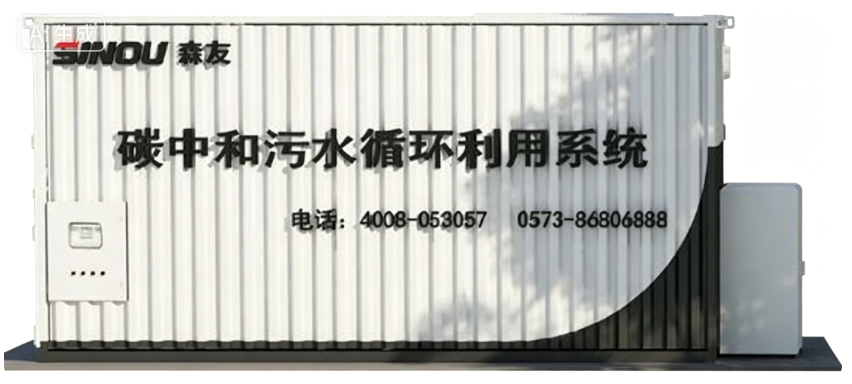
Every time a concrete truck returns to the plant with a drum full of leftover material, the clock starts ticking on a series of energy-intensive steps. Traditional washout relies on high-pressure hoses, mechanical scraping, and vast amounts of fresh water to separate aggregate and cement paste. That process immediately pumps electricity and fuel into the equation—running pumps, powering mixers, and heating water—while the leftover slurry often ends up in settling ponds or landfills, where it slowly releases embedded carbon back into the environment.
What rarely gets measured is the delayed carbon toll: the drying and hauling of sludge to disposal sites, the methane potential in anaerobic breakdown, and the replacement water demanded by each cycle. Studies from materials science groups have noted that a single cubic meter of returned concrete, if fully washed and landfilled, can trail a carbon shadow equivalent to dozens of kilometers driven by a passenger car. These figures stay hidden because they are spread across multiple operators—transport, water treatment, and waste management—each adding a small but accumulative layer to the overall footprint.
Beyond the direct emissions, there is a less visible strain on carbon budgets from the very materials that get washed away. Cement paste, the binding agent in concrete, is responsible for the majority of concrete's carbon intensity. When it is separated and discarded, the original calcination emissions from its production are effectively wasted, forcing new cement to be manufactured to cover future demand. Breaking down the carbon impact reveals not just an efficiency problem but a linear model that treats embedded carbon as disposable, rather than a resource that could be looped back into production.
The Road to Zero-Discharge Systems
Achieving zero-discharge in industrial operations isn't just a technical milestone—it's a fundamental rethinking of how we manage water. For decades, factories treated wastewater as an unavoidable byproduct, something to be cleaned just enough before releasing it. The road to zero discharge flips that mindset, treating every drop as a resource that can be reclaimed. This shift is driven by tightening regulations, water scarcity, and the growing realization that what we once considered waste often holds recoverable value, from heat to chemicals.
The path is far from smooth. Early adopters quickly discovered that zero-discharge systems demand a marriage of advanced technologies—membrane filtration, evaporation, crystallization—and meticulous process integration. Each industry faces its own puzzle; a textile plant's dye-laden effluent requires vastly different treatment than a power station's cooling blowdown. The real breakthrough has come not from any single device, but from systems thinking: designing plants where one process's output becomes another's input, closing loops that were once wide open.
What's encouraging is that this road is now well-traveled enough to reveal clear patterns of success. Companies are moving beyond pilot projects to full-scale implementations, often finding that the initial investment pays back through reduced water purchase costs and recovered materials. More importantly, they're building resilience against future water price shocks and regulatory changes. The road to zero discharge isn't about perfection overnight; it's a series of deliberate steps, each one making the next more feasible, until the discharge pipe simply dries up.
How Nature-Inspired Treatment Cleans Recycle Water
Conventional water recycling often leans on chemical additives and energy-intensive machinery, but there's a quieter, more elegant path unfolding. By observing how wetlands, river banks, and even mangrove forests naturally purify water, engineers are redesigning treatment systems from the ground up. Instead of forcing water through synthetic filters, they let biological communities do the heavy lifting, turning wastewater into a resource that's safe to return to the environment or even reuse for irrigation and industry.
At the heart of many nature-inspired systems are constructed wetlands—shallow, planted basins where water moves slowly through gravel, roots, and rhizomes. Microbes cling to every surface, feasting on organic pollutants, while plants like reeds and bulrushes pump oxygen into the root zone, creating microhabitats where ammonia transforms to harmless nitrogen gas. Some facilities go a step further, mimicking the filtering prowess of mussel beds or the intricate branching of respiratory systems to design biomimetic membranes that capture impurities without high pressure or chemical baths.
What sets these living technologies apart is their resilience and regenerative spirit. Unlike sterile mechanical plants, a wetland-based system adapts to shifting loads and even improves with age as root networks expand. The process doesn't just strip water of contaminants; it rebuilds aquatic vitality, often becoming a haven for dragonflies, songbirds, and pollinators. For communities looking to shrink their carbon footprint and close the water loop, harnessing such borrowed wisdom from the natural world is proving to be less of a novelty and more of a long-term strategy.
Turning Sludge Into a Valuable By-Product
Sludge, often viewed as a costly disposal problem, contains a surprising amount of reusable materials. Modern processing techniques can extract organic matter, nutrients, and even energy-rich compounds from what was once considered mere waste. By applying controlled thermal or biological treatments, facilities transform this residue into soil conditioners, biogas, or construction aggregates. The shift in perspective—from burden to resource—demands both technological adaptation and a willingness to rethink industrial by-products.
Turning sludge into a sellable commodity starts with thorough analysis of its composition. Source material varies widely, from municipal wastewater solids to industrial food-processing leftovers. Tailoring the recovery method to the sludge type maximizes output: anaerobic digestion captures methane for power generation, while composting stabilizes organic content for agricultural use. Advanced thermal processes like pyrolysis not only reduce volume but produce biochar, a porous material that improves soil water retention and sequesters carbon. Each pathway recovers value that traditional disposal simply buries or burns.
The economic and environmental gains multiply when communities integrate by-product streams into local supply chains. Farmers adopt biosolid-based fertilizers, reducing reliance on synthetic alternatives. Cement kilns substitute a portion of fossil fuels with dried sludge pellets, lowering their carbon footprint. These circular approaches replace linear waste flows with regenerative loops, where yesterday’s sludge becomes tomorrow’s crop nutrient or building block. Success hinges on consistent quality control and public acceptance, but the direction is clear: what we once discarded now feeds the circular economy.
Lessons from Plants That Made the Switch
Plants that transition between different environments, like those moving from aquatic to terrestrial habitats, offer profound insights into adaptability. They didn’t follow a predetermined roadmap but gradually shifted their strategies through small, incremental adjustments. For instance, early land plants developed waxy cuticles and stomata not by sudden leaps but via a slow refinement of existing traits, proving that flexibility and patience are key when facing unfamiliar terrain.
One striking lesson is how these organisms repurposed what they already had. Rather than inventing entirely new solutions, they tweaked ancestral tools, turning challenges into opportunities. The evolution of vascular tissue from simple water-conducting cells is a testament to working with available resources, reminding us that innovation often hides in plain sight within our current toolkit.
These botanical stories also emphasize the value of resilience through collaboration. Many plants formed symbiotic relationships with fungi to secure nutrients in harsh soils, highlighting that switching contexts doesn’t mean going it alone. The takeaway is clear: embracing change involves not just internal modification but also building bridges with others to navigate uncharted worlds together.
FAQ
Concrete batching plants generate high-pH, solids-laden washwater and slurry. Traditional treatment often relies on energy-intensive processes, chemical dosing, and high water consumption. The embedded carbon in chemicals plus power use means a significant CO₂ footprint, mainly from pumping, neutralization, and sludge dewatering.
A combination of on-site renewable energy, process optimization, and material substitution. For instance, plants can use solar-powered mixers and pumps, collect rainwater for dilution, substitute mineral acids with captured CO₂ for pH control, and dewater sludge using gravity rather than mechanical presses, with offsets for any residual emissions.
Beyond meeting tightening environmental regulations, it’s a differentiator in bid competitions and helps with responsible sourcing certifications. There’s also a direct operational benefit: recycled process water reduces fresh water demand, and carbon-neutral treatment often lowers chemical and energy costs after the initial investment.
Recycling is central. Reusing clarified water for batching cuts raw water intake, while recovered solids can go back into low-strength concrete or be used as a soil amendment. This circular flow slashes the embodied carbon associated with fresh water extraction and waste hauling to landfill, which often outweighs the treatment footprint itself.
Instead of dosing muriatic acid or CO₂ gas from cylinders, some plants bubble flue gas from an on-site boiler or, even better, their own concrete curing kilns through the washwater. This mineralizes the carbon dioxide into bicarbonates, neutralizing alkalinity while avoiding the manufacture and transport of commercial acid—turning a waste stream into a reagent.
Wet sludge is heavy and expensive to transport. Simple innovations like geotextile dewatering tubes let gravity drain the water, leaving a dry cake that’s lighter. The dried material can be carbonated further in thin layers exposed to air, locking in CO₂. Avoiding incineration and long-haul trucking is key to keeping the life-cycle carbon balance low.
Yes, often more so than for mega-plants because treatment volumes are modest. Modular, containerized systems with pre-piped solar recirculation and passive settling can be installed without heavy civil works. Many small ready-mix operators already collect rainwater and let solids settle in pits; adding a solar panel and a simple carbonation lid moves them close to neutral.
You need to meter electricity use, chemical volumes, and truck movements, then use standard emission factors. More sophisticated systems log real-time pH, flow, and solar output to optimize dosing. Independent verification usually follows ISO 14064 or PAS 2060 guidelines, and the data can feed directly into the plant’s overall environmental product declarations (EPDs) for their concrete.
Conclusion
Concrete batching plants have traditionally consumed vast quantities of water and generated waste that often ends up in settling ponds or landfills, carrying a significant carbon footprint. The industry is now rethinking water management not just to comply with tightening environmental regulations but to cut operational costs and emissions. Traditional truck washout processes release high-pH slurry, loaded with cementitious solids, that requires careful disposal or treatment. The embedded carbon in wasted cement and the energy used for water treatment and transport contribute heavily to a plant's overall emissions. Moving toward zero-discharge systems, where all process water is captured, treated, and reused, becomes an imperative for carbon neutrality. Nature-inspired treatment methods, such as constructed wetlands, bio-reactors, or phyto-remediation, offer low-energy and low-chemical ways to clean recycle water, removing suspended solids and neutralizing alkalinity through natural biological and physical processes.
Once the water is clarified, the residual sludge—once a costly disposal problem—can be turned into a valuable by-product. By separating and processing the cement-rich solids, plants can produce recycled aggregate, soil amendment, or even raw material for new concrete mixes, closing the material loop and further reducing the carbon impact. Real-world lessons from facilities that have already adopted these integrated systems show that the transition demands upfront investment and a shift in operational mindset, but the long-term benefits outweigh the costs. Reduced water bills, lower waste hauling fees, and potential revenue from recovered materials help offset the initial outlay. More importantly, these plants demonstrate that achieving carbon-neutral wastewater treatment is not a distant ideal but a practical, scalable solution that aligns environmental stewardship with economic sense.
Contact Us
Contact Person: HaiYan
Email: [email protected]
Tel/WhatsApp: +86 18957325588
Website: https://www.senyoubeton.com/