

Best Rotary Union Selection for Efficient Fluid and Gas Transfer
2026-07-23
Choosing the right rotary union can make or break the efficiency of your fluid and gas transfer systems. Whether you're dealing with high-pressure hydraulics, vacuum, or cooling circuits, a poorly matched rotary union leads to leaks, downtime, and costly maintenance. That's where MOFLON stands out—not just as a supplier, but as a partner in engineering custom solutions that keep your operations running smoothly. In this guide, we'll cut through the complexity and give you practical tips for selecting the best rotary union for your specific application.
Understanding the Core Functions of Rotary Unions
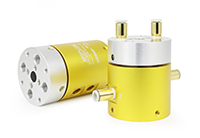
At their simplest, rotary unions are mechanical devices that transfer fluid or gas between a stationary source and a rotating component without leakage. They might seem straightforward, but their design is critical in systems where continuous rotation and uninterrupted flow must coexist—think of a printing press roller that needs coolant while spinning at high speed, or a wind turbine blade actuator that requires hydraulic fluid as it adjusts pitch. The union’s primary role is to maintain a sealed path under dynamic conditions, compensating for pressure, temperature, and speed fluctuations that would quickly degrade an ordinary fitting.
Beyond just passing media, rotary unions often integrate multiple passages within a single compact unit to handle different fluids simultaneously—such as hydraulic oil, water, and air—each channeled independently without cross-contamination. This multiflow capability is essential in automated machinery like rotary indexing tables or robotic arms, where space constraints demand efficient porting. The internal sealing mechanisms vary from simple O-rings to advanced mechanical face seals or labyrinth designs, chosen based on factors like media type, rotational speed, and required service life. A well-engineered union accounts for heat dissipation and wear, ensuring that maintenance intervals align with operational expectations rather than becoming a bottleneck.
It’s easy to overlook their role until a replacement is needed, but rotary unions quietly enable reliability in sectors from food processing to heavy industry. In a bakery’s continuous oven, steam-heated rollers depend on unions that withstand thermal cycling and sticky residues; in a steel mill, unions conveying high-pressure water for descaling must endure abrasive particles and shock loads. The core function isn’t just sealing—it’s about enabling the relentless motion that defines modern manufacturing, all while keeping media exactly where it belongs.
Key Factors That Influence Your Choice
When you’re standing at a crossroads, the decision you make often comes down to a mix of personal values, practical constraints, and gut feelings. It’s not just about the price tag or the specs on a sheet—it’s about whether the option aligns with your lifestyle, your long-term goals, and even your identity. You might find yourself weighing the intangible elements, like brand reputation or how a product makes you feel, against hard data such as durability or performance reviews. That internal tug-of-war shapes your final call more than you realize.
Another layer that quietly guides your choice is the influence of social circles and past experiences. A recommendation from a trusted friend or a negative memory from a previous purchase can tilt the scales dramatically. We’re wired to seek validation and avoid repeating mistakes, so those subtle nods from our community and our own history become silent advisors. At the same time, the way options are presented—the framing, the comparisons, the stories they tell—can nudge you without you even noticing. It’s a delicate interplay between the objective and the subjective.
Ultimately, the factors that steer your decision are rarely isolated. They weave together in a narrative you’ve built over time: what you prioritize, who you trust, and what you’re willing to compromise on. Recognizing these elements isn’t just helpful for making better choices—it’s a way to understand yourself. Whether it’s a gadget, a career path, or a weekend plan, the same undercurrents are at play, guiding you toward what feels right for you.
Matching Materials to Your Media and Environment
Selecting the right materials starts with understanding where and how your message will be seen. A glossy magazine ad demands high-resolution images and rich color, while a simple flyer might work best with lightweight paper and bold, clear typography. The physical environment plays a huge role—outdoor signage needs weather-resistant substrates and fade-proof inks, whereas a luxury brand's in-store display might call for textured, tactile surfaces that invite touch. By matching material characteristics to the surrounding context, you ensure your media feels native to its setting and captures attention naturally.
Digital environments have their own set of rules. A web banner optimized for retina screens requires different file formats and compression than a video thumbnail. Loading speeds, screen calibration, and even the ambient light where users typically view content should influence your choices. For instance, dark-themed interfaces benefit from materials that maintain contrast without causing eye strain, while interactive kiosks in bright public spaces need anti-glare coatings and durable overlays. Every material decision, from pixel density to physical finish, shapes how effortlessly your audience absorbs the message.
Don't overlook the sensory and emotional impact. Materials communicate subtle qualities—the warmth of uncoated paper feels approachable, while a sleek metallic finish conveys precision and innovation. Consider the journey your media takes: a direct mail piece might travel through harsh postal systems, so durability matters as much as design. In hybrid campaigns, where a QR code bridges printed matter to a digital landing page, the tactile experience of the material can prime the user for the online interaction. The goal is harmony: the material not only survives its environment but enhances the story you're telling.
The Role of Sealing Technology in Performance
Effective sealing is more than just preventing leaks; it is a fundamental contributor to the overall performance and longevity of any mechanical system. When seals perform optimally, they maintain essential fluids and lubricants within the system while keeping contaminants out. This containment directly affects friction, wear, and energy efficiency—a poorly sealed component can lead to increased drag, overheating, and premature failure. In high-speed or high-pressure environments, the right sealing solution ensures that critical clearances are maintained, allowing the system to operate within its designed parameters and significantly boosting reliability.
Beyond basic containment, advanced sealing technologies can actively enhance performance by reducing energy losses. For instance, low-friction seal designs minimize the power required to overcome resistance, which in hydraulic and pneumatic systems directly translates to lower fuel or electrical consumption. In the automotive sector, improved sealing in engines and transmissions contributes to better mileage and reduced emissions. Furthermore, the right material selection for seals ensures compatibility with aggressive fluids and extreme temperatures, preventing degradation that could otherwise compromise performance over time. In essence, sealing technology is a silent yet indispensable partner in achieving peak efficiency and durability.
Balancing Speed, Pressure, and Temperature Limits
Finding the sweet spot between speed, pressure, and temperature is a constant juggling act in fluid systems. Push speed too high and friction can spike temperatures, while cranking up pressure might overwhelm seals or thin out lubricants. Each variable doesn’t just act in isolation—they’re deeply intertwined, and a nudge in one can send ripple effects through the others. The trick is recognizing that perfect balance isn’t a fixed point; it’s a moving target that shifts with system demands and the materials you’re working with.
In practice, you rarely get to optimize one without making compromises elsewhere. For instance, in hydraulic circuits, increasing pump speed to boost cycle times often means lowering pressure to keep oil from overheating, but that might cost you the torque you need. Experienced operators learn to read the gauges as a conversation—when pressure rises, temperature follows, and that often hints at flow restrictions or component wear. It’s less about rigid limits and more about building an intuitive feel for where the system can be pushed before it starts sweating, literally and metaphorically.
Maintenance Tips to Extend Service Life
Routine checkups often reveal small issues before they turn into expensive repairs. A quick look at seals, moving parts, and fluid levels once a week can catch early wear or leaks. Something as simple as listening for unusual sounds during operation often points to loosening components or insufficient lubrication. These informal inspections cost nothing but routinely prevent sudden breakdowns.
Cleanliness matters more than people assume. Dust, debris, and residue build up in hidden spots, trapping moisture and accelerating corrosion. A gentle wipe-down after heavy use, combined with occasional deep cleaning of vents and filters, keeps internal systems breathing and running cooler. For outdoor equipment, a simple cover or shaded storage area reduces weather-related stress significantly over the years.
Lubrication schedules are easy to postpone, yet nothing wears down mechanisms faster than friction. Following the manufacturer's intervals for greasing moving joints and swapping worn-out fluids restores that quiet, effortless motion. When you replace a filter, take an extra minute to check the surrounding connections—loose bolts or misaligned guards often hide in plain sight and quietly lead to uneven wear.
FAQ
A rotary union, also called a rotating joint or swivel, is a precision device that allows media like water, steam, hydraulic oil, or air to flow from a stationary source into rotating machinery. It’s essential for keeping processes running smoothly in equipment such as printing presses, wind turbines, and packaging lines without leaks or pressure drops.
Start by matching the union’s rated speed and pressure to your application’s peak demands. Look for units with balanced mechanical seals and low-friction bearings that can handle the combo without excessive heat buildup. Don’t just check max specs—verify how they perform together, because some designs lose efficiency when pushed at both limits simultaneously.
Prioritize seals made from materials like silicon carbide or tungsten carbide for abrasion resistance, and stainless steel housings for corrosion protection. Internal lubrication grooves and vented designs help prevent contamination ingress, while cartridge-style seals simplify field maintenance when downtime is expensive.
Not necessarily. Multi-passage unions are ideal when you need to transfer several media types simultaneously—like compressed air and coolant in automated machinery—but they add complexity. For a straightforward single-fluid setup, a well-engineered single-passage unit often delivers lower torque and longer seal life.
Misalignment is the top killer—always use flexible mountings and check runout with a dial indicator. Support hoses properly to avoid side loads, and never tighten connections beyond the manufacturer’s torque specs. Purge the lines before startup to remove debris that could score sealing surfaces.
Regularly inspect for slight drips or seal weepage—that’s an early warning. Keep a log of temperature and vibration readings to catch bearing wear before it cascades. Use only compatible lubricants and replace wear parts like O-rings on a schedule instead of waiting for a leak. A five-minute check each week can prevent unplanned downtime.
Hot oil service demands seals and bearings that can handle thermal expansion without binding, often requiring high-temperature elastomers and carbon graphite components. Chilled water applications, on the other hand, face condensation and potential frost buildup, so you’ll want insulation and corrosion-resistant internals. Don’t assume a single union works for both—thermal dynamics change everything.
Hybrid ceramic bearings run cooler and can handle minor misalignment better than all-steel types. They’re electrically insulating, which prevents arc damage in motor-driven equipment, and they often last twice as long in clean-fluid applications. The upfront cost is higher, but the payback in reduced maintenance and energy savings is noticeable.
Conclusion
A rotary union might seem like a simple connector, but its ability to maintain a leak‑free flow of fluid or gas across a rotating interface depends on careful matching to your specific process. The first step is understanding what demands your media places on the unit—corrosive chemicals call for stainless steel or specialized alloys, while abrasive slurries may require hardened internals. Temperature swings and pressure spikes only narrow the field further. Sealing technology sits at the heart of this balance: spring‑energized PTFE seals excel in low‑friction, chemically aggressive environments, whereas mechanical face seals handle higher speeds and pressures. Ignoring these material and seal choices risks premature failure, no matter how robust the housing looks.
Beyond material compatibility, performance hinges on recognizing the interplay of speed, pressure, and temperature limits. Pushing a union beyond its rated rpm even momentarily can overheat the seal and cause catastrophic blow‑by. A well‑matched rotary union also anticipates real‑world fluctuations—start‑up pressure surges or ambient temperature changes—that test the design envelope. Long service life then becomes a maintenance discipline: periodic purging to clear debris, monitoring seal wear patterns, and relubricating according to the duty cycle keep small issues from turning into costly downtime. When selection integrates these mechanical limits with practical care habits, the result is a rotary union that quietly sustains high‑efficiency transfer, often for years, without drawing attention to itself.
Contact Us
Contact Person: Xiangpin Li
Email: [email protected]
Tel/WhatsApp: 86 186 1706 8578
Website: https://www.moflon.com